
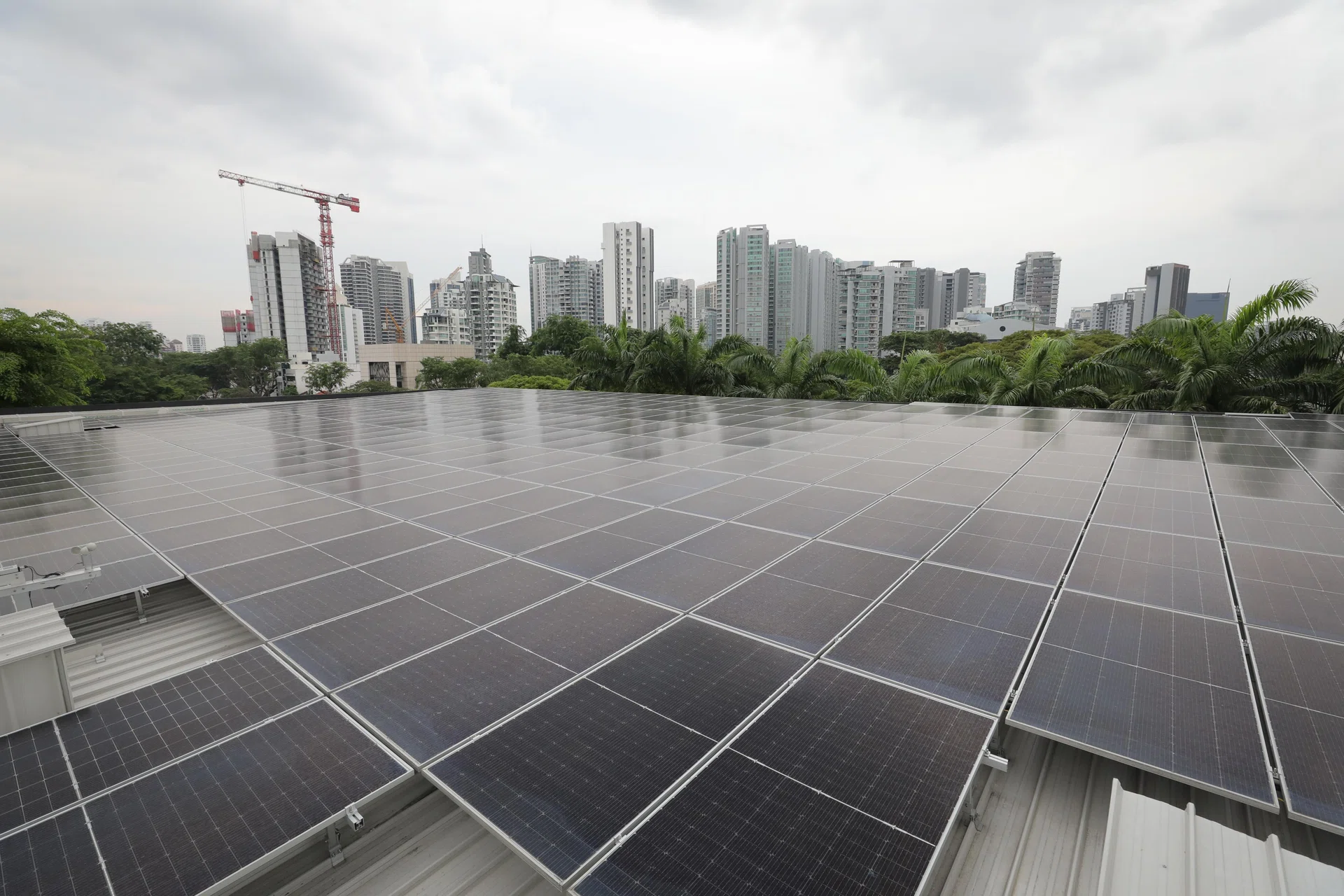
Work needed includes upgrading the individual countries’ distribution network, introducing smart meters, improving reliability and better managing outages
[SINGAPORE] At least US$4 billion of investments are needed to upgrade Asean’s power grid to a smart grid, noted to a recent report by energy think tank Ember.
This includes upgrading the individual countries’ distribution network, introducing smart meters, as well as improving reliability and better managing outages.
To prepare the power grid for rapid integration with renewable energy source through digital controls, advanced forecasting, as well as installing battery storage to minimise curtailment, an estimated US$6.7 million is needed.
The most ambitious pathway to modernise Asean’s power grid into a smart grid will require US$10.7 billion, said to the report. Such levels of investment will support an interconnected regional market that allows for cross-border power trade and advanced flexibility in the grid system.
Modernising power systems to smart grids are the cornerstone of the clean energy transition that Asean governments have committed to, as traditional grids – which were built around fossil fuel supply – are not designed to manage the intermittency of renewable source of energy, such as solar and wind.
“Asean’s renewable energy boom makes it imperative that its power grids evolve into future-ready, next-generation, flexible systems. Stronger domestic grids are needed to integrate solar and wind, while regional interconnections can provide additional flexibility by sharing resources across borders. Together, these two strategies of reinforcing national systems and advancing cross-border integration are central to Asean’s long-term energy vision,” said the report.
A NEWSLETTER FOR YOU

Friday, 8.30 am
Asean Business
Business insights centering on South-east Asia’s fast-growing economies.
Its estimation of the investment size required for the three different pathways is derived from international benchmarks, where investment per capita ranged between US$6 and US$17, depending on the country.
At the lowest level of investment of US$4 billion, the report noted that households and businesses will see benefits in the form of fewer outages and lower technical losses.
This comes from the use of smart meters and forecasting tools, as well as implementing a demand response programme to improve efficiency, reduce peak demand and support renewable scheduling.
SEE ALSO
The medium-level ambition requiring US$6.7 billion of investment will allow more renewable power onto the system, reduce waste and cut reliance on fossil back-up.
These can come about through measures that strengthen grid resilience and support greater consumer participation.
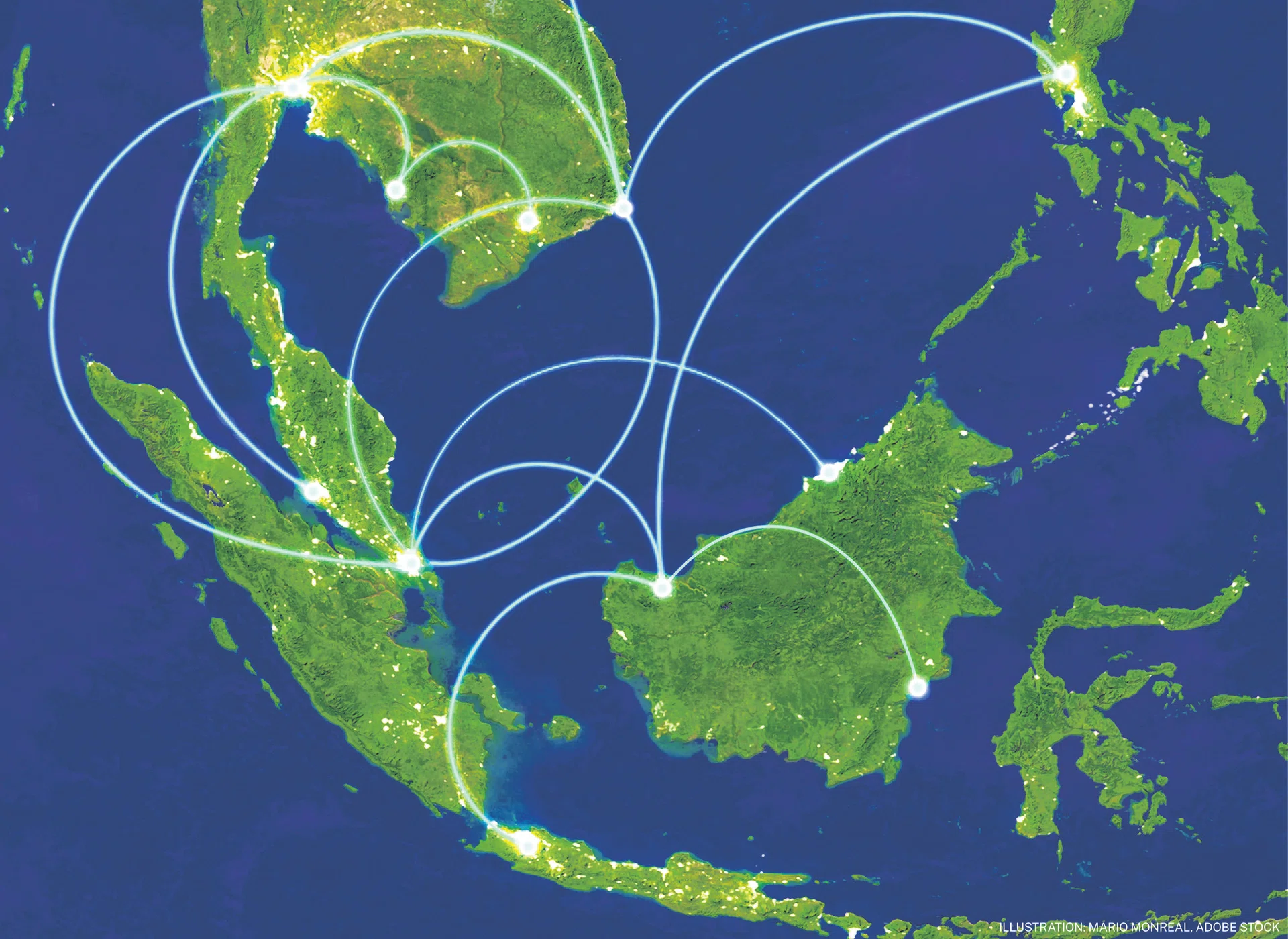
At the highest level, US$10.7 billion worth of investment could support an interconnected regional market, improving resilience while enabling a deeper clean energy transition.
These higher-cost investments include the use of energy management systems that optimise energy use, and the installation of storage, or electric vehicle charging systems to provide critical system services of stabilising the grid, integrating variable renewables, and supplying back-up capacity.
The report noted that these estimates are indicative, and not precise forecasts. The actual investment amount will depend on policy ambition, system conditions and technology choices.
In any scenario, modernising power transmission networks with smart grids will require substantial upfront investment – a potential challenge for developing markets, which make up most of Asean.
In developing countries, concessional and blended finance will play a larger role, with multilateral development banks providing loans and guarantees, and governments co-financing through performance-based schemes, as seen in India, noted the report.
Economic losses from outages
The need to modernise to smart grids becomes all the more crucial, considering that the report estimated that Asean could incur annual economic losses of US$2.3 billion by 2040 as a result of power outages.
This could be through foregone investment, missed industrial output and diminished competitiveness.
“In emerging economies, interruptions compound the challenges of rapid demand growth and infrastructure gaps, while in advanced markets, they jeopardise high-productivity industries and investor confidence,” said the report.
Furthermore, Asean’s rapid growth is increasingly powered by digital industries, advanced manufacturing and data-driven services – which all depend on clean, reliable electricity. In this context, even short outages can translate into major economic losses and weakened competitiveness.
While Asean power grids are becoming more reliable, the surge of solar and wind is creating new challenges.
By 2050, the region’s solar capacity is projected to jump more than twelvefold, from 27.7 gigawatt (GW) in 2023 to 334.8 GW.
Wind will expand from 7.4 GW to 228.4 GW over the same period, while batteries are set to rise from just 4.2 GW to nearly 94 GW.
However, Asean’s power grids are not equipped to handle variation in power generation, which requires systems that can respond instantly to fluctuations.
“Without real-time visibility, storage and demand-side flexibility, even small shifts in output can trigger curtailment, costly fossil backup or outages,” said the report.
“Modernising grids is essential to secure growth, unlock renewable potential and safeguard Asean’s place in the global economy. Delay, by contrast, risks billions in annual losses and erodes the resilience the region has worked hard to build,” it added.
Job creation
The report also estimated that smart grid investments could create between 243,000 and 649,000 jobs in Asean.
As multinational companies in electronics, automotive and textiles now demand traceable low-carbon supply chains to meet stricter environmental, social and governance standards, countries that can guarantee reliable, renewable-powered electricity will have a competitive edge in attracting these investments.
This translates into jobs not only in manufacturing, but also in the construction, installation and long-term maintenance of the infrastructure that supports industrial growth.
The report projects that the estimated US$4-10.7 billion investment could lead to creation of up to 650,000 jobs in the region.
These roles would span design and engineering, digital meter installation, IT integration and operations, while stimulating opportunities for local businesses that supply equipment, transport and services.
“The social dividends go beyond jobs. By reducing outages, smart grids cut reliance on diesel back-up generators. These generators are not only expensive to run but also a major source of urban air pollution. Cleaner grids mean lower household energy costs, more reliable electricity for small enterprises and measurable health benefits through reduced respiratory illness linked to pollution,” said the report.