
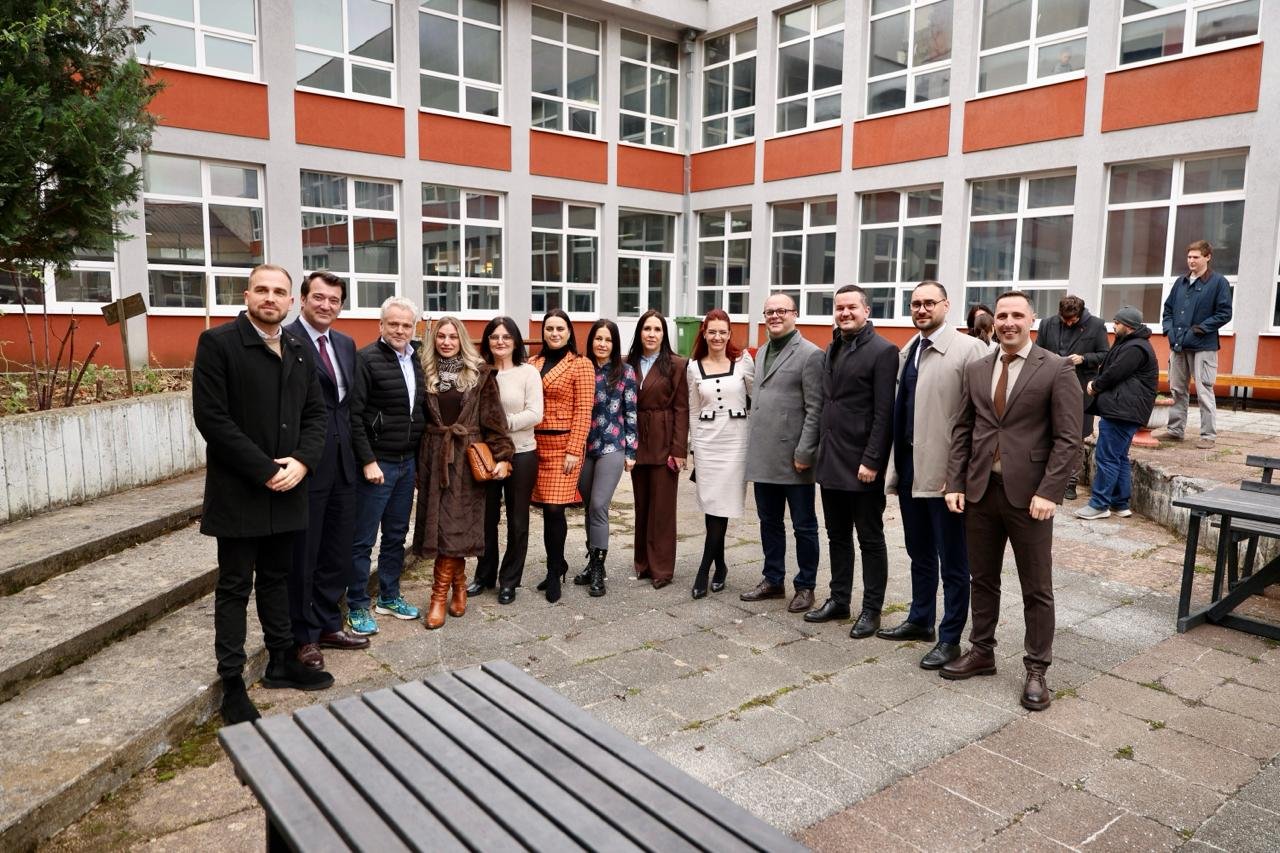
The third green classroom under the national environmental protection campaign “Čuvaj da te čuva”, implemented by the Delegation of the European Union to Montenegro in cooperation with its partners, was officially opened today at Radomir Mitrović Primary School in Berane. The opening of the classroom was made possible with the support of Erste Bank Montenegro and the Steiermärkische Sparkasse Foundation from Graz, the majority shareholder of Steiermärkische Bank und Sparkassen AG. The new outdoor learning space allows pupils to develop knowledge and habits essential for environmental protection through practical activities and direct contact with nature.
Addressing pupils, teachers and partners, the Ambassador of the European Union, Johann Sattler, recalled that Radomir Mitrović Primary School is celebrating its 50th anniversary this year and that its building was constructed thanks to contributions from citizens and support from the wider community. He noted that opening the green classroom continues this same spirit of collective effort, demonstrating how joint investment can create better opportunities for future generations.
Copyright: Evropska kuća
“Environmental protection cannot be measured solely by adopted strategies and commitments made. Progress must be visible on the ground – in cleaner rivers, preserved forests and healthier communities. Illegal waste dumping along the Lim River and the serious environmental risks posed by continued waste disposal at the Mostina landfill are not isolated problems. They point to the need for a more efficient and sustainable waste management system, adequate infrastructure, a clear division of responsibilities and stronger institutional cooperation. Montenegro has already recognised these challenges in its national policies and commitments under Chapter 27 of the accession negotiations. Now is the time to translate these commitments into tangible results. That is precisely why, through the ‘Čuvaj da te čuva’ campaign, we are bringing together institutions, schools, businesses and citizens to turn environmental awareness into concrete action. These changes must be felt in all local communities, including northern Montenegro. And to children, whom we often tell that the future is in their hands, we owe more than fine words – we owe them a healthier and better-preserved environment,” Sattler said.
Copyright: Evropska kuća
The opening of the green classroom in Berane also demonstrates the importance of cooperation with the private sector in achieving the campaign’s objectives.
“We are particularly pleased to be implementing this initiative together with the Steiermärkische Sparkasse Foundation from Graz, the majority shareholder of Steiermärkische Bank und Sparkassen AG, which shares our belief that supporting education leaves a lasting mark on the community. This classroom, made from recycled plastic, will be a place where pupils can learn, spend time together and develop a greater awareness of the importance of protecting the environment and our resources. As a bank, we partner with the community and support projects with measurable, long-term impact. That is why we are particularly pleased that, in addition to this school, we have also supported the installation of a green classroom in Mojkovac, enabling more children to benefit from this initiative. We would like to thank the European Union, the Ministry of Education, the school management and everyone who helped turn this idea into reality,” said Damir Ivaštinović, member of the Management Board of Erste Bank.
The green classroom in Berane is the third to open as part of the campaign, while the fourth is already scheduled for 26 November. Through investment in environmental education, the ‘Čuvaj da te čuva’ campaign places particular emphasis on younger generations and on fostering a responsible attitude towards nature from an early age.
Ambassador Sattler began his working visit to northern Montenegro with this event. During the remainder of his visit to Berane and Rožaje, the focus will be on the challenges of waste management and illegal logging, as well as the need for sustainable solutions that will contribute to environmental protection, improve citizens’ quality of life and help Montenegro fulfil its commitments under Chapter 27 of the accession negotiations.