

Many investor residence programs start you on a temporary permit that you renew until you qualify for permanent residence.
In 19 countries and territories, an approved investor’s first status has no end date in law. Minimums range from R$150,000 in Brazil to S$10 million in Singapore.
Here, day one means the day the application is approved. IMI checked every route against its government’s law or program page in November 2026.
“It’s often not just one individual moving, it’s the whole family,” notes Joseph Boll, Founder and CEO at Frederick Capital. In his experience, families think about “schools, budgets, where everyone will live, and whether you’ll actually be allowed to stay.”
“So families want something simple: One clear transaction where they know they’ll come out with permanent residency,” Boll argues. He adds that routes that grant it from the start take “a huge amount of pressure off.”
Ranked by the purchase, stake, or payment each route requires, before fees and rent, these five have the lowest minimums:
- Brazil accepts R$150,000 invested in innovative activities, or R$500,000 in any Brazilian business.
- Paraguay asks for US$70,000 in a new company and five jobs for Paraguayan workers.
- Cape Verde accepts €80,000 in property in a municipality with below-average economic output per person.
- Anguilla accepts a US$150,000 contribution to its Capital Development Fund for a single applicant.
- The Dominican Republic accepts US$200,000 invested in the country.
Latin America
Brazil grants residence for an indefinite term to investors in a Brazilian company, under Normative Resolution 13 of 2017.
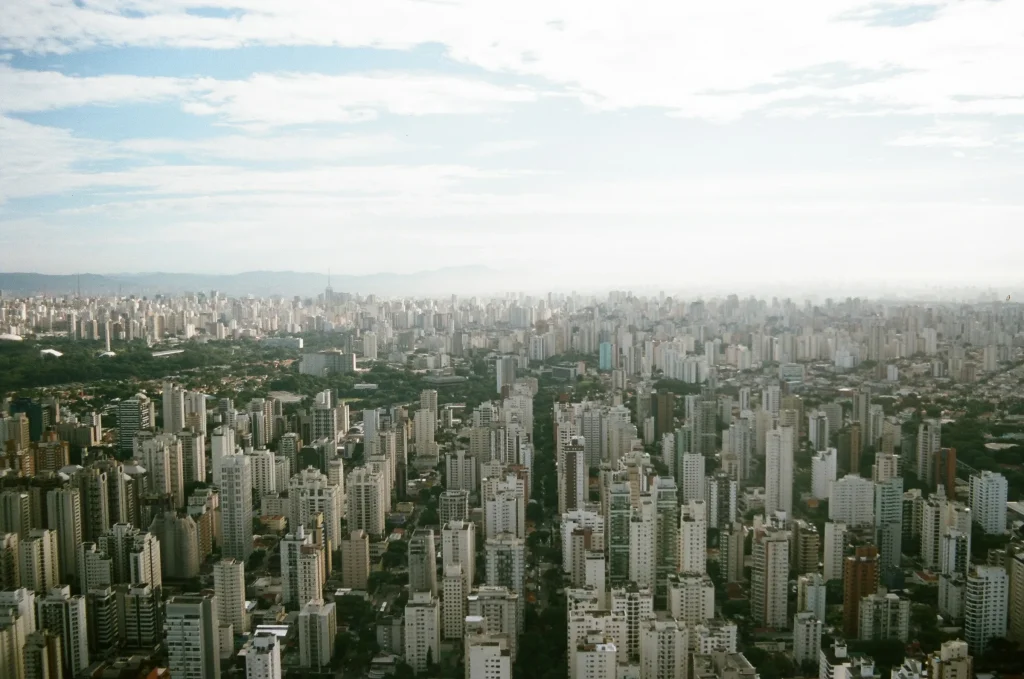
Investors put at least R$500,000 into a Brazilian business. Investment in innovative activities qualifies at R$150,000.
Paraguay’s Migration Law 6984 exempts investors from the temporary residence that other foreigners need first. Applications go through the Unified System for Opening and Closing Companies (SUACE), the government’s business registration desk.
Resolution 0283 of April 2026 from the Ministry of Industry and Commerce sets four investment tracks. On the productive track, investors open a company, create at least five jobs for Paraguayan workers, and invest at least US$70,000.
Financial instruments and property each qualify at US$200,000, and tourism projects at US$150,000. The five-job condition applies to the productive track only.
A financial investment must last at least two years, and property for personal or family use does not qualify.
SUACE issues the investor certificate within five business days of a complete file.
The permanent residence card is valid indefinitely. You renew the plastic card every ten years.
Panama replaced its Qualified Investor rules with Executive Decree 17 of 2026, published in the Official Gazette in September. The status is permanent residence as a qualified investor, with no temporary permit first.
A newly built property bought from the developer qualifies at B/.300,000. Resale property and securities through a licensed broker both need B/.500,000.
A fixed-term deposit needs B/.750,000 at a private bank, or B/.500,000 at one of the two state banks. The balboa trades at par with the US dollar.
The government charges B/.5,000 to the National Treasury plus a B/.5,000 repatriation deposit for the main applicant. The investment must remain in place for five years.
Africa
Cape Verde’s Green Card, created by Law 30/IX/2018, grants permanent residence for an indefinite period. Buyers qualify with property paid for with money transferred from abroad.
The minimum is €80,000 in a municipality where economic output per person is below the national average. Elsewhere it is €120,000.
Mauritius grants a residence permit to foreigners who buy a home of at least US$375,000 in an approved development. The Economic Development Board (EDB) sets the rules.
The permit remains in force for as long as you own the property. The country’s separate Permanent Residence Permit lasts 20 years and needs a prior permit, so it is a later step.
South Africa’s Immigration Act grants permanent residence under section 27(c) to a foreigner who sets up or invests in a business in the country. The minimum is R5 million, brought in from abroad.
Applicants must also commit that at least 60% of the staff will be South African citizens or permanent residents. Unless you prove, within two years of the grant and again three years after that, that the money remains invested, the permit lapses.
The Caribbean
The Dominican Republic’s migration regulation, Decree 631-11, exempts investors from the temporary residence that normally comes first. It places them in the investor subcategory of permanent residents.
Article 55 of the decree requires that investors put at least US$200,000 into the country. The first card lasts one year, and each renewal after that lasts four years.
Turks and Caicos grants a Permanent Residence Certificate (PRC) through four investment routes. Building a home, or buying or renovating a distressed property, on Grand Turk, Salt Cay, South Caicos, Middle Caicos, or North Caicos qualifies at US$300,000.
On the other islands, including Providenciales, the same route needs US$1,000,000.
A business on those five islands qualifies at US$750,000, against US$1,500,000 elsewhere. It must create jobs in the islands, and at least 60% of its staff must be people who need no work permit.
A US$1,000,000 contribution to a designated public sector project also qualifies. The fourth route accepts US$1,000,000 in any business or home in the islands.
Each route costs a US$25,000 fee, plus a US$1,500 non-refundable application fee.
Anguilla’s Economic Residence Act issues a Permit of Permanent Residence on final approval. The law sets no expiry date.
A non-refundable contribution to the government’s Capital Development Fund qualifies at US$150,000 for a single applicant, plus US$50,000 for each dependent.
Approved property must be worth at least US$750,000 for a family of up to four. The government charges a US$10,000 permit fee for a single applicant on this option.
Business premises also qualify at US$750,000. The Governor may revoke the status if the property is resold within five years.
Curaçao’s Immigration Service issues an investor permit for an indefinite period for a business investment of XCG 1.5 million. The service files this permit under temporary residence, but it has no end date.
Smaller investments bring permits of three or five years, which fall outside the count.
The Bahamas grants economic permanent residence for a minimum investment of US$1.0 million. The money goes into property or zero coupon bonds from the Central Bank of The Bahamas.
The investor must own the asset for at least ten years, and the certificate lasts for life unless revoked.
A US$20,000 government fee is due once it is granted, on top of a US$200 processing fee.
Europe
Cyprus grants an Immigration Permit under Regulation 6(2) of the Aliens and Immigration Regulations. The government says the residence right has unlimited validity, and the card is replaced every ten years.
Investors must put at least €300,000 into one of four options.
The options are a new home from a developer, plus value added tax (VAT), or offices, shops, or hotels, which may be resales. Shares in a new Cyprus company with at least five staff also qualify, as do Cyprus fund units.
Applicants also need a secure yearly income of €50,000, plus €15,000 for a spouse and €10,000 for each minor child. The permit ends if you sell the investment without replacing it, gain permanent residence elsewhere, or spend two years away from Cyprus.
Malta grants permanent residence under the Malta Permanent Residence Programme (MPRP). Investors buy a home for at least €375,000 or rent one for at least €14,000 a year.

Every applicant pays a €60,000 administrative fee, a €37,000 government contribution, and a €2,000 donation to a local nonprofit. The applicant also needs capital assets of €500,000, including €150,000 in financial assets, or €650,000 with €75,000 in financial assets.
Applicants must own or rent the qualifying property for at least five years. An optional one-year temporary permit covers the applicant while the agency processes the file.
Bulgaria’s Foreigners in the Republic of Bulgaria Act grants permanent residence for BGN 1 million in approved investments. Bulgaria adopted the euro in January 2026, which puts the figure at €511,291.88.
Middle East
Saudi Arabia’s Premium Residency law sets two types of permit, permanent and fixed-term. Three products lead to permanent residence or to a permit with no fixed term.
Unlimited Duration premium residency is permanent residency for a one-time payment of SAR 800,000. It counts here in the same way as the US Gold Card gift.
The Investor product asks for a stake of at least SAR 7,000,000 and ten employees. It grants permanent residency directly, on condition that the investor maintains both for the first two years.
The property owner product needs residential property worth at least SAR 4,000,000 with no mortgage, and the owner may not mortgage it later. The permit is valid for as long as you own the property, with no fixed term.
Both of these products charge a one-time fee of SAR 4,000.
Asia-Pacific
Taiwan’s Immigration Act lets investors apply to the National Immigration Agency. Once the agency approves the file and the investment is made, it grants permanent residence.
The investment regulations set two options, and in both the investment must be at least three years old when you apply. One is NT$15 million in a business that has employed five or more Taiwanese nationals for at least three years.
Central government bonds also qualify, at NT$30 million owned for at least three years. For the business route, the agency’s filing list asks for three years of tax, financial, and labor insurance records.
New Zealand’s Active Investor Plus visa grants a Resident Visa, which lets you live in New Zealand indefinitely. The Growth category needs NZ$5 million in acceptable investments for 36 months.
The Balanced category needs NZ$10 million for 60 months. Growth investors must spend 21 days in New Zealand, and Balanced investors 105 days, during the investment period.
The Resident Visa has travel conditions that expire after four years for Growth and six years for Balanced. Once you meet the investment conditions and Immigration New Zealand removes them, you can apply for a Permanent Resident Visa with no travel limit.
Singapore’s Global Investor Programme (GIP) grants Singapore permanent residence directly. Applicants pay Singapore’s Economic Development Board a non-refundable S$20,000 application fee, plus a S$100 processing fee each to the Immigration and Checkpoints Authority.
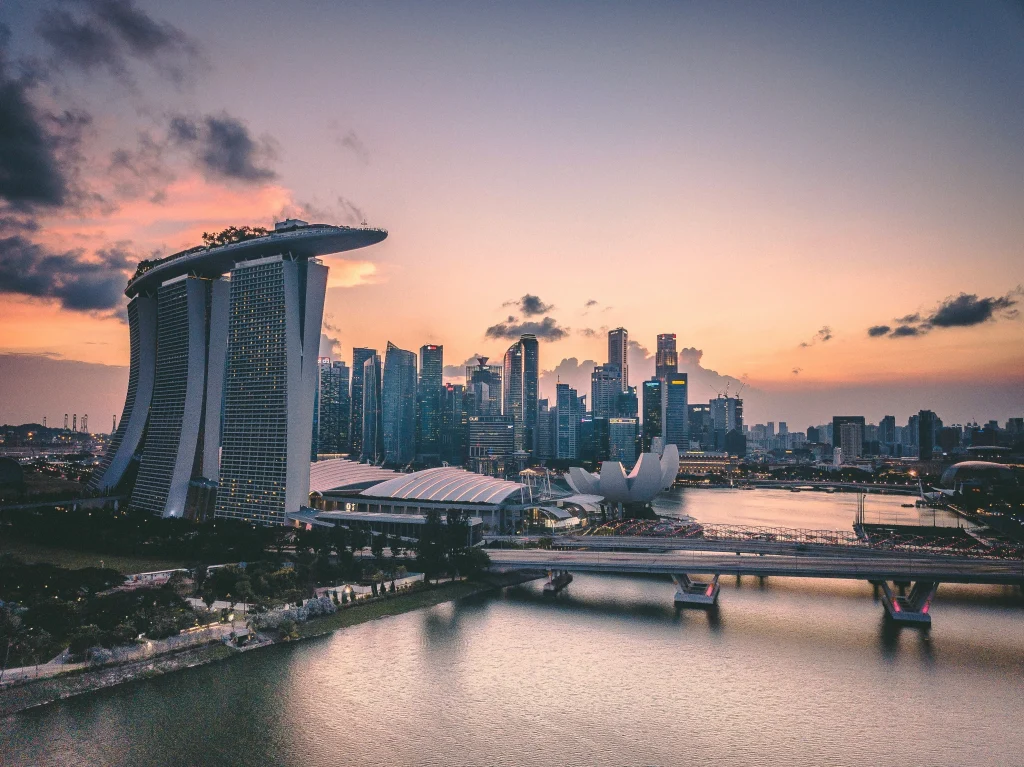
The GIP options are S$10 million in a new or growing Singapore business, or S$25 million in a GIP-select fund. A single family office qualifies with assets of S$200 million, of which S$50 million goes into Singapore.
Applicants also need a business track record, such as three years leading a company with yearly turnover of at least S$200 million.
Permanent residents need a Re-Entry Permit to travel, and GIP investors get one valid for five years. Since December 1, 2025, a permanent resident abroad without a valid permit has 180 days to apply for one.
The 180 days count from departure, or from the date the permit expired abroad. Permanent residence ends the day after a refusal, or the day after the 180 days if no application was made.
You remain a permanent resident for as long as the application is pending.
United States
As of November 2026, the Gold Card grants lawful permanent residence, the green card, in the EB-1 or EB-2 category. It rests on a gift to the Department of Commerce.
The gift is US$1 million for an individual, or US$2 million when a company gives on behalf of a person. Visa availability applies, and applicants from a small number of countries may wait a year or more.
The filing fee for Form I-140G is US$15,000 for each person in the petition. Each family member adds a further US$15,000 fee and a US$1 million gift.
How we counted
The law may call the first status permanent residence or a permit for an indefinite period.
Each country or territory counts once, with every qualifying option listed. A gift or one-time payment to the state that brings permanent residence counts as an investment, as with the US Gold Card.
A status counts even if it ends once you sell the investment. An interim permit issued to an applicant before approval, such as Malta’s one-year temporary permit, is not the first status.
A status with a fixed end date does not count. A status that is indefinite only for applicants above a set age does not count either.
Routes that grant permanent residence on day one with no investment form a separate group. Whether a status survives years abroad is also a separate question, covered in where permanent residence lasts through a long absence.
“The expiry date on the card is only one question,” argues Adam Juchniewicz, CEO of Bitcoin Lawyer. He believes that “the more useful question is what happens if you sell the investment, spend several years abroad, or need to bring your family back.”
“A minimum investment is an entry threshold, not the price of the whole plan,” Juchniewicz notes. He advises that you “count the fees, capital you must keep committed, property costs, and tax consequences before deciding which route is affordable.”
Routes left out
Brazil’s property route, a separate option, grants residence for four years first.
Nicaragua’s Law 1228 of 2024 grants permanent residence for three months to five years, renewable. The investor route from US$30,000 uses that permit.
The US EB-5 program grants conditional permanent resident status for two years. Investors must then file to remove the conditions.
Barbados grants its indefinite Special Entry Permit to applicants over 60. Applicants under 60 can apply for a temporary one.
Since May 2026, the Cayman Islands grants its Certificate of Permanent Residence for Persons of Independent Means for ten years. In the final year, you can apply to renew it indefinitely, at the authorities’ discretion.
Quebec’s investor program starts with a federal work permit. Investors must then live in Quebec for at least twelve months.
Pending changes
Turks and Caicos’ Parliament passed the Immigration Bill 2026 on October 22. Under the law, qualifying investors receive a renewable 25-year Long Term Residence Permit.
The government says investors with this permit will not qualify for permanent residence through it. Its target for the law to take effect is December 1, 2026, though November 14 is also possible.
Applications filed before then will be decided under the current rules, the government adds. Turks and Caicos leaves this count once the law takes effect.
Belize’s Cabinet approved a proposal for a US$500,000 investor route to permanent residence through commercial ventures. The route was not law as of November 2026.
Bulgaria’s bill to amend the Foreigners Act passed its first reading on September 16, 2026. The bill would cancel permanent residence for anyone who spent less than six months and one day in Bulgaria the previous calendar year.
It would also write the €511,291.88 investment figure into the Act.