

Despite volatile equity markets driven by simmering geopolitical tensions and their effects on the global economy, inflows into equity mutual funds have remained strong.
In January 2026, the equity funds category reported inflows for the 59th consecutive month, worth Rs 24,029 crore. And within the category, flexi-cap funds saw the largest inflows for the sixth consecutive month, attracting Rs 7,672 crore.
Given India’s bright long-term economic prospects and recognising that growth may be seen across market cap segments, yet unsure as to which specific market cap segment, flexi-cap funds are an appropriate choice.
The Shift to Safety: Why Managers Prefer Large-Caps Now
Flexicap funds invest a minimum of 65% into equities dynamically (without any upper or lower limit) across largecaps, midcaps, and smallcaps, depending on their outlook.
The fund managers of these funds usually follow a mix of top-down and bottom-up approaches, look at market cap valuations and the fundamentals of companies under consideration.
In the last one year, flexi-cap fund managers in India have made a significant flight to safety.
Currently, most have over 70% allocation to largecaps.
In comparison, two years ago, flexi-cap fund managers were more aggressive – chasing midcaps and smallcaps in the endeavour to clock better returns.
After seeing froth in midcaps and smallcaps in late 2024, most flexi-cap funds booked profits in these high-risk market segments and skewed their portfolio to large caps for stability amidst the heightened volatility.
This opportunistic and agile approach has yielded attractive returns.
Quite a few have been able to generate alpha, i.e. outperform the benchmark index – the Nifty 500 – Total Return Index (TRI) on longer periods (3 years, 5 years and 7 years). In other words, they have benefited from the wealth-multiplying ability of midcaps and smallcaps, and the stability of largecaps.
Moreover, among the flexi-cap funds that have been around for a long time, some have demonstrated the ability to arrest downside risk with a dynamic approach.
Is it a good time to invest now, and how are valuations placed?
The price-to-equity (PE) ratio of the Nifty 500 index is currently at 23.6 (as of 24 February 2026), near the 5 –year median, down from 28 at the peak in September 2024.
PE of the Nifty 500 Index
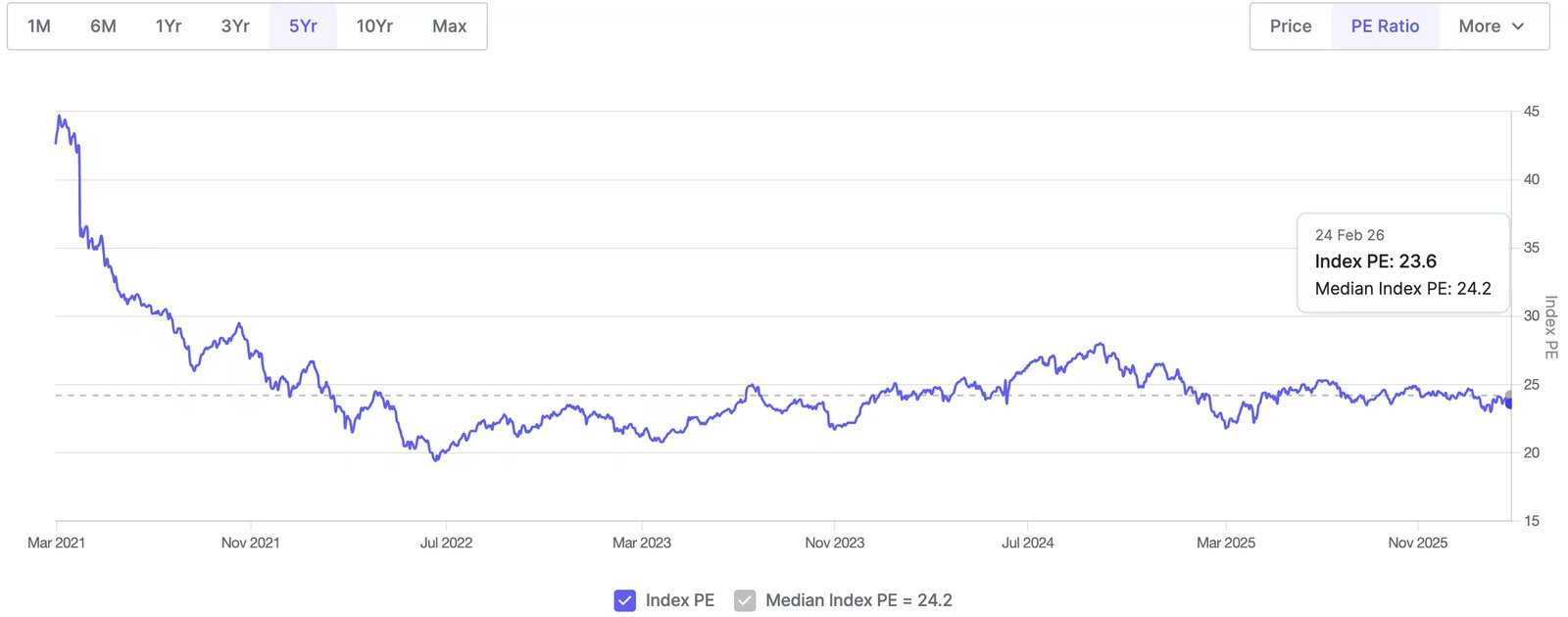
The correction in the Indian equity market offers a good opportunity to invest in equities.
After a volatile 2025, the froth has largely settled, and the market is entering a phase where earnings growth is finally catching up to stock prices.
But it makes sense to invest with a dynamic or a flexi-cap approach. A flexi-cap fund manager can strategically approach market-cap segments where growth at reasonable prices is seen.
The key lies in your fund selection.
You need a flexi-cap fund that is not just the best on returns, but also one that has kept risk in check, has worthy portfolio characteristics, and has fared well on a risk-adjusted basis.
A flexi-cap fund should be such that it deserves to be a part of your core equity mutual fund portfolio. This is assuming you have the stomach for high risk and an investment horizon of at least 5-7 years or more.
In my view, here are some of the best-managed flexi-cap mutual funds in India today.
The Top 3 Flexi-Cap Funds for 2026 Portfolio
The top 3 flexi-cap funds, considering portfolio characteristics, longer period returns and risk ratios, are:
Performance of the Top 3 Flexi-cap Funds
The Portfolio Characteristics of the Top 3 Flexi-cap Funds
| No. of Stocks | Top 10 Stock (%) | Top 3 Sectors (%) | PB Ratio | PE Ratio | |
| HDFC Flexi Cap Fund | 50 | 48.5 | 61.7 | 2.9 | 21.1 |
| Parag Parikh Flexi Cap Fund | 86* | 48.0 | 55.4 | 3.2 | 17.7 |
| Franklin India Flexi Cap Fund | 55 | 44.5 | 58.3 | 3.4 | 25.5 |
Source: Fund Factsheets
Let’s delve deeper and understand why these are among the best flexi-cap funds in India today.
#1 HDFC Flexi Cap Funds
This scheme was launched in January 1995, originally as the Zurich India Equity Fund. After HDFC Mutual Fund acquired Zurich India Mutual Fund in June 2003, this scheme was renamed HDFC Equity Fund.
Thereafter, in January 2021, to align with SEBI categorisation and rationalisation norms, the scheme was rechristened as HDFC Flexi Cap Fund.
Over its 31-year history, several star fund managers, such as Prashant Jain, Roshi Jain, and Chirag Setalvad, have handled this fund.
After Prashant Jain (who managed the fund for 19 years), Roshi Jain took over, and very recently, after her exit from HDFC Mutual Fund on 31 December 2025, Chirag Setalvad took over for a brief period of one month.
From February 2026, the fund is managed by Amit Ganatra, who is a senior equity fund manager, along with Dhruv Muchhal, an equity fund analyst and fund Manager for overseas investments.
The fund has displayed an impeccable track record under various fund managers with robust investment processes and systems followed.
As per the January 2026 portfolio, the fund manages a massive Rs 97,452 crore, being the second largest in the flexi-cap funds category.
Currently, the fund is holding around 82% of its assets in equities, 2% in REITs, 0.5% in debt instruments (mainly G-secs), and a significant 15% in cash & cash equivalents (mainly in tri-party repos or TREPs).
The high cash holdings indicate that the fund manager is keeping power dry and managing inflows into the fund carefully amid volatile markets.
In the past, too, the fund has taken tactical cash calls. For example, just before the COVID-19 crash and during the taper tantrum of 2013-14. That said, the allocation levels were below 10% then.
You see, while high cash calls help limit the downside risk, the flip side is that if the market moves up, the fund loses out on the upside potential.
The current equity portfolio reveals that the fund is holding a fairly diversified portfolio of 50 stocks, of which around 86% are largecaps, 5% midcaps, and 9% smallcaps.
This allocation is perhaps considering the present market volatility against the backdrop of geopolitical tensions – Trump 2.0’s tariff tantrums, the US’s increasing interventionism in the affairs of other countries, tensions in the Middle East and the ongoing Russia-Ukraine war, among others.
The top 10 stocks are currently 48.5%, and include names such as ICICI Bank, HDFC Bank, Axis Bank, SBI, SBI Life Insurance Company, etc.
Top Holdings of HDFC Flexi Cap Fund
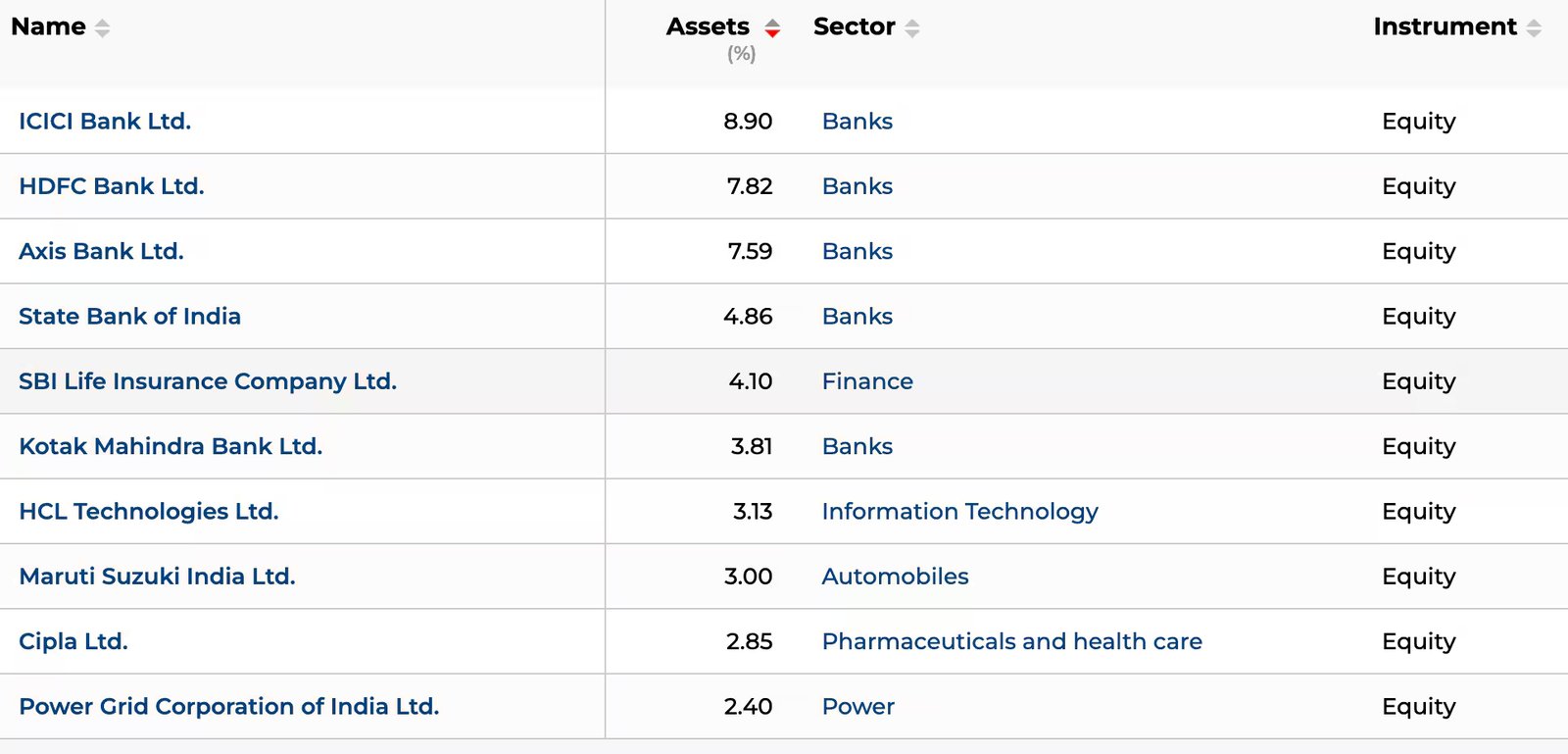
source: fund factsheet
The fund has a higher concentration in certain sectors. Currently, it is banks & financial services, auto & auto components, and pharma & healthcare, among others.
The valuation ratios – PB and PE – reveal that the fund is quite conscious of the value but also seeks growth at a reasonable price.
And to reap the full growth potential of stocks in the portfolio, the HDFC Flexi Cap Fund follows a strict buy-and-hold strategy.
Its portfolio turnover ratio in the last one year has ranged from 9% to 33%. The latest portfolio turnover as of January 2026 is just 9.5% under the new fund manager. This is exceptionally low compared to some of its peers and shows the conviction with which the portfolio is held.
It is quite selective of the companies it invests in. It considers companies that are likely to achieve above-average growth, enjoying distinct competitive advantages, and having superior financial strength.
In terms of style, the fund follows a blend of growth and value investing to generate optimal returns.
With such an approach, the fund has yielded a CAGR of 21.1% and 19.7% over the last 5 years and 7 years, respectively, outperforming the category average and its benchmark index (as of 16 February 2026).
Moreover, the fund has exposed investors to less risk (standard deviation of 10.3%) and generated superior risk-adjusted returns (Sharpe ratio of 1.44). In other words, HDFC Flexi Cap Fund is an above-average performer on a risk-adjusted basis.
#2 Parag Parikh Flexi Cap Fund
This fund was launched in May 2013 as Parag Parikh Long Term Value Fund. It initially followed a multi-cap approach with a value style of investing.
However, after the SEBI mutual fund categorisation norms took effect, and the flexi-cap fund category was introduced in November 2020, it was rechristened as Parag Parikh Flexi Cap Fund in the following month.
Since its launch, the fund has exhibited an impressive performance track record.
As a result, the fund has seen inflows over the years, and today, as per the January 2026 portfolio, it is the largest flexi-cap fund in India, managing assets of over Rs 1,33,970 crore.
Since its inception, this fund has been managed by Rajeev Thakkar (CIO – Equity) and Raunak Onkar (Head of Research & Overseas Equity). Both are veterans with decades of experience in fund management. With effect from May 2022, Rukun Tarachandani is also co-managing the fund. He has over a decade of experience in equity research, arbitrage, and fund management.
Parag Parikh Flexi Cap Fund focuses on attractively priced stocks, following a value style to reduce downside risk and benefit from the subsequent uptick in the market.
The investment team emphasises quality over quick returns, preferring companies with durable business models, competent management, and predictable cash flows. A bottom-up approach is followed to identify fundamentally sound domestic equities.
Currently, the fund has 68% in domestic equities (including 2.5% in arbitrage and special situations), nearly 12% in overseas equities, 18% in debt & money market instruments (including CDs, CPs and T-bills), and around 1% in REITs.
As regards their cash allocation, if arbitrage positions and money market instruments (CDs, CPs and T-bills) are considered, the fund is holding 20.9%. Such allocation is typically to cushion the downside risk, and whenever valuations look attractive, appropriately deploy it in equities.
The present equity portfolio has 86 stocks, including the arbitrage positions. A dominant 93% is in largecaps, and around 3% each in midcaps and smallcaps. This is perhaps because the fund house still sees some froth in mid and smallcaps. It currently prefers largecaps for stable returns.
The top 10 stocks are currently 48%, and include names such as HDFC Bank, Power Grid, Coal India, ITC, etc., making it fairly diversified.
Top Holdings of Parag Parikh Flexi Cap Fund
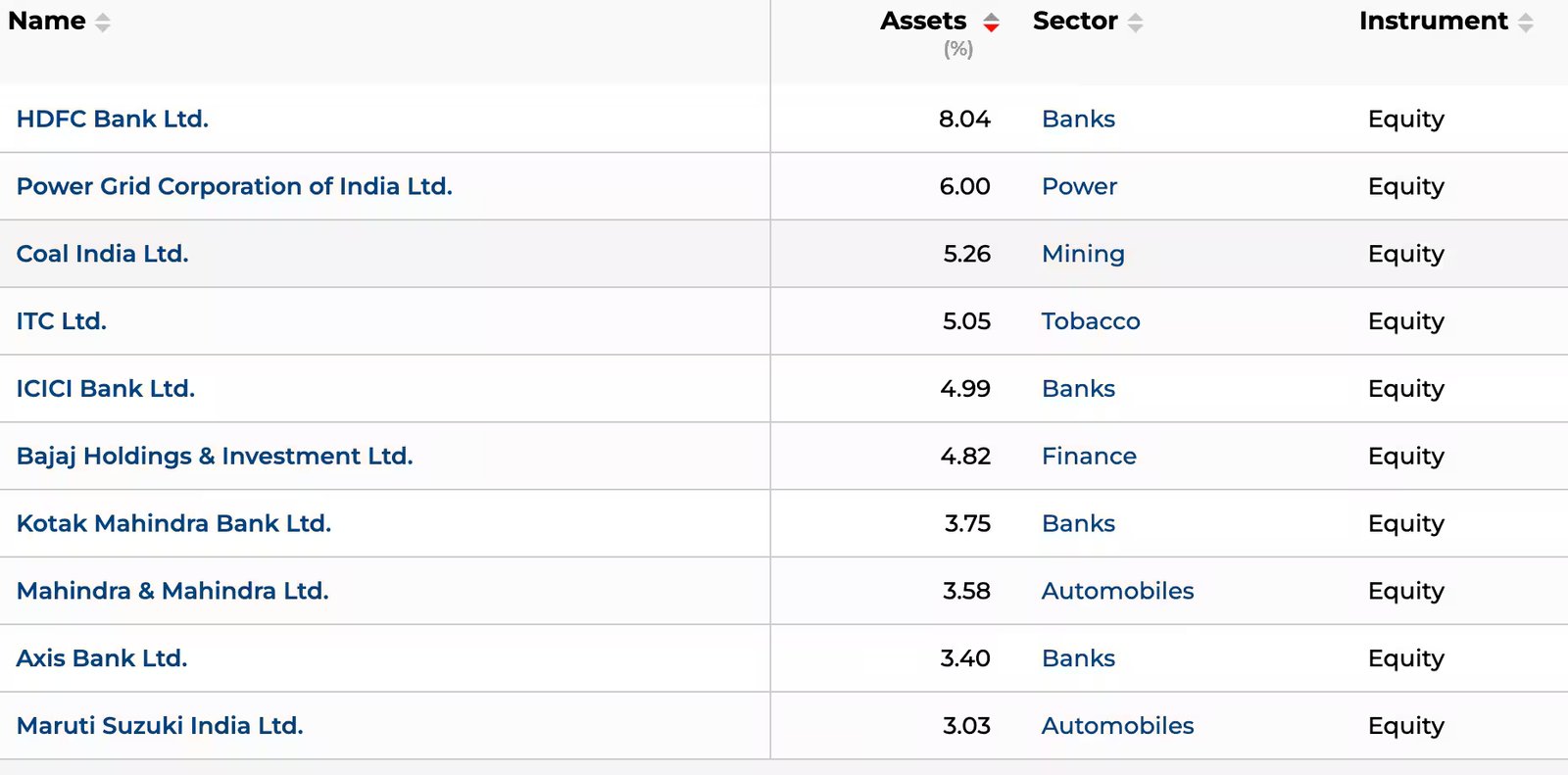
source: fund factsheet
The fund also offers geographical diversification by holding a substantial portion of its portfolio in a few select global giants.
The current portfolio includes foreign equities, such as Alphabet (Google), Microsoft, Amazon, Meta, etc. Being value-conscious, the fund has avoided certain magnificent seven stocks, such as Nvidia, Apple, and Tesla.
Parag Parikh Flexi Cap Fund’s portfolio has a slightly lower PE than the HDFC Flexi Cap Fund, although their PB ratios are sort of similar.
The fund has held its portfolio with conviction and a long-term view. The portfolio turnover has ranged between 13-19%. As per the January 2026 portfolio, it was nearly 14%, reflecting its buy-and-hold investment philosophy.
This strategy followed by the fund, has yielded appealing returns.
In the last 5 years and 7 years, the fund has clocked a CAGR of 18.5% and 20.8%, respectively, outshining the category average and the benchmark.
It has exposed investors to lower risk (standard deviation of 8.3%) than the category average and benchmark, and on a risk-adjusted basis (Sharpe ratio of 1.68), has handsomely rewarded investors.
#3 Franklin India Flexi Cap Fund
This fund was launched in September 1994 as the Kothari Pioneer Prima Plus Fund before the acquisition of Franklin Templeton Mutual Fund.
Thereafter, when Franklin Templeton Mutual Fund acquired Kothari Pioneer Mutual Fund (which had rebranded to Pioneer ITI) in July 2002, it became the Franklin India Prima Plus Fund.
Later, the fund was renamed to Franklin India Equity Fund in June 2018 and followed a multi-cap approach.
After the regulator permitted a flexi-cap category in late 2020, the fundamental attributes of this scheme were changed to follow a flexi-cap approach, and it was recategorised and rechristened as Franklin India Flexi Cap Fund.
Over the years, backed by its appealing performance, the assets of the fund have grown. As per the January 2026 portfolio, the fund manages an AUM of Rs 19,528 crore.
In its 3-decade-long history, several fund managers have handled the fund. Currently, R. Janakiraman (CIO – Equity), Sandeep Manam (who specialises in managing the overseas equity portion) and Rajasa Kakulavarapu co-manage the fund.
The fund managers consider market conditions, the fundamentals of the companies, valuations and liquidity, among a host of other factors, when approaching market cap segments.
A blend of value and growth style of investing is followed, and stocks are approached bottom-up across sectors.
The fund prefers wealth-creating companies across sectors with a core focus on the fundamentally healthy ones in growth-oriented businesses. It decides the market-cap allocation on the relative opportunities available.
As per the January 2026 portfolio, the fund has 95% of its total assets in equities, 0.4% in debt (mainly in sovereigns), and around 4% in cash & cash equivalents (TREPs and reverse repos). In other words, it remains mainly invested in equities.
The fund currently has 55 stocks in its portfolio, of which 81% are largecaps, 12% midcaps, and 8% smallcaps.
The top 10 stocks comprise 44.5% of the portfolio – seem well-diversified – and include names such as HDFC Bank, ICICI Bank, Axis Bank, L&T, etc.
Top Holdings of Franklin India Flexi Cap Fund
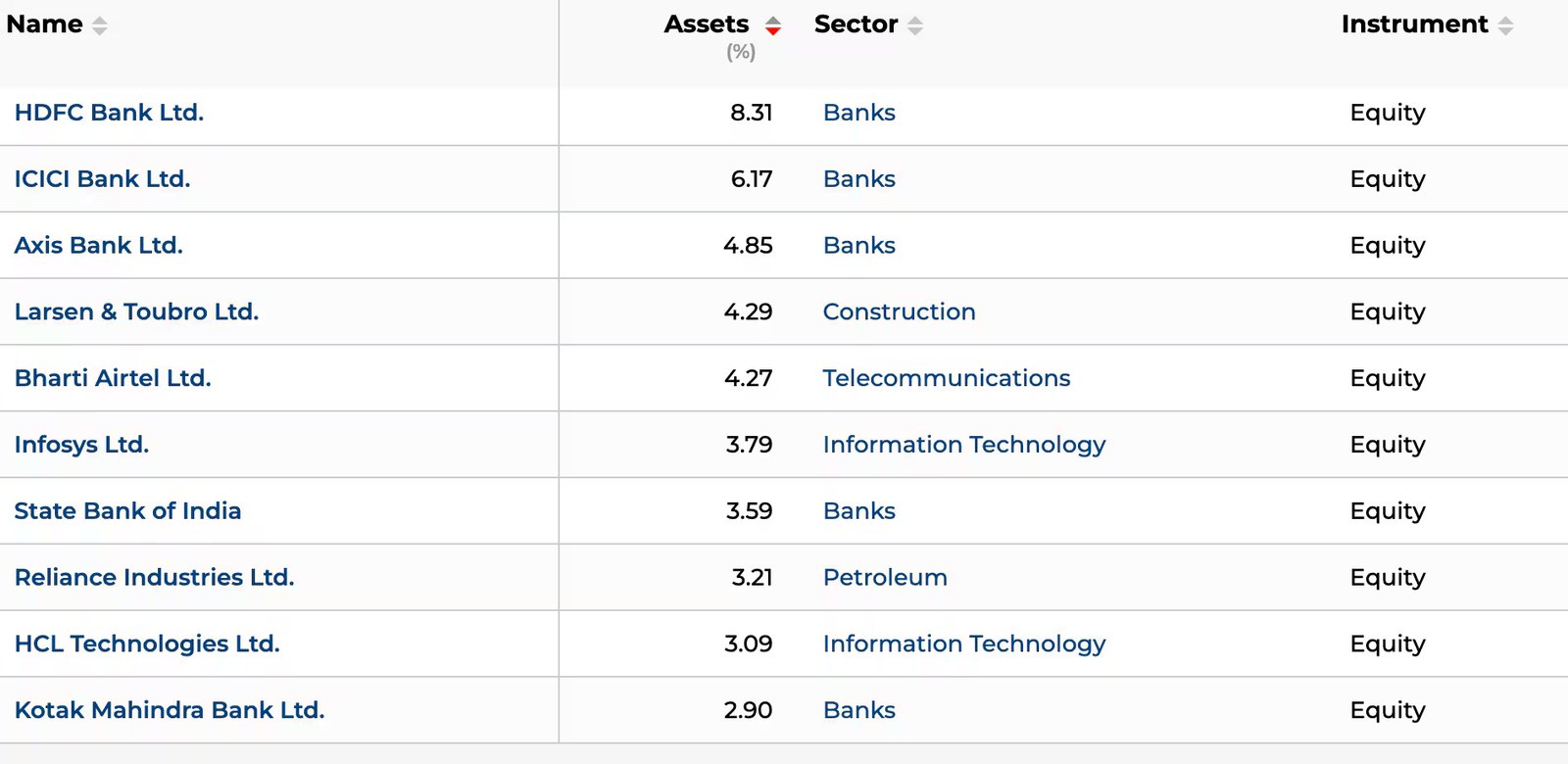
source: fund factsheet
The fund’s portfolio is concentrated to top 3 sectors, which include banks & financial services, IT, and industrials/engineering.
When investing, the fund is conscious of valuations but is slightly aggressive compared to the HDFC Flexi Cap Fund and Parag Parikh Flexi Cap Fund, as it prefers high-growth oriented companies.
Overall, the fund holds its portfolio with conviction and keeps its churn low. In the last one year, the portfolio turnover ratio of the fund was in the range of 23-27%. As per the January 2026 portfolio, it is 24% — in other words, about one-fourth of the portfolio is replaced.
With the strategy followed, the fund has clocked decent returns. Over the last 5 years and 7 years, the fund has clocked a CAGR of 16.7% and 17.5%, respectively.
The risk taken by the fund (standard deviation of 12.8%) is slightly below the category average, and on a risk-adjusted basis (Sharpe ratio of 0.86), it is an above-average contender.
To conclude
These funds, with their worthy portfolio characteristics and coming from fund houses following robust investment processes and systems, are expected to fare well even in the future.
At present, given the headwinds and volatility equity markets are facing, it makes sense to take the SIP route to mitigate the risk with the inherent rupee-cost averaging feature or make staggered lump sum investments.
Invest thoughtfully, considering your personal risk profile, broader investment objective, the financial goal/s you are addressing, and the time horizon.
And finally, keep your return expectations rational.
Remember, for every level of return you seek, there is risk. Further, it’s not always true that high risk will translate into higher returns.
Happy investing!
Note: We have relied on data from www.valueresearchonline.com, www.financialexpress.com, and the factsheets published by the respective fund houses throughout this article. Only in cases where the data was not available, have we used an alternate, but widely used and accepted source of information.
Returns data as of 24 February 2026. Direct Plan and Growth Option Considered. The Risk Measures have been calculated using calendar month returns for the last three years. The Risk Measures have been calculated using calendar month returns for the last three years and are as of 31 January 2026.
Standard Deviation is a measure of the total volatility of the fund. The Sharpe Ratio is a measure of risk-adjusted return that shows how much excess return an investment generates for each unit of risk taken.
Portfolio data as of 31 January 2026. The average of the price-to-book value ratios and price-to-equity ratios of all underlying stock holdings in proportion to their portfolio weights is considered.
Disclaimer:
The above content is for informational purposes only. Mutual Fund investments are subject to market risks. Please consult your financial advisor before investing.
Rounaq Neroy has over 20 years of experience in the financial markets and investments. He is a close observer of the Indian economy and writes deeply on the capital markets, mutual funds, stocks, precious metals, asset allocation, wealth management, and investment strategy. His editorials provide interesting, actionable investment ideas to guide readers in the journey of wealth creation and make wise decisions. Rounaq was the Head of Content at PersonalFN (Quantum Information Services Pvt. Ltd.), which also owns Equitymaster.com – India’s oldest and trusted equity research house.