
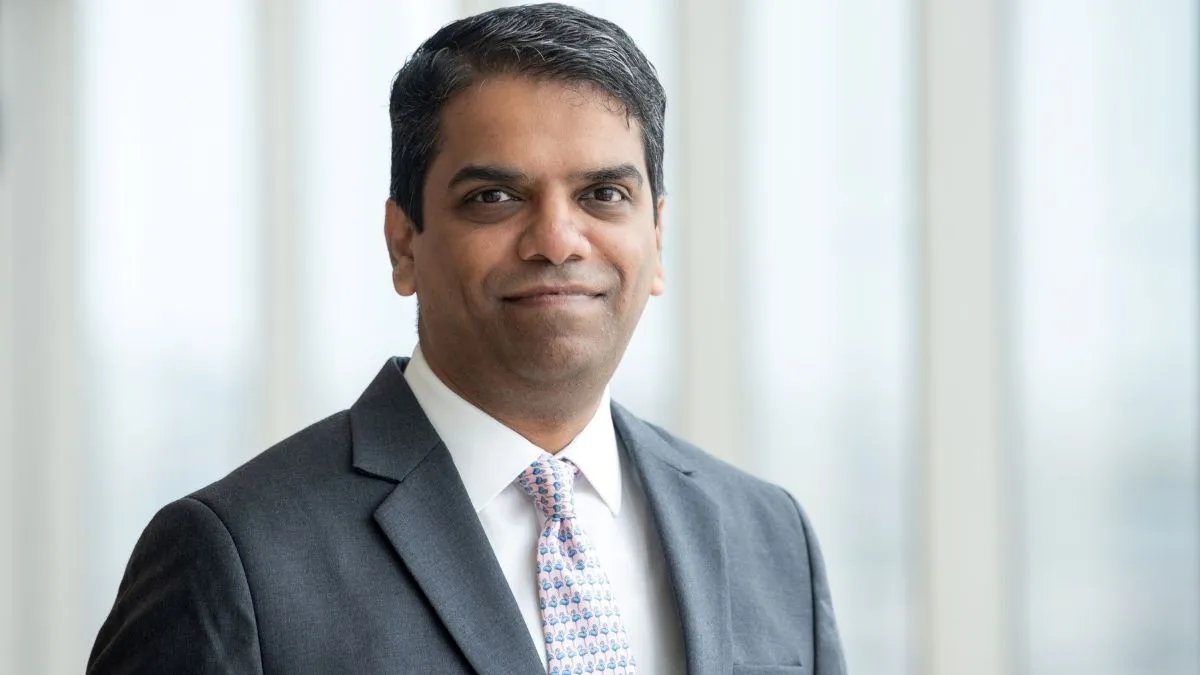
Anand Vardarajan, CEO & MD, Tata Mutual Fund, believes Indian markets have sufficient liquidity to absorb large IPOs without affecting flows into the secondary market. He tells Kushan Shah that specialised investment funds (SIFs) could also grow much faster than mutual funds did to reach assets of Rs 10 lakh crore. Excerpts:
How do you see valuations across market caps? Do you expect investor interest in large caps to revive?
Large caps are a little undervalued, but they have not seen much investor interest, especially in the mutual fund space. Fund flows have followed earnings growth and market opportunities, and a larger share of that growth has recently been visible outside the large-cap segment. Markets have also become broader in recent years, with a lot of the action shifting to mid- and small-cap stocks.
As markets evolve, asset allocation tends to balance growth prospects and valuations. We could see investor interest gradually broaden across market caps, including large caps, while mid and small caps continue to remain an important part of portfolios.
Several big IPOs have hit the market. Is there sufficient liquidity to support both primary and secondary markets?
If we look at primary and secondary market flows over the past few weeks, there has been no pressure on secondary markets because of IPOs. Looking at the bigger picture, household savings are about 22% of GDP, of which only a fraction is currently invested in equities. There are close to 25 crore demat investors in India, compared with only around 60 million mutual fund investors.
As we move forward, the investor base will continue to expand, providing sufficient liquidity for both primary and secondary markets.
Given the muted equity-market returns over the past two years, are high SIP inflows sustainable?
There are two types of market corrections: price corrections and time corrections. While price corrections are more visible, time corrections — prolonged periods of muted returns — often test investor patience even more.
The fact that domestic investors have continued to participate in the markets through SIPs over the past two years shows the resilience and maturity of new-age investors. As awareness of long-term investing improves, we remain very constructive on the outlook for SIPs.
SIFs have seen strong growth in their first year. How do you see their prospects?
SIFs have a significant opportunity because mutual funds are largely unidirectional due to their long-only exposure, while SIFs can also express a negative view through short exposure and potentially benefit in falling markets. They address an important gap between traditional mutual funds and alternative investment products by giving investors access to a wider range of strategies across different market environments.
At the industry level, SIFs have the potential to scale rapidly by offering diversified return streams, lower volatility and better post-tax risk-adjusted outcomes. Active mutual funds took about 15 years to grow from Rs 1 lakh crore to Rs 10 lakh crore, while passive funds took about six years. I don’t think SIFs will take that long.
SIFs and the newly proposed MF-PMS framework will help bridge the product gap between mutual funds and alternative investments such as PMS and AIFs.
Passive funds have seen substantial investor interest. Do you expect them to continue growing rapidly?
Passives are growing faster than the overall industry. Passive fund AUM has risen from well below Rs 1 lakh crore in 2018 to more than Rs 15 lakh crore, an increase of over 15 times. We have also seen significant allocations to gold and silver over the past two years. The passive segment should continue to grow at a rapid pace.