
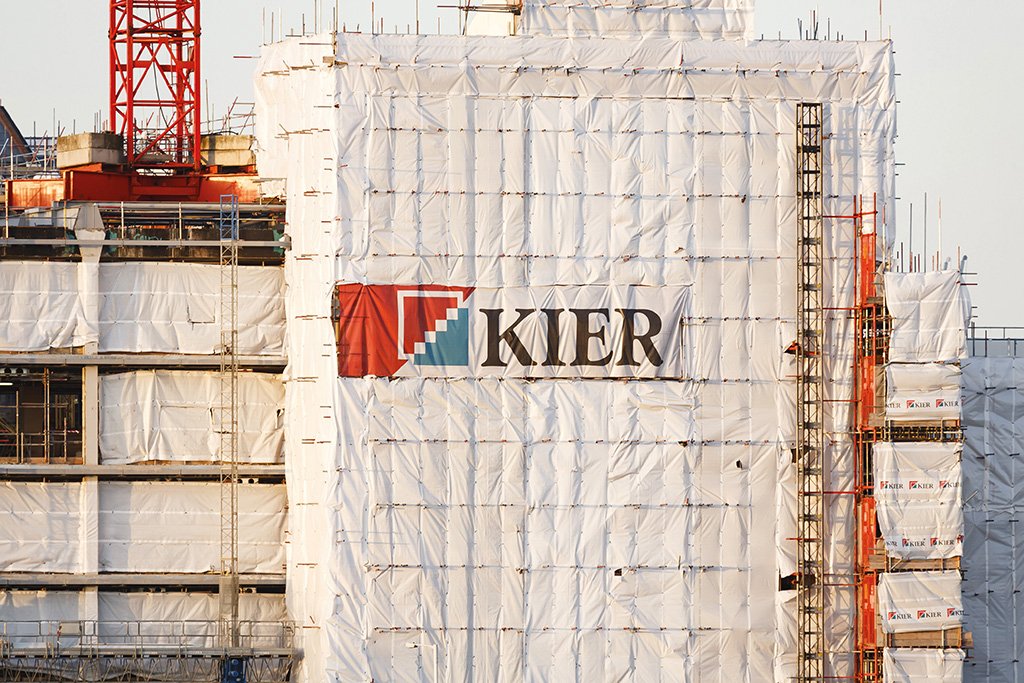
Kier is pulling out of property investment to focus on construction and infrastructure, as well as strengthening its balance sheet.
Unveiling its full year results to 30 June 2026, the company said from 2027, there will be “no investment in new property development opportunities”.
The tier one contractor said the pull-back from property development would be done in a “controlled way to balance timing and value, with capital to be realised in line with existing development schedules”.
Kier’s property business brought in £63m in the year to the end of June 2026, compared with £38m in 2025. But operating profit fell by 25.4 per cent over the period, which, the company said was largely down to the timing of transactions that had been impacted by the “wider macroeconomic turbulence”.
Kier’s chief executive Stuart Togwell said the capital being put into property investment will be better used elsewhere.
“I like the idea of simplifying my model and making the most of the opportunity that’s in front of me,” he told Construction News. “And I do want to continue to put resilience into my balance sheet, so I have more options.
“The problem with property, is that it takes three to five years from when you seed the money. With the current volatility, that takes away some options.
“If we see a tentative M&A, I want to have the ability to consider that. And moving away from property and putting the money onto my balance sheet does that for me. Also, we’ve got the option to not refinance our bond in 2029. That’s a big prize for me in terms of building up the cash on the balance sheet.”
Strengthening its cash position is a strategic priority for Kier. The group’s net cash at the end of June 2026 was 14 per cent higher than in the precious year at £232.4m.
This gave it an average net cash position of £10.7m, compared with a net debt figure of £49.2m in 2025. “This financial milestone reflects the focus on operational delivery and cash management throughout the business and further reinforces the group’s disciplined approach to capital allocation, balancing growth, resilience and shareholder returns,” Kier said in its accounts.
As a group, Kier posted a 7.5 per cent rise in revenue to £4.4bn (2025: £4.1bn). Pre-tax profit for the year to 30 June 2026 came in at £136.4m, an 8.8 per cent increase from the £125.4m figure for 2025. The dividend on Kier shares rose from 7.2p to 7.8p per share, and basic earnings per share (EPS) rose 10.2 per cent to 14.1p per share.
Maintaining double-digit EPS growth is also a specific target for Togwell, which he described as “the most important thing”.
“It’s not rocket science,” he told CN. “It’s looking at it in terms of ‘where are you strong and where can you grow from?’ And it was clear to me it was from the infrastructure and construction business.”
Revenue growth going forward, Kier said, was largely underpinned by the 8 per cent rise in the group’s order book to a record £11.9bn by the end of June 2026, which secures more than 95 per cent of the group’s forecast revenues for 2027.
“If you include the £2bn I’ve got in PCSA (Pre-Construction Services Agreements), I’m already looking at two to three years’ worth of work [that is] currently secured,” Togwell told CN. “And then if you look at the drawdown of pipeline opportunities that we’re looking ahead at in the next six months, there’s about £65bn of work coming through to win off the existing £200bn frameworks we’ve got, which will give me work for five years.”
In its infrastructure division, Kier saw revenue rise 10 per cent to £2.3bn, with operating profit up 23 per cent to £109.8m. The infrastructure division’s order book grew 14 per cent to £7.4bn, with notable project and framework wins including Sizewell C’s North Plaza (a £38bn project) and a £968m legacy concrete roads framework with National Highways.
The group also saw significant strength in water business, with a £140m extension of the Network Services Alliance framework at South West Water and a quality improvement contract at Maple Lodge worth up to £280m with Thames Water.
“We’re in all the right places,” Togwell told CN. “In terms of the sectors, we’ve positioned ourselves really well in terms of water. I’ve got 140 live projects in water and 100 in ECI (Early Contractor Involvement).
“If you look at the energy market off the back of the nuclear sector, we’re set to grow that business, double it in fact, in the next three years. In the defence sector, we can [more than] double in the next three years.”
Revenue at Kier’s construction business rose 4 per cent to £1.99bn, but reported operating profit fell 19 per cent to £44.3m, owing to costs of £32m relating to cladding compliance.
Meanwhile, the construction division’s order book was steady at £4.5bn. That figure does not include Kier’s £500m Hinchingbrooke Hospital redevelopment contract, which was won after the year end.
“The construction business is a bit like a swan going across the lake – it looks calm, but underneath it, it all goes on,” Togwell told CN. “And you have different sectors that have increased spend profile and then they change. So, at the moment, we’ve got a transition from justice, which has been incredibly strong for us. We’re replacing it with defence work.”
To a large extent, Togwell remains fairly sanguine about economic headwinds, such as the effects of the Iran war on energy and material prices, which are currently battering the UK construction sector.
“Remember, 60 per cent of our work is cost-reimbursable,” he said. “And 35 per cent of the remaining 40 per cent is on a two-stage basis. So, we have a year to 18 months to fix costs. So, costs are going up, but we’ve got time to fix it and we’ve got time to be working with customers with alternatives to make sure that we can still deliver value for money.”
As such, Togwell believes Kier is well-positioned in its markets and is upbeat about the company’s prospects going forward.
“We’ve learned lessons hard in the past,” he told CN. “We’re not going to grow at any cost, but we’re feeling very, very confident [that] we’re in the right sectors and we’ve got the right capabilities. And more importantly, the right relationships with customers. They trust us to deliver their projects and we do.”