


Close Menu
Fund Focus News
    Facebook X (Twitter) Instagram
    Trending
    • How to choose small-cap mutual funds and avoid chasing past returns
    • Building crores without perfect plans or ‘best’ mutual funds: 10 lessons from 3 techies – Money News
    • Multi-cap vs multi-asset allocation mutual funds returns race: Key differences, 1, 3 and 5-year returns compared here
    • Crypto ETFs Lose $610 Million as Ethereum Outflows Overtake Bitcoin
    • He started with ‘very bad’ mutual funds, yet built Rs 1 crore corpus at 29 – Money News
    • Best thematic factor-based mutual funds 2026: Which equity schemes lead in 1- 3- and 5-year CAGR returns?
    • A simple and easy-to-understand explanation of the differences, relationship, and management methods of ETFs and mutual funds
    • “Should have stopped it even by lying down” — Leveraged ETFs that wiped out 2 trillion won in retail investor funds reignited at the Financial Supervisory Service National Assembly audit
    Facebook X (Twitter) Instagram
    Fund Focus News
    • Home
    • Bonds
    • ETFs
    • Funds
    • Investments
    • Mutual Funds
    • Property Investments
    • SIP
    Fund Focus News
    Home»Property Investments»Property Funds | Commercial Investment Sector Research & Review
    Property Investments

    Property Funds | Commercial Investment Sector Research & Review

    February 23, 2026


    Josef Licsauer

    Investing in property is much more than just buy-to-let. While there aren’t many funds that invest in residential property, commercial property offers plenty of investment opportunities. It’s broadly divided into three areas: retail, industrial and office. Most investors access this part of the market through property funds or REITs (Real Estate Investment Trusts).

    There are two IA (Investment Association) fund sectors devoted to property. The IA UK Direct Property sector contains funds that invest in bricks & mortar. The IA Property Other sector includes funds that invest elsewhere, such as overseas or in property company shares.

    Scroll across to see the full image.
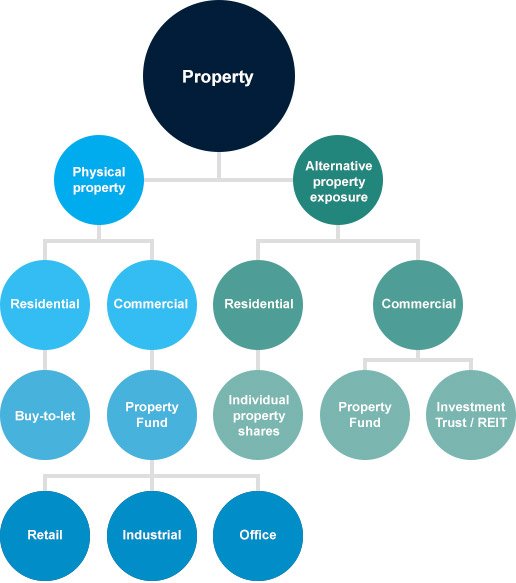
    Tree diagram showing the different forms property investing can take - full description below


    • Can’t view this image?

      The image above demonstrates the different forms property investing can take. It’s structured as a tree diagram of different size and coloured circles, with ‘Property’ at the top.

      ‘Property’ then branches down into ‘Physical property’ and ‘Alternative property exposure’.

      Physical property splits off into two branches of ‘Residential’ and ‘Buy-to-let’ on one side, with ‘Commercial’ and ‘Property fund’ on the other. Property fund then divides into ‘Retail’, ‘Industrial’ and ‘Office’.

      Alternative property exposure splits into ‘Residential’ and ‘individual property shares’ on one side, with ‘Commercial’ and it’s sub categories of ‘Property fund’ and ‘Investment Trust/REIT’ on the other.


    Our view on the Property sector

    The performance of property funds usually depends on how the economy’s doing. In good times demand for property increases. This pushes up rents and property prices and encourages more construction. During slowdowns or recessions the opposite happens.

    Commercial property is normally preferred by investors in need of an income. That’s because most of the returns come from rental income. As with any investment the value of property investments and the income they could provide can fall as well as rise.

    Funds investing in physical property

    Property funds that invest directly in bricks and mortar are popular with investors, but we don’t think they’re the best way to invest. This is because commercial property is illiquid so it’s not easily bought and sold. It’s time-consuming, labour-intensive, and expensive.

    This creates problems for fund managers. Investors usually want to put a lot of money into their funds when performance is good, and the outlook is rosy. But because it can take months to find and buy suitable properties, the manager often ends up holding a lot of cash and missing out on rising property prices.

    Similarly, when the outlook isn’t so good, or when performance has been poor, investors tend to sell property funds. This often forces the manager to sell properties in order to give investors their money back. The best properties are often quickest and easiest to sell, so remaining investors can be left with less attractive investments.

    To help with this issue fund managers adjust the pricing of their funds and can stop investors trading them. These decisions are not taken lightly and only in extreme circumstances. It does mean you could receive less than you expect when selling a property fund, or not be able to sell at all for a period of time.

    This can hurt the fund’s performance and means returns aren’t solely down to the skill of the fund manager. The high costs associated with buying and selling property also eats into the income received by investors, more so than when buying and selling shares.

    Funds investing in property company shares

    These funds work in a similar way to funds that invest in company shares. The value of the fund is directly linked to the value of the shares the manager invests in.

    They mostly invest in REITs. REITs own and operate a variety of properties and are looked after by an expert management team. This helps to spread risk and means they don’t rely on a small number of properties.

    You can also invest in REITs, and other property-related investment trusts, directly. These don’t have the same problems as unit trusts when large numbers of investors try to buy and sell at the same time. But it’s possible for the shares in the REIT or investment trust to trade below (or above) the value of the properties they invest in. This is known as trading at a discount (or premium).

    Investment trusts can also borrow money to invest, often called gearing. This can improve returns when markets are rising, but increases losses in falling markets, so it’s higher risk.

    We think investors who want to invest in a specialist area should make sure it forms a small portion of a diversified portfolio.


    Source link

    Share. Facebook Twitter Pinterest LinkedIn Tumblr Telegram Email

    Related Posts

    Pension Insurance Corporation to halt direct property investment

    October 15, 2026

    Property resilience investments outpace insurer recognition

    September 29, 2026

    Are investors ready for the commercial property pivot?

    September 23, 2026
    Leave A Reply Cancel Reply

    Top Posts

    Property Funds | Commercial Investment Sector Research & Review

    February 23, 2026

    Government Bonds vs. Individual Government Bonds: What Changes If You Use Them Early? Comparing 3.1% and 2.05% After 3 Years

    October 17, 2026

    Crypto ETFs Lose $610 Million as Ethereum Outflows Overtake Bitcoin

    October 18, 2026

    How to choose small-cap mutual funds and avoid chasing past returns

    October 18, 2026
    Don't Miss
    Mutual Funds

    How to choose small-cap mutual funds and avoid chasing past returns

    October 18, 2026

    Small-cap mutual fund rankings can change sharply from one year to the next, making it…

    Building crores without perfect plans or ‘best’ mutual funds: 10 lessons from 3 techies – Money News

    October 18, 2026

    Multi-cap vs multi-asset allocation mutual funds returns race: Key differences, 1, 3 and 5-year returns compared here

    October 18, 2026

    Crypto ETFs Lose $610 Million as Ethereum Outflows Overtake Bitcoin

    October 18, 2026
    Stay In Touch
    • Facebook
    • Twitter
    • Pinterest
    • Instagram
    • YouTube
    • Vimeo
    EDITOR'S PICK

    Beyond Bluechips: Top 5 thematic funds for your 2026 portfolio – Mutual Funds News

    March 6, 2026

    Gold ETFs vs Silver ETFs: Both deliver up to 47% returns in 1 year – Where should you invest now? – Money News

    September 8, 2025

    The Retirement Funds Boomers Rely on Most — and Why Rising Generations Will Need a New Strategy

    August 8, 2025
    Our Picks

    How to choose small-cap mutual funds and avoid chasing past returns

    October 18, 2026

    Building crores without perfect plans or ‘best’ mutual funds: 10 lessons from 3 techies – Money News

    October 18, 2026

    Multi-cap vs multi-asset allocation mutual funds returns race: Key differences, 1, 3 and 5-year returns compared here

    October 18, 2026
    Most Popular

    🔥Juve target Chukwuemeka, Inter raise funds, Elmas bid in play 🤑

    August 20, 2025

    💵 Libra responds after Flamengo takes legal action and ‘freezes’ funds

    September 26, 2025

    🇮🇸 CPP Investments and Equinix complete atNorth acquisition to support growth of leading Nordic data center platform

    September 1, 2026
    © 2026 Fund Focus News
    • Get In Touch
    • Privacy Policy
    • Terms and Conditions

    Type above and press Enter to search. Press Esc to cancel.