
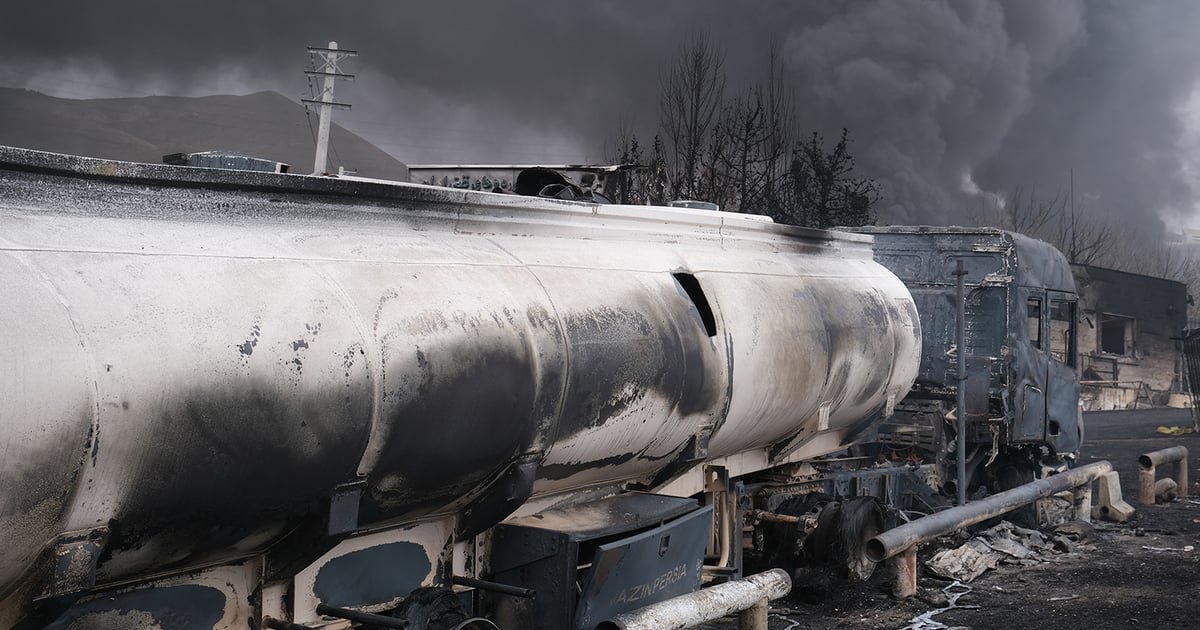
For ETF investors looking to put the current investing environment in a broader context, a natural reference point is the start of the Ukraine war in February 2022. A week after Russia’s full-scale invasion on Feb. 24, 2022, the United States Oil Fund LP (USO) was up 20%. Likewise, there was a similar price spike in the USO after the Iran strikes on Feb. 28, 2026. Before the Ukraine invasion, Russia supplied 27% of the European Union’s oil imports and 7% of U.S. petroleum imports. This conflict is similarly disruptive, since 20% of the world’s crude oil and liquefied natural gas passes through the Strait of Hormuz, although this time Asian countries like Japan, India and China are affected most directly.
However, there are many important differences between today’s macroeconomic environment and that of 2022, including the pre-conflict level of crude oil prices, direction of interest rates, and breakthroughs in artificial intelligence. Contrasting the impact of these two recent oil shocks on ETFs is useful and may provide some insight into the factors that ETF investors should monitor going forward.
Similarity with 2022: Rotation into Low Volatility and Value ETFs
Demand for U.S.-focused low volatility ETFs has been positive for the first time since 2022 (as measured by aggregate flows into the three largest ETFs in the category). In 2022, low volatility ETFs took in $4.5 billion in the two quarters following the start of the Ukraine war. Since then, this category has had net outflows every quarter, as investors rotated heavily into growth ETFs due to the AI-driven rally. Interest in value and low volatility ETFs only started to pick up again in Q4 2025. In that quarter, the three largest U.S. value ETFs took in over $10 billion in inflows. In Q1 2026, low volatility ETF flows finally turned positive after 12 consecutive quarters of outflows.
While the rotation into low-volatility ETFs is comparable to 2022, a key difference is that this crisis more directly impacts Asian countries like Japan, South Korea, and India. Japan sources more than 90% of its crude oil from the Middle East, according to Japan’s Ministry of Economy, Trade and Industry. Consequently, the iShares MSCI Japan ETF (EWJ) was down 6.4% between Feb. 27 and March 10, 2026. In contrast, the EWJ was down only 2.1% in the week after the start of the Ukraine war in 2022. The iShares MSCI South Korea ETF (EWY) was down 13.9% in the week of February 28, 2026, since 75% of the country’s oil and gas imports go through the Strait of Hormuz, according to the Korea International Trade Association. Other ETFs impacted are travel-related ETFs such as the U.S. Global Jets ETF (JETS), although those were equally impacted by the Ukraine conflict as well.
Differences with 2022: Direction of Rates and Impact of AI
In February 2026, prior to the start of the current Iran conflict, the anticipated direction of interest rates and projected S&P 500 earnings growth were very different than in February 2022, prior to the Ukraine invasion. In February 2022, the Federal Funds Target Rate was 1.50%-1.75%, preceding a rapid hiking cycle of 4.25% in 2022 to counter very high inflation. That hiking cycle impacted all sectors, particularly interest rate-sensitive sectors like Information Technology, with the State Street Technology Select Sector SPDR (XLK) eventually declining by 27.7% in calendar year 2022.
In contrast to that environment, the S&P 500 Information Technology sector is currently projected to have 32.6% EPS growth in 2026 on a calendar-year basis. These technology earnings tailwinds are currently projected to help S&P 500 EPS grow by 13.2% at the end of 2026 on an annual basis. CFRA’s fundamental analysts believe that a relatively short Middle East conflict will not affect capital expenditures since companies are prioritizing AI projects, although an extended conflict and sustained disruption to transport through the Strait of Hormuz could impact these earnings projections.
Looking Ahead: Range of Crude Oil Price Increases Will Be Critical
Looking ahead, ETF investors will need to balance the inclination to get more defensive in response to an oil price shock, while ensuring they are still positioned to take advantage of secular growth from AI. Investors with multi-asset ETF portfolios may consider trimming their ETF exposure to large energy-importing markets like Japan or India, as well as industries like travel that are directly impacted by the Iran conflict. They may opt to tilt more toward U.S.-focused, income-oriented, and low volatility ETFs. At the same time, market participants will need to ensure their ETF portfolios have sufficient exposure to sectors that benefit from AI progress.
The key variable to monitor will be the duration and range of increases in crude oil prices. In the near term, CFRA’s fundamental analysts expect WTI crude oil prices to trade above $100 per barrel in response to the Iran conflict, since there is a lack of clarity on how many ships will be able to travel through the Strait of Hormuz. However, they emphasize that while a range of $85 per barrel is a “sweet spot” for the industry, sustained prices above $95 or $100 per barrel could result in demand destruction in the broader economy, particularly for oil-sensitive sectors like travel and cruise lines, freight, and logistics. Furthermore, if they last for a long period, they could potentially threaten AI-related capital expenditures as well.