
Last Updated:
Experts say volatile markets push investors to bonds and fixed deposits for stability, but gold remains key for diversification and balanced portfolios.




Bonds and FDs are gaining attention when other assets are losing their shine amid geopolitical downturn
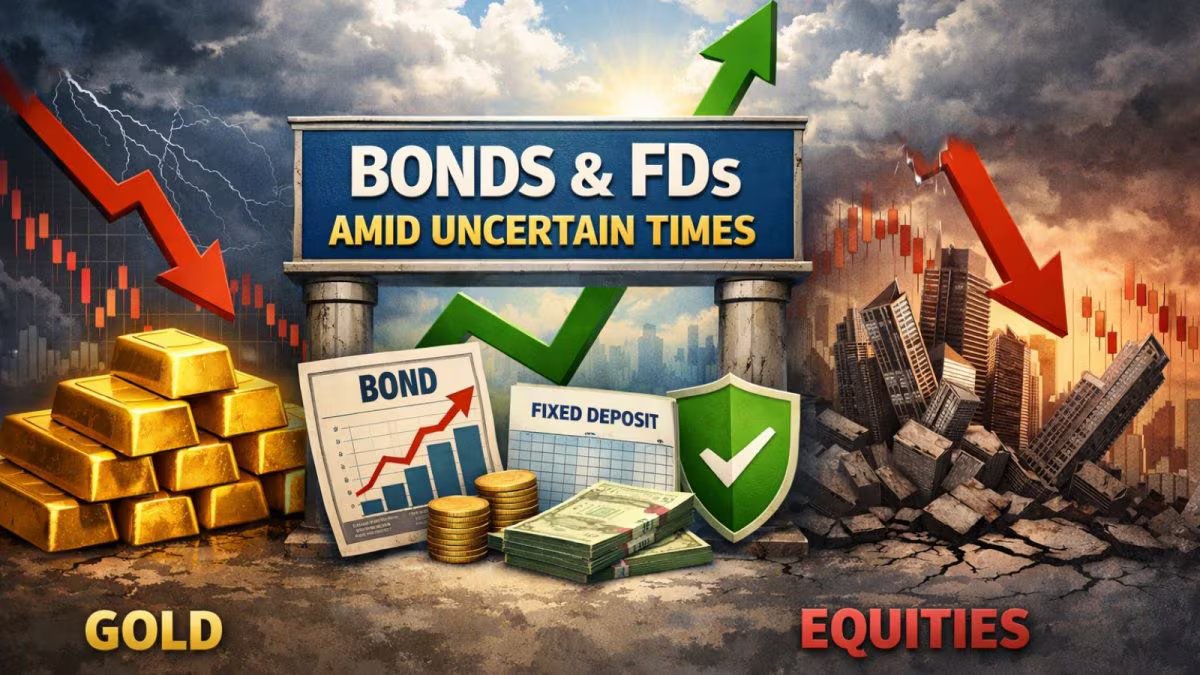
Bonds and fixed deposits (FDs) are gaining attention among investors, as other assets are in a downturn, eroding or stagnating investors’ wealth. These long-known financial instruments, especially FDs, have remained darlings for Millennials and Boomers.
The equity market is still volatile because of the Iran-US war, gold and silver’s rally has fizzled out while real estate is out of reach. At this scenario, bonds and fixed deposits are seeing an option to be considered.
The rising bond yield has also piqued investors to consider this asset in their investment strategy. The big question now: are bonds or fixed deposits replacing gold as the go-to hedge?
Experts suggest it’s not a replacement, but a strategic shift in how portfolios are being balanced.
Why Fixed Income Is Back in Focus
Saurabh Jain, Co-Founder & CEO of Stable Money, explains that this trend is a natural reaction to uncertainty. “Gold is typically a hedge against extreme uncertainty, while bonds… are meant to deliver stability and predictable income,” he says.
According to him, when markets turn volatile, investors seek visibility and capital protection which bonds currently offer, especially with relatively attractive yields that can be locked in.
Echoing this, Anand K Rathi, Co-Founder of MIRA Money, notes that fixed income is once again emerging as a strong stabilising force. With the 10-year government bond yielding around 7 per cent and high-quality corporate bonds offering an additional 40–80 basis points, the risk-reward equation looks favourable for conservative investors.
Not a Replacement, But a Rebalance
Despite the growing interest in bonds, experts are clear—gold isn’t going anywhere. Jain highlights that a well-structured portfolio should combine stability (fixed income), growth (equities), and diversification (gold).
Rathi also points out that gold continues to serve as a hedge against global uncertainties and currency risks. Instead of replacing gold, investors are now diversifying their “safe” assets rather than relying on a single option.
What Should Investors Do?
The key takeaway is disciplined allocation. Experts suggest allocating around 5–10% of the portfolio to fixed income, depending on risk appetite. However, investors should also factor in taxation, as fixed income returns are taxed as per income slabs, which can impact net gains.
In uncertain times, the strategy isn’t about choosing between gold and bonds—it’s about balancing both to navigate market cycles more effectively.
March 26, 2026, 13:10 IST
Read More