
Enab Baladi – Jana al-Issa
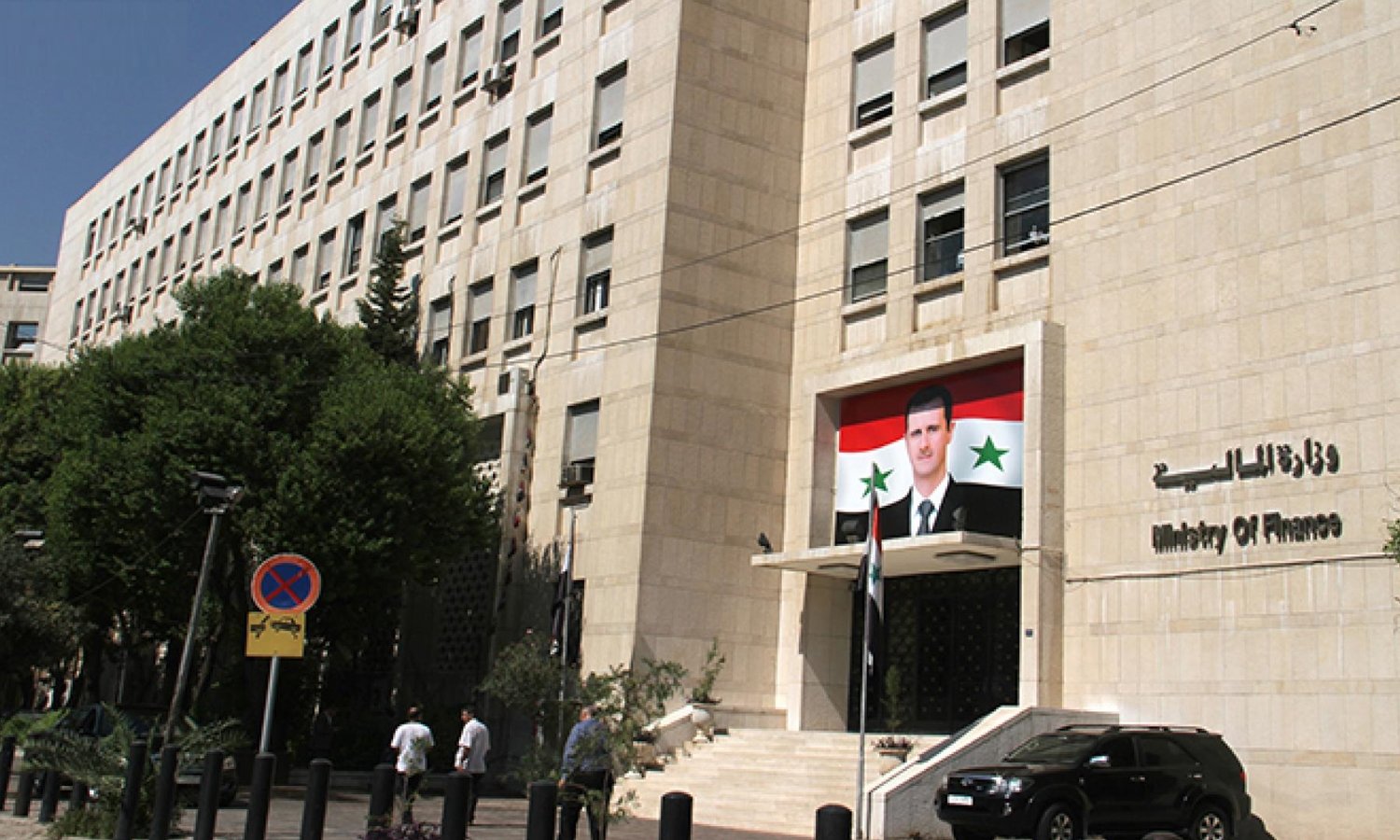
The Ministry of Finance in the Syrian regime’s government is finalizing a legislative project regulating the issuance of Islamic bonds (sukuk). This will allow for the issuance of a new type of government securities known as sovereign Islamic bonds, alongside the treasury bonds that have been periodically issued for over four years.
The issuance of these securities targets public investment projects that generate income for the treasury and sukuk holders. The project also allows private institutions to issue Islamic bonds to finance their income-generating production projects, according to a statement from Anas Ali, Director of Public Revenues at the regime’s Ministry of Finance.
Islamic sukuk or bonds are official documents and financial certificates representing an equal share in the ownership of an asset, existing or to be acquired or constructed. They grant rights to the holder and impose obligations within the limits arising from their share of ownership. These sukuk are issued according to Sharia-compliant contracts and can be traded and redeemed according to Sharia regulations.
Focus on reconstruction
At the end of 2018, CEO of Syria International Islamic Bank, Bashar al-Satt, stated after concluding the Islamic Sukuk course in Damascus that sukuk would play a significant role in the upcoming reconstruction phase. He highlighted their substantial benefits in supporting the liquidity of Islamic banks and boosting their activities, especially in funding development projects.
In the regime-controlled areas, there are four Islamic banks: Cham Bank, Syria International Islamic Bank, Al Baraka Bank-Syria, and the recently established National Islamic Bank in 2021.
An Islamic bank is a financial institution that adheres to Sharia law in all its financing, banking, and investment transactions. It operates under the supervision of the central bank in the respective country and follows Sharia principles in all offered transactions and products, be it investment deposits, investment sukuk, or savings accounts.
In a press statement on August 11th, Director of Studies, Awareness, and External Relations at the Syrian Commission of Financial Markets and Securities, Nivin Said, mentioned that Islamic financing models could be applied to fund a wide range of projects, including roads, electricity generation, airports, seaports, hospitals, and more.
Said indicated that as the Commission completed its project on issuing the Islamic sukuk law and submitted it to the Cabinet for review, the Commission works to collect and utilize savings for economic development programs generally, and sustainable development specifically. The project provides new channels and ensures substantial returns for sukuk holders without relying on traditional interest rates.
Economic academic and researcher Sinan Hatahet explained to Enab Baladi that Islamic sukuk are a mechanism for the state to extract capital from the public to invest in productive or infrastructure projects in return for a fixed annual profit rate over the maturity period.
This mechanism is used in many countries. However, if the sukuk are denominated in Syrian pounds, traders or investors, regardless of their financial solvency, will hesitate to engage, even if the government offers a very high profit rate, according to Hatahet.
In a separate statement to Enab Baladi, financial and banking sciences doctor Firas Shaabo pointed out that Islamic sukuk are a Sharia-compliant financing tool alongside government bonds, which are “forbidden” in Islam.
Shaabo elaborated that relying on Islamic sukuk to fund projects would have very limited impact in the Syrian situation, as treasury bonds also did not make a significant difference despite being used for years. He considered the current reliance on sukuk as an attempt by the government to diversify its financial tools.
Treasury bonds fall short of expectations
This year, the Ministry of Finance aims to issue treasury bonds worth a total of 1,000 billion Syrian pounds through six auctions to fund public sector investment projects, leveraging available funds from operational banks in Syria or individuals opening accounts with these banks.
The regime’s government began offering treasury bonds and notes for subscription for the first time in 2010, conducting seven issuances meant to finance infrastructure projects. This was considered a departure from the previous method of relying on the central bank for internal borrowing. This practice resumed in 2020 and continues today.
Typically, states resort to issuing treasury bonds to achieve investment goals, such as initiating investments requiring funds and repaying such loans from the returns of these investments. However, it is considered among the “worst” loans when borrowed to cover expenses like salaries or funding budget deficits for purely consumptive purposes, which do not help rescue the economy despite government promotion.
In December 2023, Enab Baladi published a report where economic experts described the solution of issuing treasury bonds to finance the deficit in Syria as a “loss” given the current state of the Syrian economy, prompting the regime towards issuing Islamic sukuk.
Treasury bonds are essentially loans issued by the state and its institutions for public subscription, with the government collecting their value from individuals or entities.
These bonds are long-term (up to 30 years), granting buyers an annual return in the form of fixed interest.
Bonds are a type of debt taken by states from investors, providing fixed interest earnings. In contrast, sukuk represent shares in ownership and financing mechanisms for a specific project, offering investors returns as part of the profits generated by the project.
Islamic sukuk might attract the Syrian economic community more than treasury bonds since the profits are not interest-based. However, this greatly depends on the annual profit rates set by the government, according to researcher Sinan Hatahet.
Researcher Firas Shaabo posits that the results of enabling sukuk cannot be relied upon due to reasons related to the unprepared investment environment and the deteriorating economic condition on various fronts. He believes that, in this case, the regime might compel some banks to buy sukuk to raise more funds.
According to a study by the Syrian Commission on Financial Markets and Securities on the importance of Islamic sukuk, sukuk contribute to achieving economic development, addressing debt issues, and managing the general budget on the macroeconomic level. They also ensure fair wealth distribution as Islamic investment is based on the principle of profit and loss sharing and the sukuk mechanism is rooted in participation, hence ensuring fair distribution of profits.
The study also notes that issuing Islamic sukuk provides diverse investment opportunities for individuals, institutions, and governments, allowing them to manage their liquidity conveniently. Consequently, they help solve unemployment issues and put idle funds to use.