
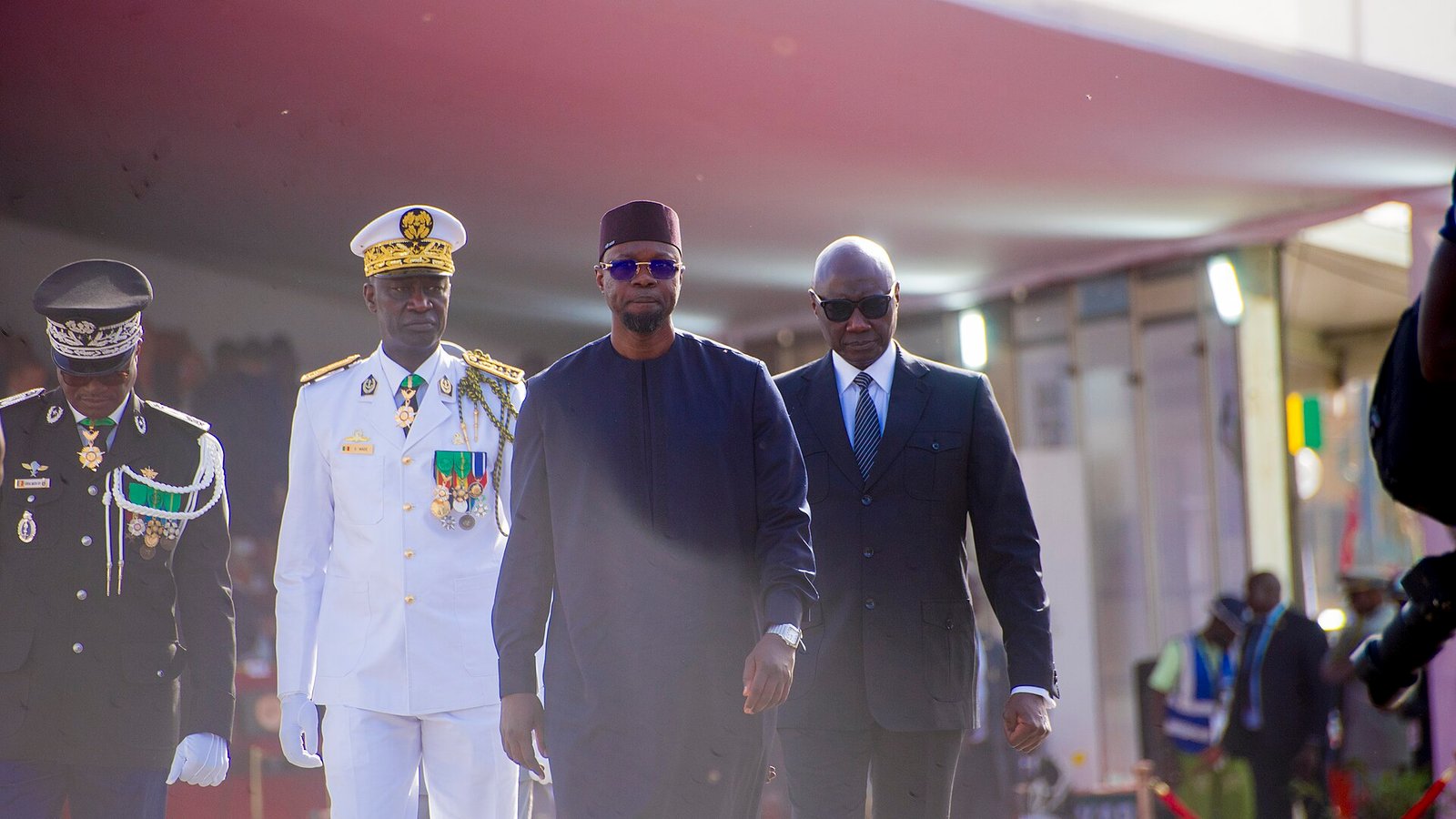
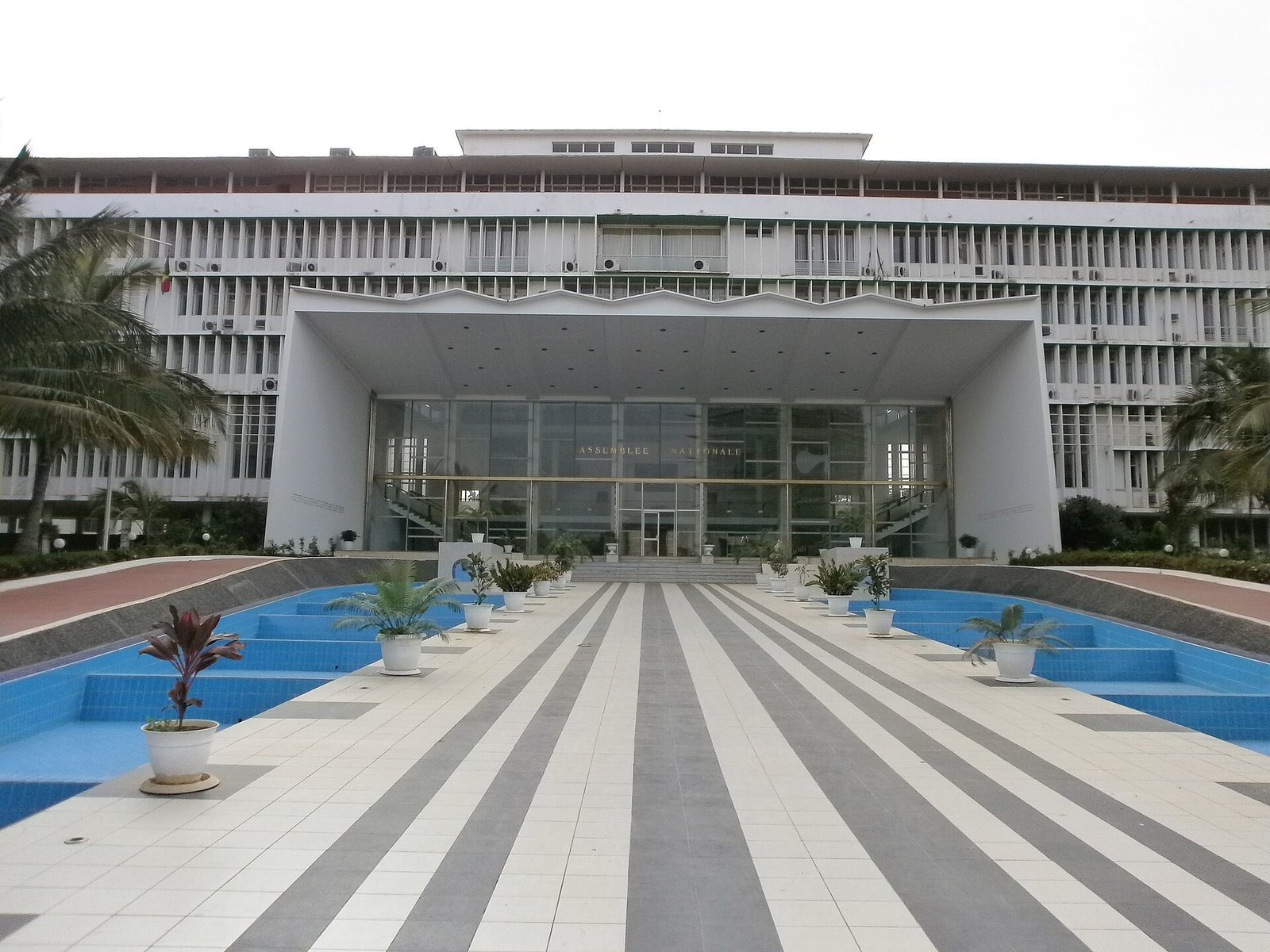
Senegal parliamentary inquiries into public debt, Banco Santander financing, flood programmes and the special funds of three state bodies moved a step closer on Friday, when the National Assembly’s Bureau, chaired by speaker Ousmane Sonko, adopted four draft resolutions.
The move covers state finances back to 2004, a period that spans the governments of former presidents Abdoulaye Wade and Macky Sall and Sonko’s own time as prime minister. It comes days before 2 December, the date from which President Bassirou Diomaye Faye can legally dissolve the Assembly, as the two former allies are locked in a dispute over the budget and an IMF programme.
What will the Senegal parliamentary inquiries examine?
The first of the Senegal parliamentary inquiries concerns the management of public debt from 2012 to 2026, including how loans were raised, used and repaid. The second covers the raising, structuring and execution of financing in which the Spanish bank Banco Santander took part for public projects in Senegal. The third covers the ten-year flood management programme and a sanitation project for ten cities. The fourth covers the special funds of the Prime Minister’s Office, the High Council of Territorial Authorities (HCCT) and the Economic, Social and Environmental Council (CESE) from 2004 to 2026.
The Bureau’s statement after the meeting was carried by Seneweb and other Senegalese outlets.
When Sonko first announced the Senegal parliamentary inquiries at the opening of the parliamentary session on 13 October, the special funds inquiry was set to cover 2012 to 2026, according to Le Soleil, the state daily. The version adopted on Friday starts in 2004. Macky Sall, who later served as president from 2012 to 2024, was prime minister under Wade from 2004 to 2007. RFI reported that former prime ministers and Sall himself are concerned by the inquiries. The period also includes Sonko’s own term at the Prime Minister’s Office, from April 2024 to May 2026.
The October list put the three Santander-financed programmes at about CFA227bn ($400mn): farm equipment and warehouses (CFA85.5bn), a digital land development project (CFA50bn) and rural electrification (CFA91.8bn), Le Soleil reported. A fifth October proposal, on a health data agreement with the US, was not among those adopted on Friday.
What happens before the commissions can start?
Under Article 54 of the Assembly’s rules, the speaker sends the proposals for the Senegal parliamentary inquiries to the justice minister, who has 15 days to say whether the subjects overlap with cases before the courts. Only then can the resolutions go to a plenary vote and the commissions be set up. A parliamentary inquiry is not a court and cannot impose criminal penalties, the Dakar daily EnQuete noted.
At the same meeting the Bureau adopted a general instruction on how the Assembly’s services would run if the chamber were dissolved, under Article 3 of its rules, according to the outlets that carried the statement. EnQuete described it as a precaution rather than a sign that dissolution is imminent.
Why do the Senegal parliamentary inquiries matter now?
The timing ties the Senegal parliamentary inquiries to the wider dispute between Sonko and Faye. Faye dismissed Sonko as prime minister on 22 May and appointed Ahmadou Al Aminou Lo, a former central banker. MPs elected Sonko speaker on 26 May. On taking the chair he said he would not use the Assembly “to pursue personal vendettas”, Le Soleil reported.
Since then the Pastef majority has rejected the government’s finance bills, voting down the 2027 budget by 126 votes to 18, and Faye has put a revised 2026 budget into force by decree. In a Facebook video on Thursday, Sonko said that if it depended on him alone he would sign a decree dissolving the Assembly on 2 December, and called on Faye to face early elections, France 24 reported. The presidency had not responded publicly by Saturday.
Debt is at the centre of the dispute. The IMF reached a staff-level agreement with Senegal on 1 September on a 36-month arrangement of about $2.2bn, still subject to board approval and to corrective action on the misreporting of debt. A Court of Auditors report in February 2025 put public debt at 99.67 per cent of GDP at the end of 2023, well above the figures published under Sall.
Special funds are also contested. An analysis by the Rosa Luxemburg Foundation in June said Sonko had publicly called on the president to ensure transparency in the use of these accounts shortly before his dismissal. The four proposals as reported do not cover the presidency’s own funds.
What has the opposition said?
No statement from Sall’s Alliance for the Republic (APR) or the opposition Takku Wallu group on the Senegal parliamentary inquiries could be found by Sunday. The APR has rejected earlier accusations over the debt figures. Sall said in February 2025 that he “totally” disagreed with what he called “allegations of falsification” and described the audit as “a political process”, according to EWN. Earlier DNE Africa coverage of the split between Sonko and Faye sets out the background.
The next steps are the justice minister’s opinion, due within 15 days, and Faye’s decision on whether to dissolve the Assembly from 2 December. A dissolution before a plenary vote would leave the four Senegal parliamentary inquiries to a new legislature.
FAQ
What are the four Senegal parliamentary inquiries about?
They cover public debt from 2012 to 2026, financing involving Banco Santander, the ten-year flood programme and a ten-city sanitation project, and the special funds of the Prime Minister’s Office, the HCCT and the CESE from 2004 to 2026.
Have the Senegal parliamentary inquiries begun?
Not yet. The Bureau adopted the draft resolutions on 27 November. The justice minister has 15 days to give an opinion before a plenary vote can create the commissions.
Can the Senegal parliamentary inquiries lead to prosecutions?
A parliamentary commission is not a court and cannot impose penalties. It can report findings, which other authorities may act on.
Can Faye dissolve the National Assembly?
The president can dissolve the Assembly from 2 December 2026, two years after it was installed, with elections to follow within 60 to 90 days. Faye had not announced a decision by 29 November.