
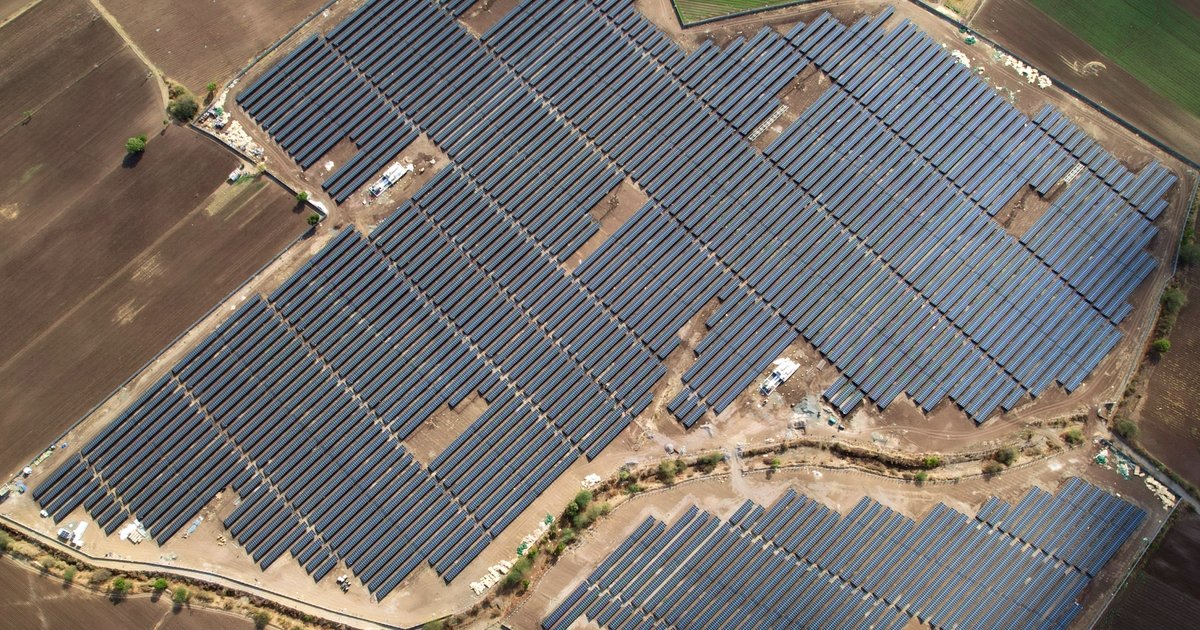
Four new wind and solar projects will add 934MW of capacity.
Amazon plans to invest $7b in renewable energy projects in India by 2030, expanding its portfolio of wind and solar power investments in the country.
The additional investment will bring Amazon’s total contracted renewable energy investments in India to $11b, following $4b in projects already secured.
The company also announced four new utility-scale wind and solar projects with a combined capacity of 934 megawatts (MW). These include a 234MW wind farm in Karnataka, its largest contracted wind project in Asia to date; a 200MW combined solar and wind project, also in Karnataka; a 300MW solar project in Madhya Pradesh; and a 200MW solar project in Rajasthan.
The projects are secured through power purchase agreements (PPAs), which are long-term contracts to buy electricity from specific renewable energy projects.
Once operational, Amazon’s contracted renewable energy projects in India will have a combined capacity of more than 2 gigawatts (GW), enough to generate electricity equivalent to the annual needs of more than 3.5 million Indian households.
Amazon said the investments will contribute to India’s energy security and help meet its growing electricity demand.
“Our renewable energy investments in India reflect years of sustained effort, planning, and collaboration across the industry,” said Kara Hurst, Amazon’s chief sustainability officer.
“This additional investment of $7b underlines our long-term commitment, helping bring additional wind and solar capacity online whilst contributing to India’s energy security and long-term renewable energy ambitions,” she added.
Amazon’s renewable energy portfolio in India includes 14 utility-scale wind and solar projects that supply carbon-free electricity to the grid, as well as 43 on-site solar installations across its facilities.
The India investments will also contribute to Amazon’s global target of reducing the carbon intensity of electricity powering its operations by 65% by 2030, against a 2019 baseline.
The target forms part of its broader commitment to achieve net-zero carbon emissions by 2040.