
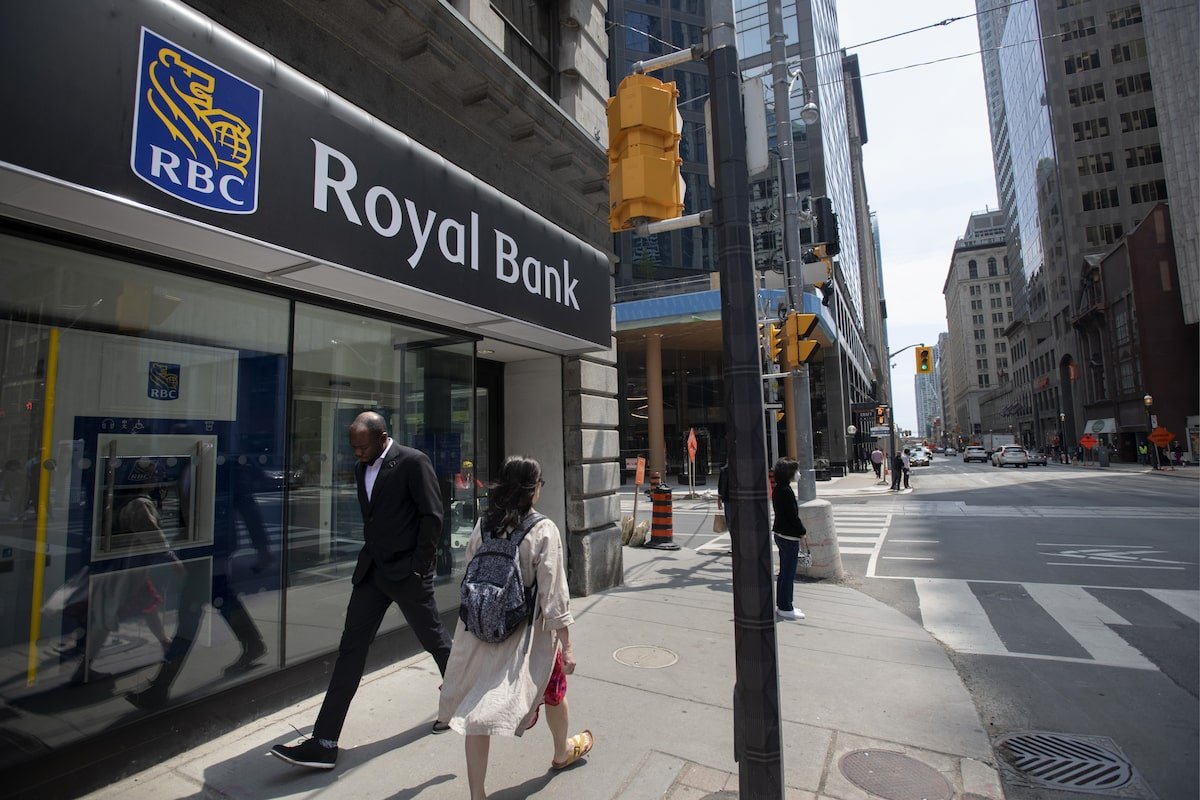
Bank branches are a good option for people who would otherwise avoid investing, but everyone needs to figure out which channel is best for them.Fred Lum/The Globe and Mail
Mutual funds sold through the big Canadian banks have been criticized for their high fees and the quality of advice given, so it’s easy to see why people might hesitate to walk into their local bank branch to invest their savings.
But the bank branch has one big advantage over other investing channels: it’s easy. This makes it a good option for people who would otherwise avoid investing.
There are a few ways people can access investments like mutual funds, exchange-traded funds, and stocks. In addition to the bank branch, they can hire a financial adviser to manage their investments, invest for themselves using an online brokerage, or they can sign up with a robo-adviser. Each of these channels has its pros and cons, and everyone needs to figure out which is best for them.
Meeting with someone at a bank is easy. You can make an appointment or drop by. You can walk into the meeting with no investment knowledge and walk out with an investment in mutual funds.
Yes, there are flaws in this approach.
Opinion: When parents divorce, RESP saving can get tricky
Opinion: Worried about financial scams and bad advice? Stick to the investing basics
Buying mutual funds at your bank branch is expensive. The average fee of a bank mutual fund – the management expense ratio or MER – ranges from 1.7 to 2.8 per cent for funds invested in the stock market. Fees matter because over long time periods, they eat away at returns.
For example, if you invest $10,000 in a Canadian equity mutual fund that charges 2.23 per cent versus a Canadian equity index mutual fund that charges 0.22 per cent, after 20 years you’d have about $10,000 more with the lower cost fund.
There are cheaper options available, such as exchange-traded funds (ETFs) and index-tracking mutual funds, which you can buy through a robo-adviser, an online broker, and sometimes with a financial adviser. (It’s possible you can buy an index mutual fund at the bank branch, but it probably won’t be offered to you because the banks prefer to sell their actively managed funds.)
A recent report from the Ontario Securities Commission shows that bank mutual fund salespeople don’t always provide good advice. For instance, 24 per cent of mutual fund sales people admitted that they have sold funds that aren’t in the best interest of the client. Some don’t even understand what a MER is, which is a very basic concept.
Despite these pitfalls, being invested in a bank mutual fund is better than not being invested at all. Leaving your savings in a TFSA savings account with one of the big banks, for example, will earn you around half a per cent a year, a return that doesn’t even keep up with inflation. If you buy a mutual fund that invests in a mix of stocks and bonds, your money can be expected to grow somewhere in the range of 5 to 10 per cent a year over the long run.
While exploring the other investing channels is a great idea, not everyone is inclined to do this. Finding a financial adviser who you trust and who can give you the level of service you want can be hard and can take a lot of time.
Opening an online brokerage account to invest for yourself requires a certain amount of confidence and being comfortable with making all of your own decisions. Robo-advisers require little work and are easy to get started with, but some people like sitting down and speaking with someone face-to-face.
If the bank branch is the best option for you, there are some things you can do to make it a positive experience. First, go in knowing that any advice you get isn’t going to be fulsome financial planning advice.
A branch employee doesn’t have the time to learn all about your current situation and your future plans. If you are looking for advice beyond what mutual funds to buy, you’ll need to look elsewhere, such as working with a financial planner.
Have a basic idea of what you need. Asset allocation – how much of your money is invested in the stock market versus safer investments like bonds and GICs – is the most important decision you will need to make. There are a lot of online resources that can help you get a handle on asset allocation before meeting with your bank.
Ask the mutual fund representative to explain how much you will pay to own the funds they are suggesting. All you need to know is the MER – this is the annual fee you pay to own the fund. A fee of more than about 1.7 per cent is high.
Ask them if they offer something less expensive – like index mutual funds, which are a great alternative to the actively managed funds you will likely be offered. Actively managed funds cost more partly because they are overseen by a professional portfolio manager, who is expected to generate better returns than a fund that simply tracks the market index.
No matter which channel you choose, feel good about getting invested instead of leaving your money in a savings account.
Anita Bruinsma is a Toronto-based financial coach and a parent of two teenage boys. You can find her at Clarity Personal Finance.