
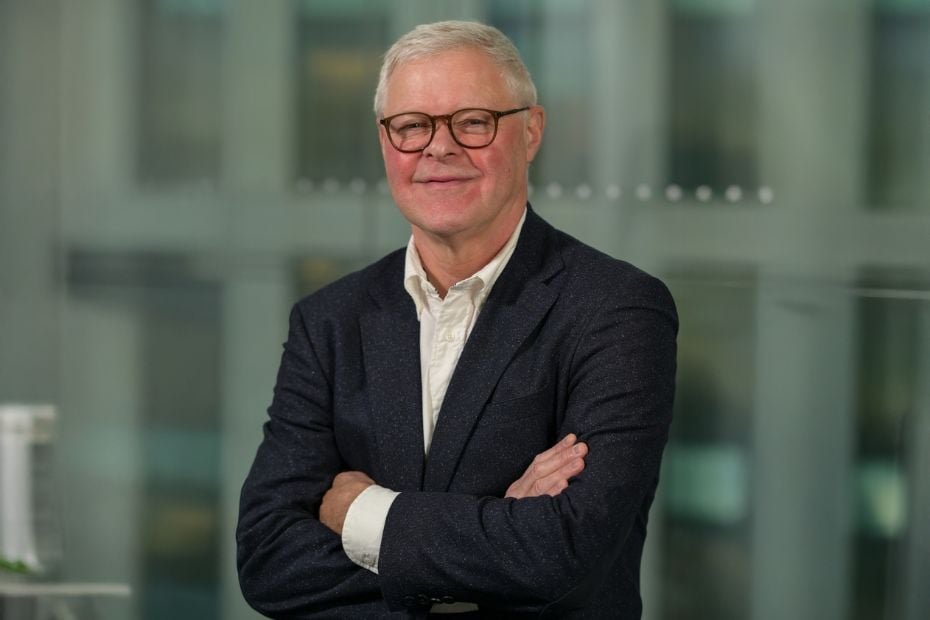
Charles Haresnape, CEO of Gatehouse Bank/Image: Supplied
When Charles Haresnape took the helm at Gatehouse Bank eight years ago, the focus was on transforming it from a predominantly commercial player into a retail-driven Shariah-compliant bank. Today, the UK-domiciled, PRA and FCA-regulated institution serves clients from around the world, with the Gulf Cooperation Council (GCC) a key growth market.
“We’re a fully Shariah-compliant bank in the UK, but you don’t have to require Shariah compliance to be our customer. That’s the basis upon which we provide our services, and we’re proud of it,” Haresnape says. “Of all my customers who are based outside the UK, 20 per cent are in the GCC and that’s growing.”
Consistent GCC appetite for UK property
For GCC-based investors, the UK remains a preferred destination for property investment, regardless of macroeconomic uncertainty.
“We’re seeing consistent demand for UK property. In fact, the demand has held up strongly, even more so than perhaps our domestic demand,” Haresnape notes. “When people look back over many recessions and economic cycles, they see UK property as faring very well. It’s very consistent and recovers quickly.”
He adds that falling interest rates are further supporting investor sentiment: “People see it as a good opportunity to get in at a lower rate than previously.”
Gatehouse specialises in residential investment rather than commercial, with an average home finance size of £300,000 to £400,000 — enabling investors to spread risk across multiple properties.
Buy-to-let and build-to-rent both in focus
Haresnape says GCC clients are active in both individual landlord and institutional segments — an unusual combination for a bank of Gatehouse’s size.
“We’re very rare in the UK to offer both buy-to-let and build-to-rent,” he explains. “For buy-to-let, which is more the individual landlord or small company, we’re seeing increasingly people building larger portfolios to give more flexibility. The trend in the UK, which also applies to the GCC, is clients wanting several properties rather than just one or two.”
The build-to-rent segment caters to large-scale overseas investors — often sovereign wealth funds or family offices — pooling hundreds of millions into UK residential property. “We currently manage over 11,000 properties in the UK on behalf of those funds,” he says. Past investors have included the Kuwait Investment Authority, alongside global private equity players such as the Carlyle Group and TPG.
Read: Navigating the new tax environment for GCC family offices
Strengthening the UK–GCC financial corridor
Haresnape sees strong regulatory alignment between the UK and GCC, making cross-border finance smoother. “In Saudi Arabia, for example, they’ve been fast followers of UK regulation standards, and there’s much more consistency now. In Dubai and Kuwait, regulation has also increased, which is good for customers,” he says.
This consistency builds trust, he adds, with customers across the GCC better understanding the protections and processes around financial services.
ESG and Islamic finance: a natural alignment
Islamic finance’s restrictions on certain industries and its risk-sharing principles naturally align with environmental, social and governance (ESG) values. Gatehouse is leveraging this to attract both ethical retail savers and impact-driven institutional investors.
“We were founder members of the United Nations Principles for Responsible Banking, and we fundamentally believe in our ESG principles ; they’re not just window dressing,” Haresnape says. “People increasingly want their finance providers not to be involved in certain types of activity — arms trade, gambling, alcohol, drugs — and we make a complete statement that we don’t invest in those areas.”
The bank has been carbon neutral for five years, plants trees for every new savings account opened, and focuses on energy-efficient building standards in the properties it finances. “We’re testing solar panels, increasing the use of ground-source heat pumps, and prioritising environmentally friendly building methods,” he says.
This ESG proposition resonates strongly with younger savers. “In our 2024 survey, 83 per cent of respondents aged up to 24 said ESG was an important factor in deciding on financial products,” Haresnape notes.
Regional investment hotspots
While some GCC investors buy London property for personal use, Haresnape says most prefer higher-yield regional markets such as Manchester, Liverpool and Birmingham.
“House prices there are lower than in London, and rental levels remain healthy, so yields are stronger. Even institutional investors take the same approach,” he explains.
Growing the GCC footprint
Looking ahead, Gatehouse is planning deeper engagement in the GCC. “We’ll be there more frequently, have more people on the ground, and increase broker relationships in the region,” Haresnape says. “The GCC is driving the growth of Islamic finance quite heavily, and the demand is increasing significantly.”
With majority ownership by Kuwaiti institutions, including the Kuwait Investment Authority as its largest shareholder, Gatehouse Bank is well-positioned to capitalise on this growth.
“The future of Islamic finance in the GCC is strong and so is the appetite for UK property investment from the region,” Haresnape concludes.