
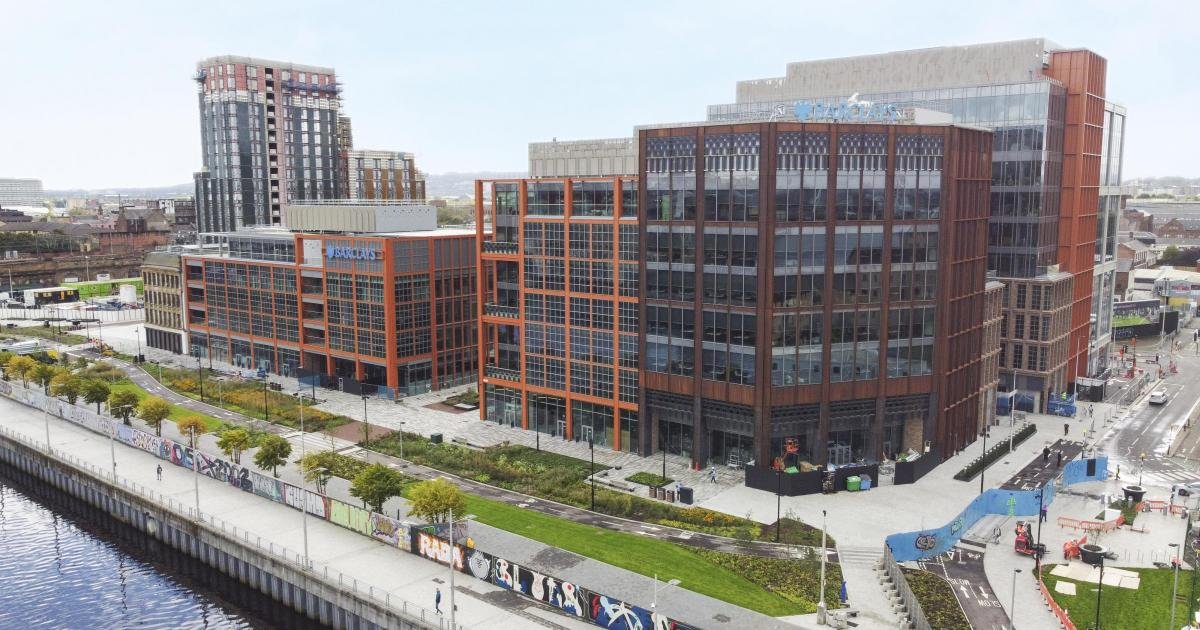
Copious roadworks may currently be making it difficult to navigate the city centre, parking costs seem expensive, and people arriving at Central Station may not exactly be given a good first impression of Glasgow. But walk through the city’s famous streets and you will stumble across an abundance of revitalised office blocks, new hotels and student accommodation, with a lot more in the pipeline.
Read more:
This is in addition to several huge investments that have taken root in recent years, from the giant Barclays campus on the south bank of the River Clyde to a major new office for JP Morgan in the heart of the international financial services district.
One expert who needs no convincing of the case for Glasgow is Sarah Hagen, head of Glasgow office agency at property firm CBRE.
Sarah Hagen, CBRE (Image: Colin Mearns)
“The fundamentals of Glasgow city centre are fantastic and it’s a pretty compelling argument [from an investment perspective],” Ms Hagen said.
“We’ve got three fantastic universities that regularly top the tables for graduate retention across the UK. We’ve got a depth of a labour force and an easily accessible, highly skilled labour force, and the key actually is also we have a depth of demand across asset classes, across multiple sectors. We’re not immune to the viability issues that face the rest of the UK but there are reasons to be optimistic.
“We’ve got a pronounced flight to quality across multiple sectors in the city and the most exciting thing is that real momentum shift towards mixed-use development. You just have to look at the recent success of the likes of the Social Hub in Merchant City, which has really created a new vibrant area and increased footfall and created a destination where people actually want to live and work and be part of, which is again what we need to see more of across the city.”
The Social Hub has created a “new vibrant area” in Glasgow (Image: The Social Hub)
A similar view was expressed by Sara Seravalli of Glasgow-based Il Salotto, a curator of events for the property and design sectors.
While expressing concern over the current condition of the city centre, Ms Seravalli said the investment case for Glasgow from a commercial property perspective is “huge”.
“There are empty sites and untapped opportunities all over this city — real chances to build something new and leave a lasting legacy,” Ms Seravalli said. “But mixed use is the key. We can’t tackle workplace, hospitality, retail, and housing one sector at a time — they need to work together, support each other. That’s how you get a city centre that’s truly alive.
“I’ll be honest — I’m not a huge fan of the student accommodation boom. I understand that 200,000 students need somewhere to live, and dedicated accommodation does free up the private rental market for young professionals. But could we not develop buildings where different communities and businesses co-exist, with spaces flexible enough to serve multiple uses? We need more Social Hubs and fewer single-purpose buildings.”
The new JP Morgan office in Glasgow (Image: JP Morgan)
Despite the sense of optimism over the potential of Glasgow, commercial property experts emphasise that there are still challenges to overcome.
And one of the biggest barriers is the financial cost of development in the current climate.
“Viability for all commercial development is challenging, not just in Glasgow but across the whole of Scotland and the rest of the UK,” said David Cobban, head of property firm Savills’ Glasgow office. “That is mainly due to the increased construction costs meaning the prices for residential and rents for offices needs to increase significantly – that jump is seen as a challenge for buyers and occupiers especially where business confidence remains subdued.”
John Grewar, director of property firm SRE Group, which owns a portfolio of offices in Glasgow and Aberdeen, agreed, adding: “It’s difficult as the same national pressures of high build cost and difficulty in sourcing property funding are having a negative effect.
“There is lack of supply of new-build stock, but demand is subdued.”