
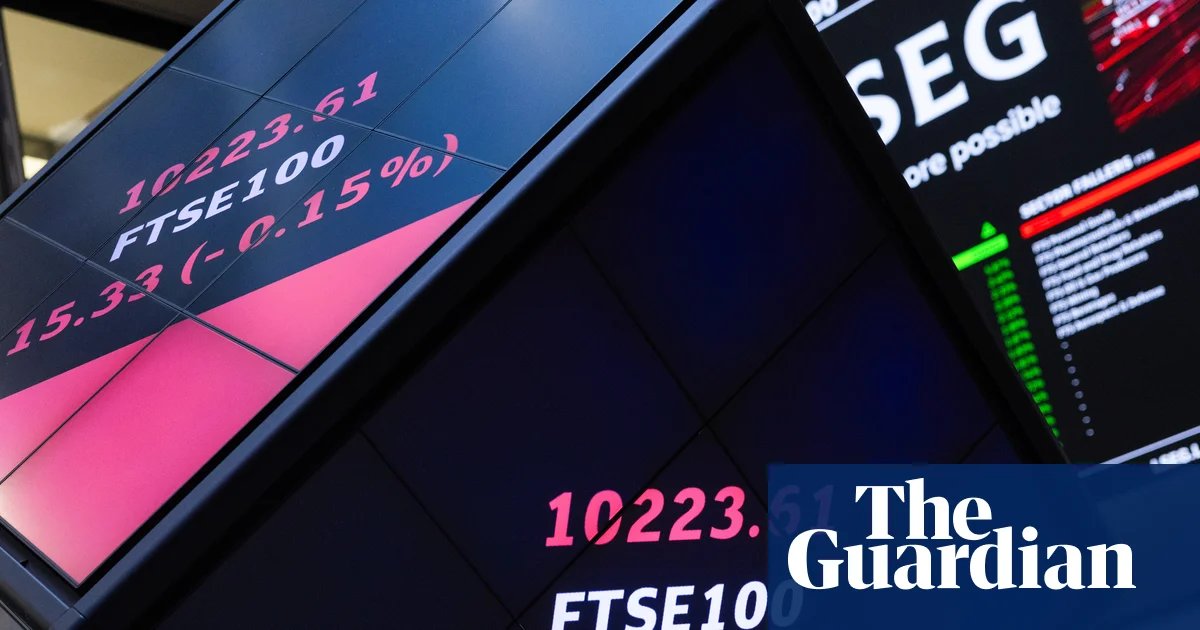
Tracker funds have been around for about half a century, providing investors with access to a range of assets without them having to make difficult and risky decisions.
Built to follow the fortunes of a given financial market index, trackers do not need management teams, which means they generally come with low charges. If you have a workplace pension, you probably already invested in one without realising it. If you want to start investing, you are likely to be directed towards a tracker fund.
No fund manager required
Tracker funds are a kind of investment fund. These are pooled investments that use investors’ money to buy into a range of different assets, including shares in companies and government bonds.
There are two main types of fund, passive and actively managed. Trackers are passive funds. They follow the performance of an index – for example, the FTSE 100 or S&P 500. When the shares in the index rise in value, so does the value of your investment; when they fall, it falls, too.
In contrast, with actively managed funds, decisions on buying and selling assets are researched and made by a fund manager and their team, and they will be trying to beat the performance of a chosen benchmark.
According to AJ Bell’s latest Manager versus Machine report, which compares the performance of actively managed funds with that of their tracker counterparts, trackers frequently provide better returns. Only 29% of active fund managers beat the passive alternative of their fund in 2025, and over the past decade fewer than 24% of active managers beat the trackers.
Historically, one reason for that has been their inherent diversification – although this has been called into question recently because of the sheer size of some of the biggest companies listed on the indices.
Instead of choosing a company and hoping it will grow, a tracker effectively buys a stake in all the companies on an index (or a representative selection of them), and, in theory, the growth of those that do well cancels out the losses of those that do less well.
Jack Bogle, the founder of the investment firm Vanguard and a pioneer of tracker funds, once said: “Don’t look for the needle in the haystack. Just buy the haystack.”
This diversification is one of the main reasons trackers are often suggested as a starting point for new investors. “With a tracker you are not putting your eggs in one basket; they are naturally diversified products,” says Steve Palmer of Royal London Asset Managers.
Typically, tracker funds work on a “market cap” basis. This means that they weight their investments according to the size of the firm. “So if one company represents 5% of an index, 5% of the fund will be invested into that company,” says James Norton, head of retirement and investments at Vanguard.
ETFs or Oeics
Tracker funds can be structured in different ways. They can be the more traditional open-ended investment companies (Oeics), but many are the newer exchange-traded funds (ETFs).
An Oeic is a fund that creates new shares when you invest and cancels when you sell.
An ETF is a wrapper in which investments are held. Unlike other kinds of trackers, ETFs are listed on the stock market and investors can buy shares in them, just as they can buy shares in a company. ETFs have garnered a lot of attention, with YouTube videos and Reddit threads dedicated to finding the most promising on the market.
“The main advantage of an ETF over a conventional open-ended fund is that shares in the ETF are traded on the stock exchange throughout the day, allowing investors to buy and sell whenever markets are open knowing the price they will pay at the point they deal,” says Jason Hollands, the managing director of Bestinvest.
“In contrast, when you invest in an open-ended fund, these usually trade once a day and so when you invest you will pay the price at the next dealing point which could be the next day.”
However, this flexibility is not necessarily useful to the average investor, since shares are best used as long-term investments.
“As a rule of thumb, investors should be prepared to commit money for at least five years, and ideally longer,” Hollands says. “The longer the investment horizon, the greater the opportunity for markets to recover from periods of volatility and for returns to compound over time.”
The most important thing is to check the charges involved, says Kate Marshall, the lead investment analyst at Hargreaves Lansdown. “ETFs have earned a reputation for being low-cost investments, although investors shouldn’t assume they are always cheaper than an equivalent mutual fund [Oeic]. In many cases, the ongoing charges of passive ETFs and index funds tracking the same market are very similar,” she says.
What to track
Trackers can follow any index the provider chooses. For new investors, choosing one that follows large companies may feel safest because they will, in theory, be less likely to fail than smaller businesses.
Some of the biggest tracker funds follow the FTSE 100, which lists the top 100 firms in the UK, or the MSCI World index, which lists more than 1,300 companies in 23 countries across the developed world. It’s worth bearing in mind, though, that global funds are hugely dominated by US tech companies. At least 30% of the MSCI World Index by value is made up of information technology companies, and its top 10 holdings are identical to those of the US-only S&P 500. These include Nvidia, Apple and Microsoft.
after newsletter promotion
Away from the big indices, some recent launches track relatively niche indices. These are typically ETFs. Global X ETF has an ETF that tracks stocks related to wind energy and another that tracks cloud computing, for example. Details of everything that is in each fund can be seen on the company’s website.
It is always a good idea to check what exactly is being tracked. Hollands says: “If you want to avoid a particular company or set of activities such as fossil fuels, tobacco, weapons, gambling or other sectors, then you may be better off choosing an actively managed fund with a clearly stated ethical or sustainable remit and published set of criteria, although there are some trackers which apply ESG screening. Investors should never assume that a tracker fund automatically aligns with their personal values or preferences.”
How to invest
You can invest in a tracker or ETF directly through a fund provider, an online platform such as Hargreaves Lansdown, AJ Bell, Bestinvest, or Interactive Investor, or even through an app-based bank such as Revolut or Monzo. It makes sense to invest through an Isa, if you are not already doing so, as any gains will be tax-free.
You do not need to have a big lump sum to invest in an ETF, says Palmer: “The barrier to entry is very low. You can start with just one share.” One share in the iShares Core FTSE 100 was priced at about £10 at the time of writing, while Vanguard’s S&P 500 was about £107 a share.
If you want to invest the same sum each month, a traditional tracker fund may be more suitable than an ETF. This is because you can buy a fraction of a unit with these funds but you can’t buy a fraction of a share in an ETF.
Tracker performance
Investment in shares is not suitable for short-term saving because of the volatile nature of the stock markets. However, index trackers have consistently delivered good returns over the longer term.
A lump sum £1,000 invested in the iShares Core FTSE 100 ETF five years ago would be worth £1,762 today, after charges. If it had been invested 10 years ago, it would be worth £2,487.
For Invesco’s MSCI World ETF: £1,000 invested five years ago would be worth £1,847, and would have grown to £3,803 over 10 years.
And £1,000 invested five years ago in the Aberdeen UK All Share Tracker would be worth £1,646 now; the same sum invested 10 years ago would be worth £2,397.
Is SpaceX in your tracker?
After the record-breaking SpaceX IPO a lot of tracker funds following global, or US, markets will become investors in Elon Musk’s company by default.
How soon depends on what a fund tracks, as the index providers have taken different approaches.
Nasdaq and FTSE Russell have fast-tracked entry to the Nasdaq 100 and Russell US Index Series, for example, meaning funds that track those will soon automatically invest in the company.
However, the group that runs the S&P 500 and Dow Jones has not, and a company must have traded publicly for 12 months, and have been profitable under US accounting rules, to be eligible.
If you choose a tracker that follows the S&P 500, you will not be buying into Musk’s company until at least the middle of 2027.