

Van Eck Associates Corp started buying South African bonds during the biggest selloff on record, and is now reaping the reward with a return of triple the emerging-market average.
The New York-based firm, which oversees about $225 billion, held no South African bonds at the start of the Iran war. A year-long rally had left them steeply valued and positioned as overcrowded, according to David Austerweil, a deputy portfolio manager for emerging-market fixed-income. On March 16, Van Eck began snapping up the debt.
Read: What 2026 holds for SA bonds
Yields on government rand bonds had shot up more than 100 basis points as the conflict drove oil prices higher, igniting concerns about inflation in energy-importing nations, including South Africa. Van Eck calculated that those worries would blow over once the war ended.
“We viewed this as an attractive opportunity to rebuild a long South African government bonds position,” Austerweil said. “We did not view the war as derailing South Africa’s economic recovery, and we believed that since other investors shared this view, South African government bonds would be one of the first markets to recover.”
ADVERTISEMENT
CONTINUE READING BELOW
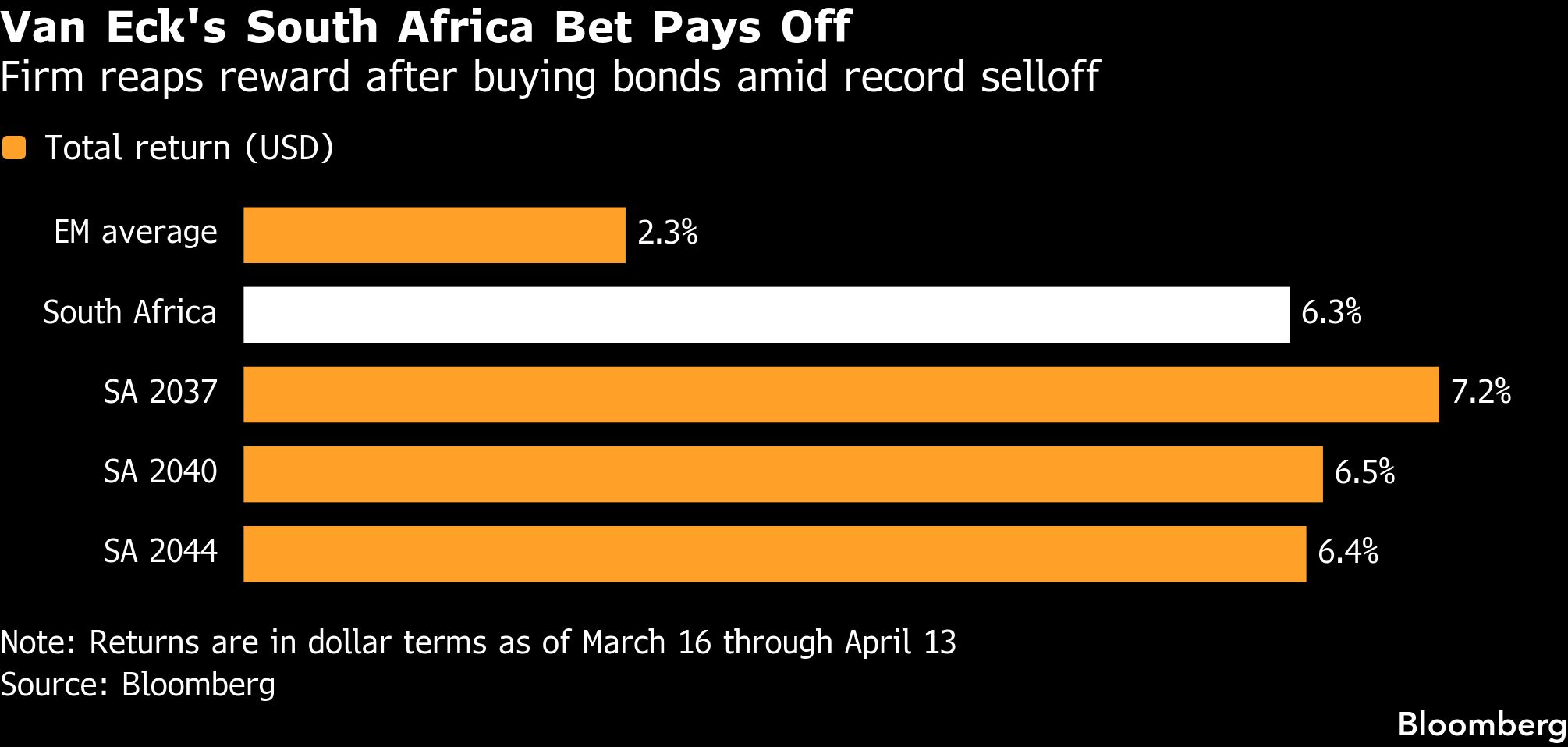
And so it did. Since March 16, when yields hit a five-month high, South African government debt has returned 6.3% in dollar terms, bettered only by Hungary, Brazil, and Colombia among major emerging markets. The average return for developing-nation local-currency bonds in that period was 2.3%, according to data compiled by Bloomberg.
Read: 5 big market takeouts for 2025
Foreign investors had sold a net R56 billion ($3.4 billion) of the bonds in March, the most since Bloomberg started compiling the data three decades ago. Now they’re returning: since the start of April, the market has seen R13.5 billion of net inflows, according to JSE data.
“It was remarkable and shows everyone was really just waiting for the all-clear to repurchase South African government bonds,” Austerweil said.
A steep yield curve suggested most value lay in the long end, and the firm bought bonds maturing in 2040, 2044, and 2037, he said. That bet has paid off, with all three bonds outperforming since March 16.
ADVERTISEMENT:
CONTINUE READING BELOW
Read: South Africa joins bond rush with new dollar-debt offering
South Africa’s 10-year yield plunged by more than 300 basis points since the tariff turmoil of April 2025 to a record low in February as investors warmed to an improving fiscal outlook and slowing inflation. Foreign investors lifted their share of fixed-rate bond holdings to 32% at the end of February, from 30% a year earlier, before the war upended the rally.
Van Eck sees further upside for South African bonds, especially relative to global fixed-income. The firm has been building on its holdings, reaching the desired level on April 8, Austerweil said.
Read: There is a lot of good news that shows SA has turned around – Kganyago
The bonds “remain attractive especially on a relative basis, especially versus global fixed income, even if they don’t look as cheap versus recent history,” he said. “The fundamental story continues to improve, and we think that will continue to support asset prices.”
© 2026 Bloomberg