
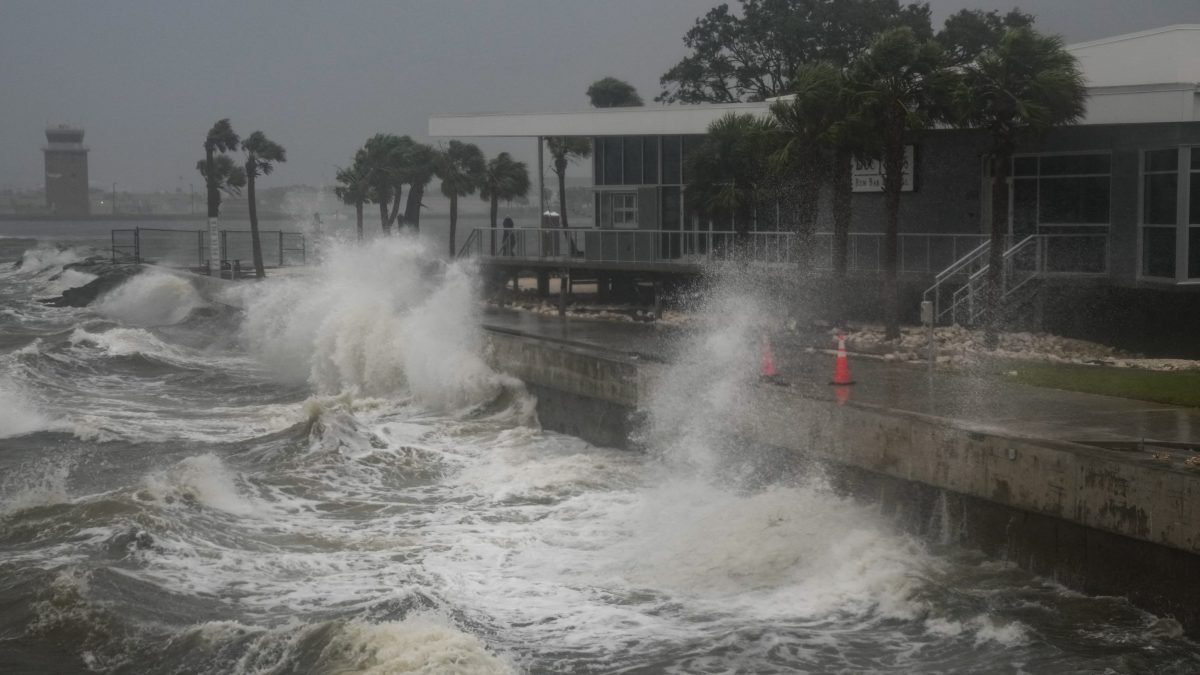

As climate change triggers more extreme weather and related disasters, the market for catastrophe bonds is on track for a record year. But potential losses from Hurricanes Helene and Milton could test investors’ tolerance for risk.
Born after Hurricane Andrew rocked Florida and Louisiana in the 1990s, cat bonds are a way for governments and insurers to spread their risk of losses from disasters to the capital markets, and a way for investors to profit from that risk. Artemis.bm, a news and data service, has tracked more than $13 billion in new bonds so far this year, with the total market now approaching $48 billion.
Investors like catastrophe bonds for two main reasons, said Steve Evans, owner and editor-in-chief of Artemis. First, they tend to pay a higher return than traditional bonds, around 11% recently, because they’re riskier.
“The returns have been good over the last few years, and that always helps,” Evans said.
More importantly, he said, cat bonds offer investors a form of diversification. They don’t move in tandem with stocks or other assets.
“They are very disconnected from broader financial markets, and so for investors, they’re seen as an attractive alternative that can deliver them some income through times when perhaps other asset classes are more volatile,” he said.
Here’s how they work: An insurance or reinsurance company, or sometimes a government, will sponsor a bond covering losses from a specific event or events. Examples include named tropical storms in the Atlantic, U.S. wildfires or European windstorms. Investors in the bond pay into a trust that the sponsor can only access if the event happens and meets certain thresholds, like total insured losses or specific wind speeds, and the bond gets “triggered.”
If it does, investors can lose part or all of their money.
“And if the event doesn’t transpire … the investors will get their money back, plus interest,” said Chris Grimes, who follows the market as a senior director in insurance at Fitch Ratings.
Grimes said it’s too soon to know whether Hurricanes Helene and Milton will trigger significant losses for cat bond investors, as insurers begin to process claims. Like other bonds, after they’re issued, catastrophe bonds are traded in a secondary market. Grimes said the prices of a handful of bonds initially fell 10% to 30% in that secondary market, suggesting investors expect some losses.
“Typically, what happens with events like this is you see an initial markdown, and then as more clarity arises over the following weeks and months, you’ll see the bond prices react to the new knowledge about the actual securities themselves,” he said.
As of this week, Evans estimated damage from Hurricane Milton might trigger investor losses in the low $100 million range.
“It’s not a severe event for cat bonds, but it is a more severe event across the entire insurance and reinsurance market, where estimates range from around $15 to $20 billion up to as high as $40 billion or so,” Evans said.
And when insurers issue new catastrophe bonds in the coming months, Grimes said, they may have to pay a higher premium to attract new investors.
“I would expect that pricing would reflect the greater loss activity that we just experienced over the last couple of weeks,” Grimes said.
That could be passed on to insurance customers. One reason for the rising cost of homeowners insurance in the past few years is that catastrophe bonds and traditional forms of reinsurance, which helps insurers pay claims after a disaster, have become more expensive.
Cat bonds play an important role in stabilizing the insurance industry, said Cliff Rossi, an expert in risk management at the University of Maryland.
“But the market, as I see it today, is still not large enough to be able to keep up with the pace of extreme weather events that we’re starting to see with these back-to-back hurricanes, for example,” he said.
How much the cat bond market grows will depend on how willing investors are to keep risking their money as climate catastrophes stack up.
There’s a lot happening in the world. Through it all, Marketplace is here for you.
You rely on Marketplace to break down the world’s events and tell you how it affects you in a fact-based, approachable way. We rely on your financial support to keep making that possible.
Your donation today powers the independent journalism that you rely on. For just $5/month, you can help sustain Marketplace so we can keep reporting on the things that matter to you.