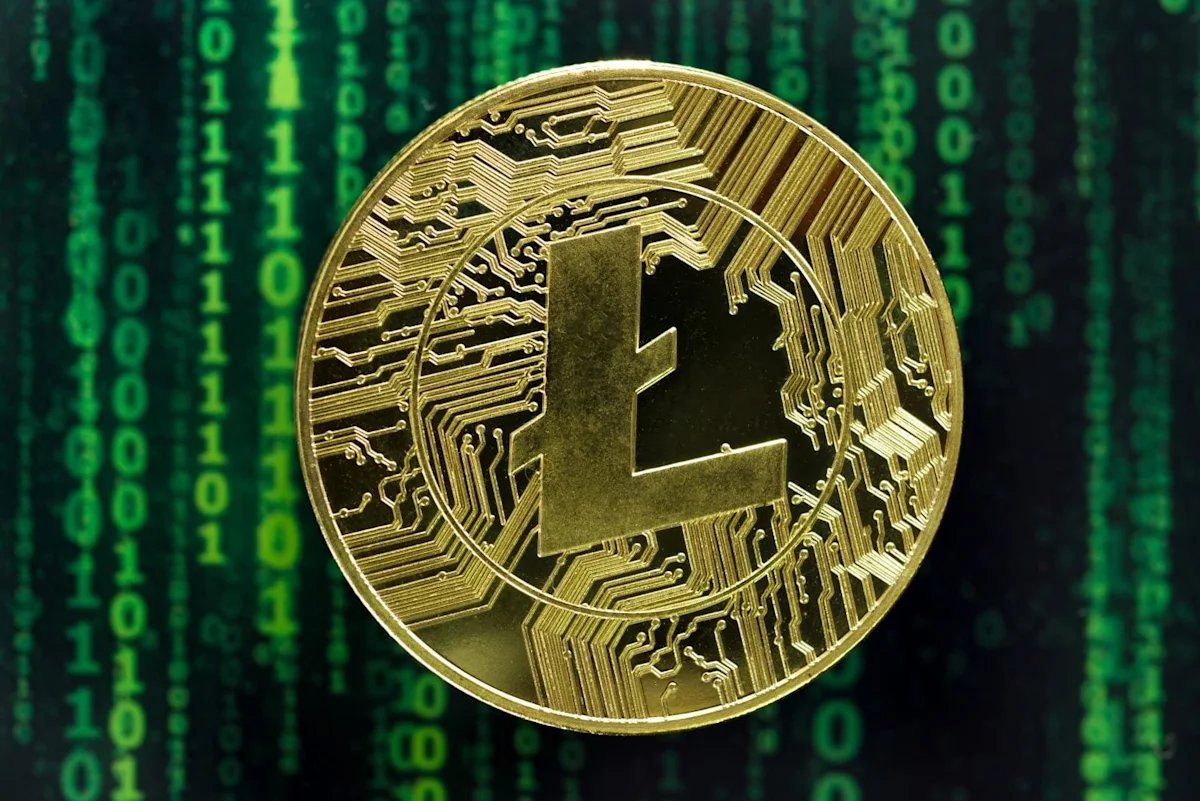
Dogecoin, Litecoin and HBAR ETFs Took In Less Than $10 Million Combined This Week. Do Altcoin Actually Move Prices?
Quick Read
Dogecoin, Litecoin, and HBAR ETFs combined pulled in under $10 million last week, too small to move prices against $854 million in daily Dogecoin trading.
Chainlink led all small altcoin ETFs with $8.3 million in weekly inflows, yet its price still fell roughly 2%.
Polkadot funds hold four times what investors deposited, proving price gains drive altcoin ETF size far more than fresh capital.
Building a portfolio and living off one are two completely different skills, and almost nobody teaches the second. This problem is what The Definitive Guide to Retirement Income helps, and it is free today. Read more here. (Sponsor)
Funds associated with Dogecoin (CRYPTO:DOGE), Litecoin (CRYPTO:LTC), and Hedera’s HBAR (CRYPTO:HBAR) collectively brought in under $10 million during the week from September 28 to October 2, 2026, according to data from SoSoValue. Notably, Dogecoin funds attracted around $879,000 on September 29 but lost about $551,000 the following day.
In contrast, Polkadot (CRYPTO:DOT) funds recorded no new investments all week, while Chainlink (CRYPTO:LINK) funds saw a steady stream of inflows. With such low activity in small altcoin ETFs, one might wonder if they can actually influence the prices of the coins they represent.
LEE WA DA / Shutterstock.com
A Zero-Flow Day Still Has Trading in the Fund’s Shares
Zakharchuk / Shutterstock.com
A “zero-flow” day occurs when a fund does not create or redeem shares. This can happen when investor demand is met by the current supply of shares in the market.
However, even on these days, investors can buy and sell existing shares of the fund. Therefore, a week full of zero-flow days indicates weak demand for new investments rather than a lack of trading activity within the market.
Chainlink Funds Took In $8.3 Million, More Than Solana and XRP Funds Combined
alfernec / Shutterstock.com
——
Now Available: The Definitive Guide to Retirement Income
Many successful investors eventually reach the same moment. The saving is done, the portfolio is built, and the question quietly changes from how much can I grow this to how much can I take out? Get that second question wrong and decades of good investing can come apart in a handful of years.
That is exactly what The Definitive Guide to Retirement Income helps answer. It covers what your retirement could actually cost, which income sources are worth using, and the withdrawal math that decides whether the money lasts. It is free today from Fisher Investments. Read More Here ›
——
This past week, Chainlink saw inflows of about $8.3 million, surpassing the combined inflows of Solana (CRYPTO:SOL) and XRP (CRYPTO:XRP). Chainlink funds saw daily inflows of $2.4 million on September 28, $1.8 million on September 29, $1.4 million on September 30, and $2.6 million on October 1, before leveling off on October 2.
This total outpaced Solana’s $2.4 million and XRP’s $4.7 million, which together reached only $7.2 million—suggesting a quiet week in the crypto ETF space.
Chainlink’s funds are also the largest among the smaller coins, with about $230 million in assets, or about 2% of Chainlink’s total market value of $10.5 billion. This size advantage might lead to more regular orders through advisory platforms, highlighting the interaction between a fund’s size and its demand.
Coin Prices, Not New Money, Set the Size of Altcoin ETFs
24/7 Wall St.
Price changes have a more significant impact on these funds than the actual inflows of new capital. For instance, Polkadot’s funds hold about $11 million yet have seen only $2.6 million invested, about a quarter of their current worth. Similarly, Avalanche (CRYPTO:AVAX) funds hold $57 million against $29 million ever invested, despite minor inflows of about $268,000 during the week.
Conversely, Litecoin and HBAR show a different trend. Litecoin’s funds hold about $14.7 million, which is slightly less than the $15.8 million invested, while HBAR funds hold $80 million against $114 million, about 30% less than investors put in.
Altcoin ETF Flows Did Not Line Up With Price Moves
Sam potrait / Shutterstock.com
Taking a closer look at price changes during the same week supports this observation. HBAR rose roughly 7% despite only two days of inflows, while Chainlink, whose funds had the strongest inflows, fell about 2%. Meanwhile, Dogecoin dropped about 5%, even though its funds ended the week nearly flat.
Daily trading volumes also far exceed the money flowing into these funds. For instance, on October 3, about $854 million of Dogecoin traded, dwarfing the week’s total inflows.
Can Altcoin ETFs Drive Prices?
At their current levels, small altcoin ETFs do not have a substantial impact on prices. Daily inflows ranging from a few hundred thousand to $2.6 million, arriving over only a few days, are too minimal and inconsistent to affect coins traded around the clock. Take Polkadot as a clear example; its funds hold four times as much as what investors have actually put in, which indicates that price changes have driven these funds up, not the inflows.
So, when can altcoin ETFs start influencing prices? If Chainlink consistently attracts seven-figure inflows on most days over a month, or if Dogecoin’s funds see a full week of new share creations, it might indicate enough demand to start affecting price. Until that happens, trading activity in the coins themselves—not their ETFs—continues to drive price movements in Dogecoin, Litecoin, and HBAR.
Released: The Definitive Guide to Retirement Income
(Sponsor) Most people spend their entire working lives focusing on one thing: growing a pile of money. Then they retire and discover the skill they actually need is close to the opposite. Turning that pile into steady income, year after year, through good markets and bad, without ever running out.
It may be the least discussed and most consequential transition in personal finance, and plenty of otherwise careful investors walk into it with no real plan. That is exactly what The Definitive Guide to Retirement Income helps answer. It is a free guide from Fisher Investments covering what your retirement will really cost, where the cash flow should come from, and how much you can safely withdraw each year. Learn more here. Learn More Here ›