
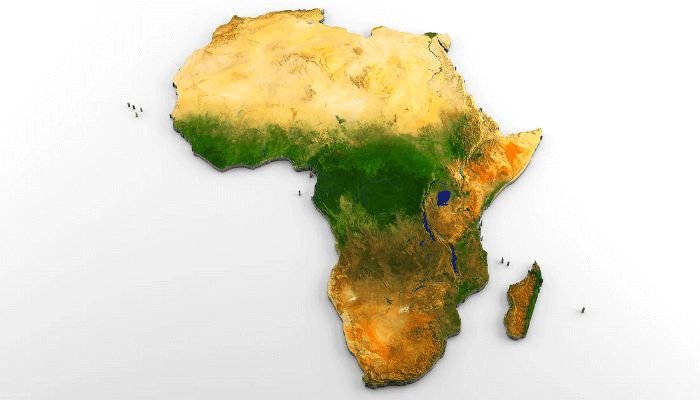
The FCFA monetary zone consists of 14 countries with a market of 160 million people and a fixed exchange rate of 1 euro = 655.957 FCFA. The West African Economic and Monetary Union (UEMOA – Union Économique et Monétaire Ouest-Africaine) consists of 8 countries (Benin, Burkina Faso, Ivory Coast (Côte d’Ivoire), Guinea-Bissau, Mali, Niger, Senegal, Togo), all of which use the West African CFA franc (FCFA – XOF) as their common currency. The Central African Economic and Monetary Community (CEMAC – Communauté Économique et Monétaire de l’Afrique Centrale) consists of 6 member countries (Cameroon, Chad, Central African Republic, Equatorial Guinea, Congo and Gabon), all of which use the Central African CFA franc (FCFA – XAF) as their common currency.
The UEMOA and CEMAC ensure monetary stability, keeping inflation around 3%, while Nigeria’s naira has suffered severe devaluations, from 1 USD = 306 NGN in 2019 to over 1400 NGN in 2024. This makes Francophone Africa an attractive investment destination for Nigerian investors, as the CFA franc reduces exchange rate risks and provides access to euros without currency fluctuations.
Francophone Africa, dominated by the FCFA, has three main leading countries: Côte d’Ivoire and Senegal (both in West Africa) and Cameroon (in Central Africa).
Côte d’Ivoire’s economy offers strong growth potential, driven by mining expansion and renewable energy projects. The Lafigue gold mine aims to produce 200,000 ounces annually, boosting exports, while the Boundiali solar plant (37.5 MW) enhances energy diversification. However, infrastructure gaps and regulatory constraints remain key challenges.
Senegal’s economy is expanding, driven by oil and gas projects, industrial growth, and major infrastructure investments. The Dakar-Diamniadio Industrial Park and the Port of Ndayane in Djamnadio enhance trade logistics. However, high public debt, unemployment, and energy dependency remain key challenges for sustainable growth.
But the country that will capture our attention is Cameroon. Indeed, Cameroon and Nigeria share ethnic, cultural, and geographical ties, making Cameroon a natural entry point into Central Africa. 20 percent of Cameroon’s population is Anglophone, residing in regions historically linked to Nigeria, while Adamawa, a Fulani-majority region, spans both countries. Meanwhile, Nigeria can serve as a gateway to West Africa for Cameroonian businesspeople.
Fast-moving consumer goods
Cameroon’s FMCG sector contributes 10 percent to GDP, yet modern retail penetration remains below 10 percent, limiting formal distribution. Infrastructure gaps, high import dependency, and counterfeit products raise costs and reduce quality. According to the IMF, improving logistics and creating a better business environment is crucial for growth. Investments in local production, supply chain optimisation, and retail expansion can help bridge the gap between demand and inefficient distribution.
Oil and energy
Cameroon’s oil production has declined from 100,000 barrels per day (bpd) in 2015 to 60,000 bpd in 2023. However, SONARA, the national refinery, remains key, importing Nigerian crude for domestic processing. The World Bank estimates Cameroon needs at least $2 billion to modernise refining capacity and transport infrastructure. The sector faces strong competition from Chinese (Sinopec), Indian (ONGC), and European (TotalEnergies, BP) firms, making Nigerian investment challenging but potentially rewarding.
Mining and natural resources
Despite vast reserves of bauxite (1 billion tonnes at Minim-Martap), iron (2.5 billion tonnes at Mbalam), and gold, Cameroon’s mining sector remains underdeveloped due to infrastructure deficits and regulatory bottlenecks. The African Development Bank (AfDB) estimates that $3 billion is needed for rail and port development to facilitate exports, while the Ministry of Mines projects $2 billion is required for modern extraction and refining facilities. Bureaucratic inefficiencies, slow licensing, and strong Chinese competition remain obstacles. Attracting $5 billion in exploration, processing, and equipment is essential to unlock Cameroon’s mining potential.
Infrastructure
Cameroon suffers from chronic underinvestment in roads, rail, and energy, limiting economic growth. The government plans to invest $25 billion by 2035, including the Douala-Yaoundé Highway ($500 million) and the Kribi deep-sea port expansion ($1.3 billion). However, financing gaps persist, with the World Bank estimating that at least $10 billion in additional investments is needed for urban transport, energy, and water projects. PPP models and private capital are crucial to bridging this deficit and improving competitiveness.
Banking and financial services
Cameroon’s banking sector contributes 7 percent to GDP but remains underdeveloped, with a low penetration rate of 16 percent (World Bank, 2023). The exit of European banks (BNP Paribas, Société Générale) has opened the market for African banks like Ecobank, Coris Bank, and Vista Bank. However, non-performing loans (10%), limited SME financing, and slow digital adoption are key challenges (Investir au Cameroun, 2024). The IMF estimates that $3 billion is required for financial inclusion, banking infrastructure modernisation, and credit expansion. Nigerian banks like UBA and Access Bank can leverage fintech and mobile banking to increase market penetration (Ecomatin, 2024).
Fintech
Cameroon’s fintech sector contributes 4% of GDP but faces regulatory barriers from COBAC, slowing mobile money adoption (Investir au Cameroun, 2024). While 50 percent of transactions use MTN Mobile Money and Orange Money, an 18 percent VAT on transactions and limited digital infrastructure hinder expansion (Ecomatin, 2024). The World Bank estimates $2 billion is needed to modernise payment systems, expand digital lending, and improve cybersecurity. Nigerian fintechs like Flutterwave and Paga can tap into digital financial services and financial inclusion gaps (Agence Ecofin, 2024).
Telecommunications
Cameroon’s telecom sector contributes 6% of GDP but faces low broadband penetration (90%) and delayed 5G adoption due to high costs and regulatory hurdles (Investir au Cameroun, 2024). The market is dominated by MTN, Orange, and Camtel, while local players like VipNet and YooMee struggle to expand. High infrastructure costs and a 33 percent tax rate hinder growth (Ecomatin, 2024). The World Bank estimates $3 billion is needed for fibre-optic expansion, rural connectivity, and 5G rollout (Agence Ecofin, 2024). Nigerian telecom firms can invest in mobile broadband and digital services.
BIXAF: A solution for cross-border transactions
Due to naira volatility, Nigerian investors prefer capital investments over debt financing, while day-to-day trade is exposed to exchange rates between the naira and the CFA franc. To address this issue, the BIXAF project (downloadable here) is ontrac—a stablecoin pegged to the FCFA/NAIRA for seamless cross-border transactions between Nigeria and UEMOA/CEMAC. With a 1:1 peg to XAF/NGN, BIXAF reduces conversion costs, secures capital, and speeds up financial transfers. Built on blockchain technology, it ensures security, transparency, and efficiency.
Why should Nigeria invest in Francophone Africa?
Francophone Africa presents a unique opportunity for Nigerian investors, offering monetary stability, expanding consumer markets, and strong infrastructure demand. The exit of European banks and the rise of African and Asian investors create new entry points for Nigerian businesses. However, competition from Chinese, Moroccan, and Indian firms, coupled with strict regulations, requires strategic partnerships, lobbying, and innovation. By leveraging local alliances and technology-driven solutions, Nigerian firms can strengthen intra-African trade and solidify their presence in Francophone markets.
Foaleng is CEO/Founder of Frontières. [email protected]