
48 properties have been sold so far
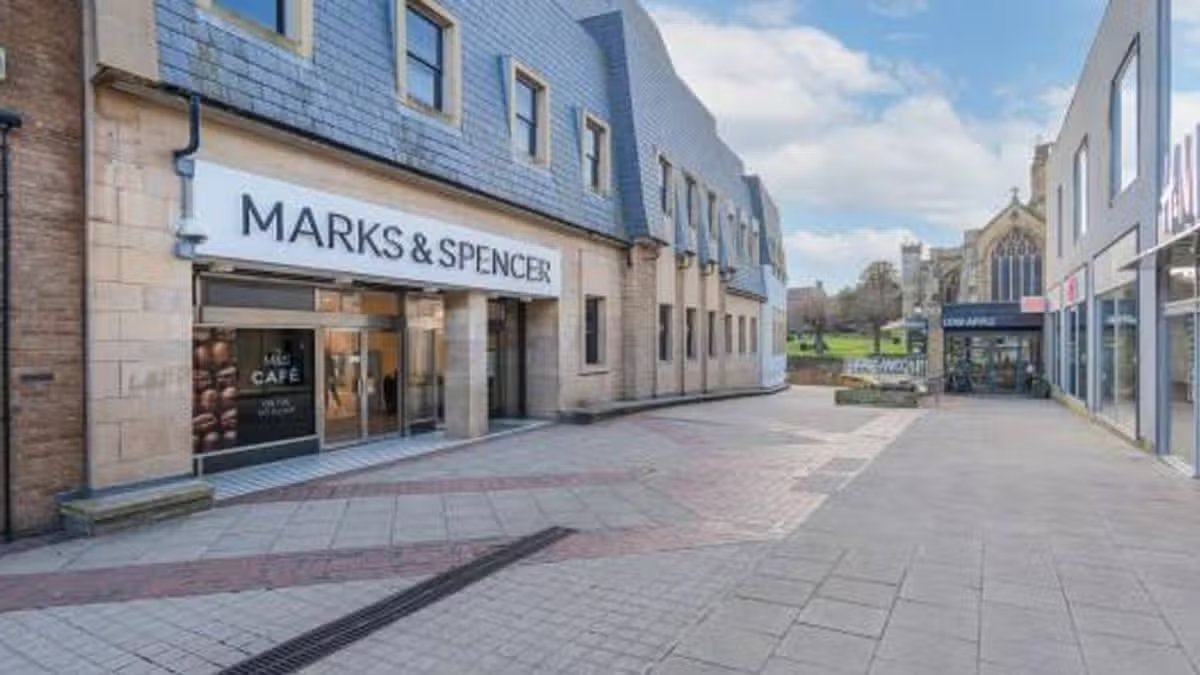
Marks & Spencer Store At 5 Middle Street In Yeovil(Image: Local Democracy Reporting Service)
Somerset Council has lost more than £91m on its commercial investments – with further losses being expected as the remainder are sold off.
Since its creation in April 2023, the council has been selling off surplus land and property, including the commercial investments it inherited from the former district councils.
The government has allowed the council to use the proceeds to be used to fund front-line services (something which is not normally permitted) – with the understanding that this facility will not be available after April 2027.
Around 60 per cent of the council’s asset portfolio has been sold to date, raising more than £125m – around £8.6m (or seven per cent) above the assets’ original valuation.
But when the cost of the original borrowing is taken into account, the council has incurred significant losses on its original investment, even when the rental income from these assets is taken into account.
Here’s what you need to know:
How did we get to this point?
Somerset’s four district councils – Mendip, Sedgemoor, Somerset West & Taunton, and South Somerset – made the commercial investments on the advice of the Ministry of Housing, Communities and Local Government (MHCLG) to generate rental income in light of cuts to central government grants to local authorities since 2010.
These investments were entirely funded by borrowing from the Public Works Loans Board (PWLB – now part of the Treasury), which allows public sector organisations to borrow money at a lower interest rate than commercial banks.
By the time the district councils were abolished and replaced by Somerset Council in April 2023, they had invested £310,226,000 (including fees and stamp duty) in 48 commercial properties – of which only 25 per cent were actually in Somerset.
These properties ranged from retail units (like the Marks & Spencer and Wilko stores in Yeovil town centre) to industrial units (like part of Commerce Park in Frome) and business parks (like Street Business Park).
Following the coronavirus pandemic, and numerous councils running into serious financial difficulties through poor financial choices, central government encouraged Somerset Council and its counterparts to sell off these investments to help address rising demand for services.
The council has chosen to steadily sell off these investments over a period of time, to avoid reputational damage and prevent it from being a “weak wildebeest” by unscrupulous investors seeking to buy under the asking price.
Which investments have been sold to date?
As of early-June, 28 of the 48 investments has been sold off by the council, raising more than £125m – around £8.6m (or seven per cent) above the assets’ original valuation.
A further five assets are currently under offer, with a combined guide price of more than £24m.
The majority of these sales have been to small property companies, a large French investment company (which is taking advantages of UK tax breaks) and private investors “with a lot of wealth… who like bricks and mortar”.
The full list of properties sold to date is as follows:
- Unit 1, New House Farm Industrial Estate, Chepstow
- Unit B2, Commerce Park, Frome
- Units 1 and 2, Barnwood Industrial Estate, Gloucester
- 430 Bristol Business Park, Bristol
- 600-650 Aztec West, Bristol
- The Leggar Retail Park, Bridgwater
- Street Retail Park, Street
- EG Petrol Filling Station, Bristol
- TK Maxx, Worcester
- 27-29 Sherwood Road, Bromsgrove
- Marks & Spencer, Yeovil
- Reevesland Industrial Estate, Newport
- B&Q, Glastonbury
- Costa Coffee, Glastonbury
- Trafalgar House, Taunton
- Imperial House, Newport
- Lyndon Place, Birmingham
- Steelite, Stoke-on-Trent
- The Range, Pellon Lane, Halifax
- Audi dealership, Cardiff
- Jaguar Land Rover, Stockton-on-Tees
- Fenick House, Glasgow
- Reflex Group, Barwell
- B&Q, Heathfield Road, Ayr
- 730 Aztec West, Bristol
- Reflex Group, Ossett
- North Shields Retail Park, North Shields
- One Quinton Business Park, Birmingham
How much money has the council lost?
A report published before the council’s audit committee values its investments (including those sold) at £222,411,000 as of March 2024 – a drop in value of £78,815,000.
By the time the 2024/25 accounts were signed off, a further loss of £17,512,000 had been incurred, either by property still held decreasing in value or property being sold off for lower than its original purchase price.
The council did manage to turn a profit on sales made during the 2025/26 financial year, to the tune of £4,715,000.
However, a valuation of the remaining assets (carried out in late-March) resulted in a further loss of £241,000 – resulting in a total loss to date of £91,853,000.
Did the council make any money from its investments?
The short answer is: yes and no.
If we are purely measuring on the different between the original purchase price and what the assets were ultimately sold for, then the council has made a massive loss.
Of the 28 sales to date, only six turned any kind of profit on this way – the largest profit being just under £1.5m from the sale of the B&Q store in Glastonbury.
The largest loss was the Steelite factory in Stoke-in-Trent, which was sold to the company for £14.4m having being purchased for £21m – a loss of £6.6m.
However, if we take into account the rental income the assets generated before they were sold, the picture is rather different.
In this scenario, only seven of the 28 investments made a net loss – with the largest loss again being the Steelite site, which made a net loss of nearly £3.2m.
The most profitable investment has been the North Shields Retail Park near Newcastle-upon-Tyne -which only marginally decreased in value and generated a net profit of nearly £4.4m.
A council spokesperson said “The properties were invested in to generate an income, so the return on initial investment should be taken into account.
“The sale returns plus rental income of these sales total a positive return of £17.19m.”
What happens next?
In addition to selling off the remaining assets, the council must also repay all the remaining borrowing it used to purchase the assets in the first place.
This borrowing is one of the main reasons for the council’s overall debt being above £1bn – though it is forecast to fall over the next five years, in spite of more money being borrowed to build new council houses.
Any assets which are sold off after April 2027 cannot be used to fund front-line services directly – unless the government grants the council a capitalisation directive for a fourth consecutive year.