

Typically, SIPs entail monthly investment. Now the question is: if you invest the same rupee amount over a year, does investing daily or weekly (high-frequency SIPs) create more wealth than investing monthly?
No consistent winner
A comparative analysis of daily, weekly and monthly SIPs across five active equity fund categories—large cap, flexi-cap, mid-cap, multi-cap and small-cap—and five time horizons from one year to 10 years, period-ending 31 August 2026, finds no consistent return winner among the three frequencies. The study sourced the data from ACE MF.
For the study, the daily SIP was Rs.500 per trading day, with weekly and monthly amounts adjusted and scaled to ensure all three frequencies invested the same total over the period. Returns were averaged across all schemes within each category. For example, in the large-cap category, 23 schemes were considered for the 10-year analysis, which increased to 33 schemes for the 1-year period.
Note: SEBI has backed the idea of “Chhoti SIP” of just Rs.250 a month, aimed at bringing first-time and smaller investors into mutual funds.
The study shows that the compounded return gaps are narrow. Across all five categories and five horizons, the gap between daily, weekly and monthly SIP returns is generally small. The maximum spread is 0.88 percentage points, recorded in the one-year small-cap period. Meaning, a large-cap fund investor running a 10-year SIP would see an average return of 11.69% via daily SIP, 11.71% via weekly, and 11.67% via monthly. For a mid-cap fund over 10 years, daily produces 17.71%, weekly 17.73%, and monthly 17.65%. For small-cap, the numbers are 18.89%, 18.91%, and 18.85%, respectively. Rankings shift by category and horizon, with no frequency consistently on top.
Manish Kothari, Co-founder and CEO of ZFunds, whose platform has seen its daily SIP book double every year for two years, says: “Across five-year windows on the Nifty 500 index from 2006 to 2026, the choice of investing frequency made almost no difference to long-term returns. Monthly, weekly and daily investing produced an average yearly return of 12.1%.”
According to Kothari, even the worst-case drawdowns behaved the same way: the worst peak-to-trough falls averaged 22.4% for monthly, 22.6% for weekly and 22.7% for daily—a difference too small to meaning fully change how a portfolio feels to hold.
Rhishabh Garg, CEO of FundsIndia.com, explains the arithmetic. “The averaging benefit that daily or weekly investing adds within a single month is tiny next to the averaging that is already happening across months and years in any SIP,” he says.
Cash flow, not return
If the return difference is negligible, why are daily SIPs gaining traction? The simple answer is that people choosing them often aren’t doing it to improve returns. They are doing it because it matches how money actually moves through their lives.
According to PhonePe’s data, nearly 77% of its daily SIP investors come from tier II/ III cities. Investors aged 18 to 29 account for 58% of the daily SIP base. The average ticket size is Rs.50 per day. Nilesh D. Naik, Head of Mutual Funds at PhonePe, says new customer acquisition increased significantly after the launch of the daily SIP feature. “Many investors, especially micro-entrepreneurs or those who are self-employed, seem to be a lot more interested in daily SIP as a feature,” he notes.
Kothari of ZFunds sees the same investor profile in his numbers. “A large part of the adoption we see comes from professionals and business owners such as freelancers, doctors, shop owners and petrol pump owners. For them, money comes into the business almost every day,” says Kothari.
At ZFunds, the most popular daily SIP amount is around Rs.200 per day—small enough to fit comfortably into daily cash flows, but meaningful enough to build into a sizeable monthly investment over time.
According to Deepak Chhabria, CEO and Director of Axiom Financial Services, for a daily wage earner or a small business owner with irregular cash flows, monthly debits may be genuinely harder to manage. Note that Sebi redefined and restructured the multi-cap category in late 2020, which means very few schemes have a track record long enough to qualify for the longer-horizon comparisons (just six funds make the cut at 10 years). The long-term XIRR calculations for the multi-cap category are, therefore, based on a relatively small sample.
Not just beginners
One assumption is that high frequency SIPs are essentially a gateway product. However, Kothari has a different view. “For us, the daily SIP is not an entry-level investment format to lure investors or those with no understanding of the product,” he says. “It is an alternative way of investing regularly for people whose income patterns are different from those of a typical salaried investor.” The ZFunds data supports the claim: The 24-month SIP persistence rate across ZFunds investors stands at 88%, which holds across both daily and monthly formats.
Boniface Noronha, Chief Digital Officer at Axis Mutual Fund, puts the positioning similarly. “Rozana SIP is not a replacement, but an expansion of choice,” he says. “Historically, three barriers existed: distance, documentation, and ticket size. Digital has solved the first two. Micro investing solves the third.”
Noronha draws a parallel between high frequency SIPs and the way fast-moving consumer goods (FMCG) companies penetrated smaller markets through sachetisation, smaller units at lower price points, same product. Notably, the capital markets regulator, Securities and Exchange Board of India (SEBI), has backed the idea of “Chhoti SIP” of just Rs.250 a month, aimed at bringing first-time and smaller investors into mutual funds. The initiative is built around the idea of “sachetisation” — making investing affordable enough to start small and build the habit over time.
However, unlike daily or weekly SIPs, which increase investment frequency, Chhoti SIP focuses on reducing the ticket size, retaining monthly investing.
The behavioural case
There is a behavioural argument for daily SIPs. When the individual commitment is Rs.50 rather than Rs.1,500, the psychological barrier to starting is lower. A person who might hesitate to commit a monthly SIP of Rs.5,000 may find it easier to begin with Rs.150 a day. “When investment minimums become similar to a mobile recharge or a cup of tea, the conversation changes from ‘Can I invest?’ to ‘Why am I not investing?’” says Noronha.
Naik of PhonePe adds that daily SIPs, by their automated nature, may also reduce the temptation to time the market. “During periods of market volatility, investors can often be tempted to delay investments while waiting for the right entry point,” he says.
Garg of FundsIndia offers a counter-argument. More frequent investing, he argues, creates more portfolio touchpoints—and more touchpoints mean more opportunities to notice short-term volatility. “A daily or weekly SIP means far more touchpoints with your portfolio, more line items, more chances to notice a rough week, and more decision points at which someone could pause or stop,” he says. “A monthly SIP is one decision a month. Less contact with short-term noise generally means less opportunity for that noise to talk you out of staying invested.”
Further, one common misconception about high-frequency SIPs is that they should be particularly useful in more volatile fund categories—small-cap and mid-cap funds—because more price points mean better rupee-cost averaging during drawdowns.
The data does not strongly support this. In small-cap funds over 10 years, the XIRR (Extended Internal Rate of Return) spread between daily, weekly and monthly SIP is just 0.06 percentage points, the same order of magnitude as in large-cap. “More intra-month volatility does mean more distinct price points to average across,” says Garg.
Key findings
Across all 5 active equity fund categories and all 5 horizons, the XIRR gap between daily, weekly, and monthly SIP is at most 0.3 0.88 percentage points. No single frequency dominates consistently. Investors should not overestimate the importance of SIP frequency; discipline and consistency matter.
Methodology
Daily SIP: Rs.500 on every trading day. Weekly SIP = Rs.500 × total trading days in a week. Monthly SIP = Rs.500 × total trading days in a month. Weekly SIP installment done on 1st trading day of the week. Monthly SIP done on 1st trading day of the month.
Funds Eligibility: Only funds with NAV data from the period start date through 31 Aug 2026. Eligible scheme counts fall as horizon lengthens.
XIRR taken as an average of all the schemes within a category.
Source: ACE MF. ET Wealth Research
Daily, weekly or monthly: Which SIP works best
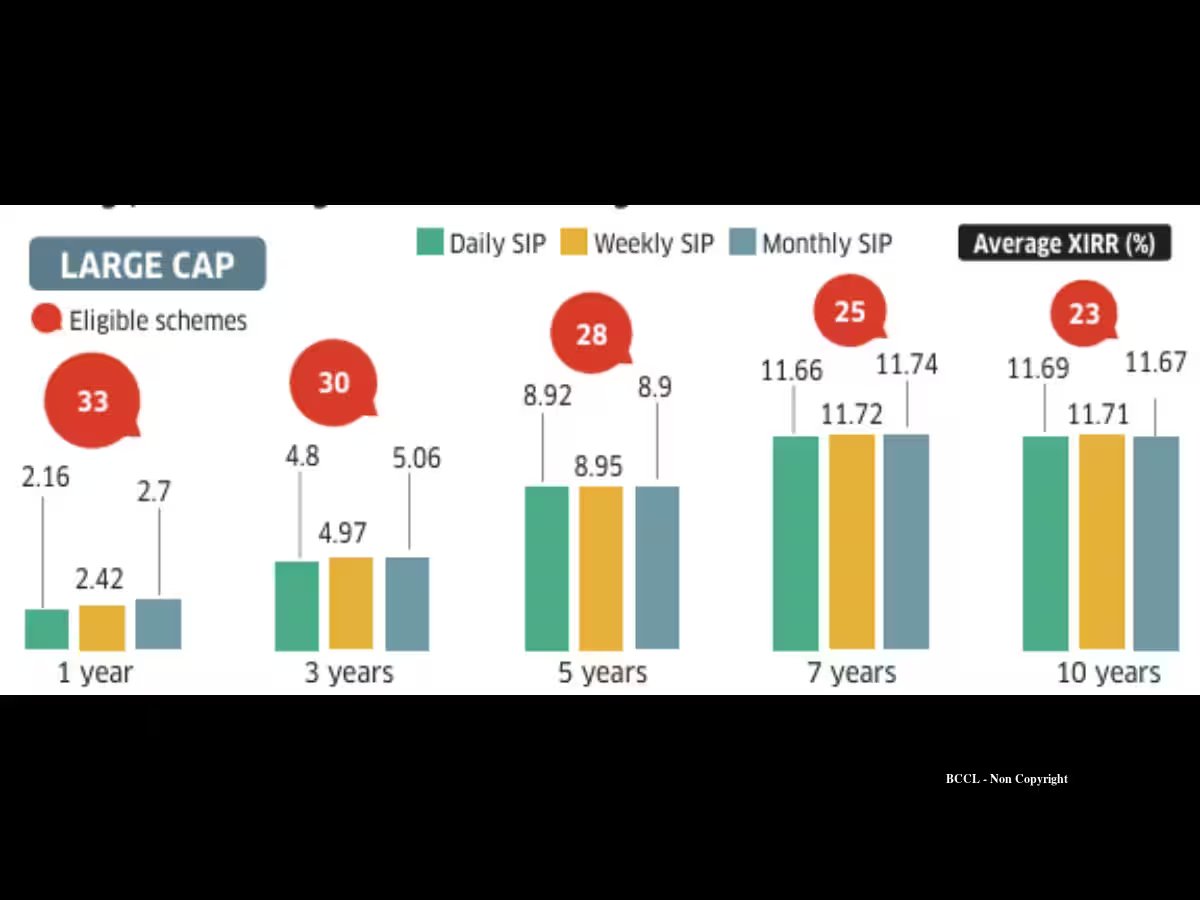
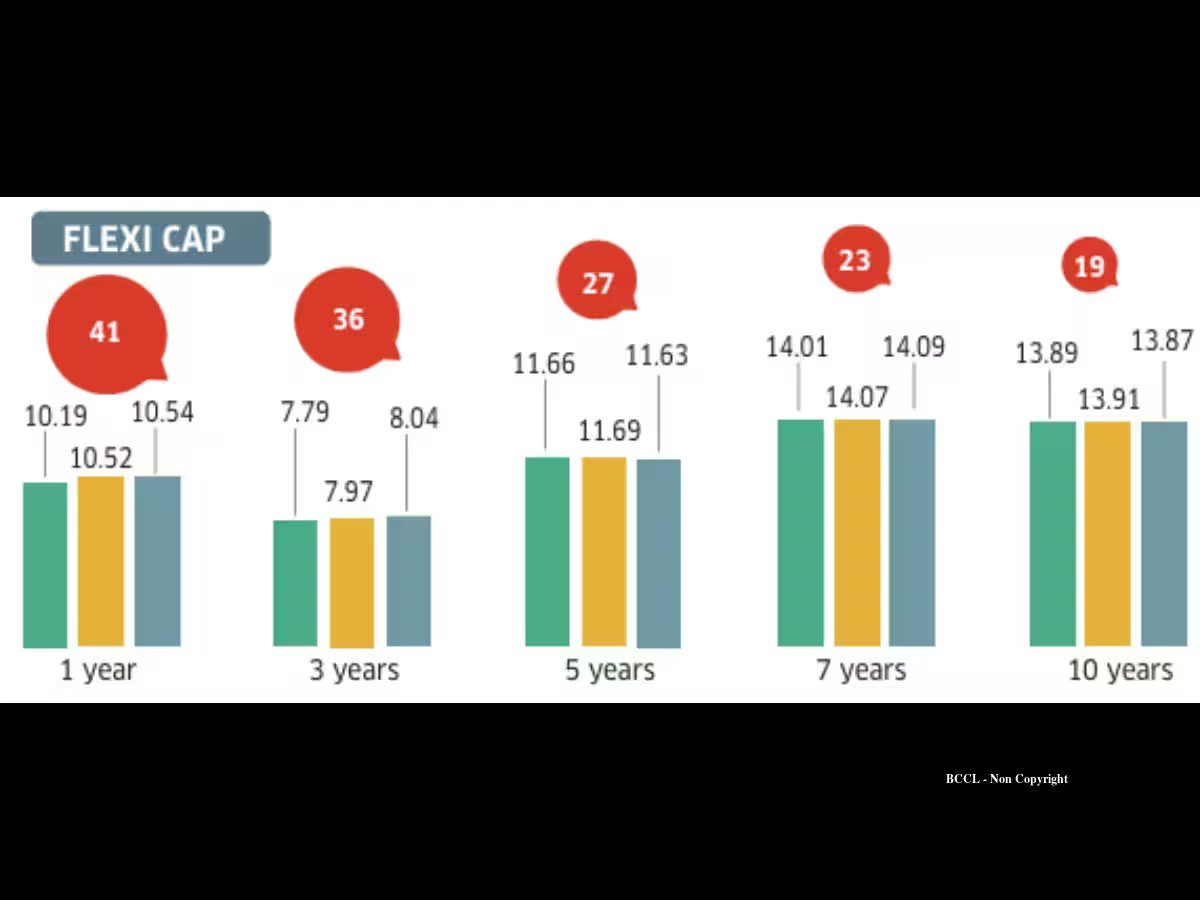
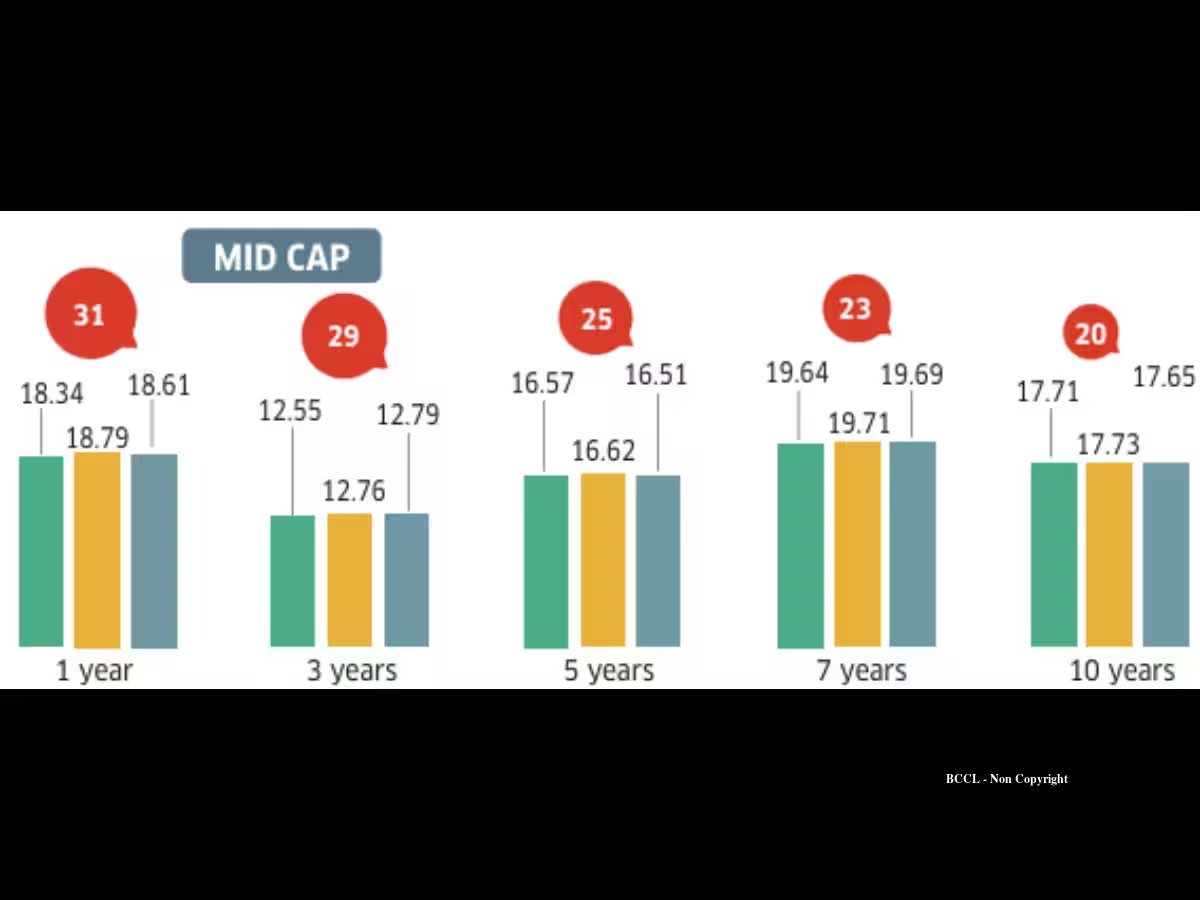
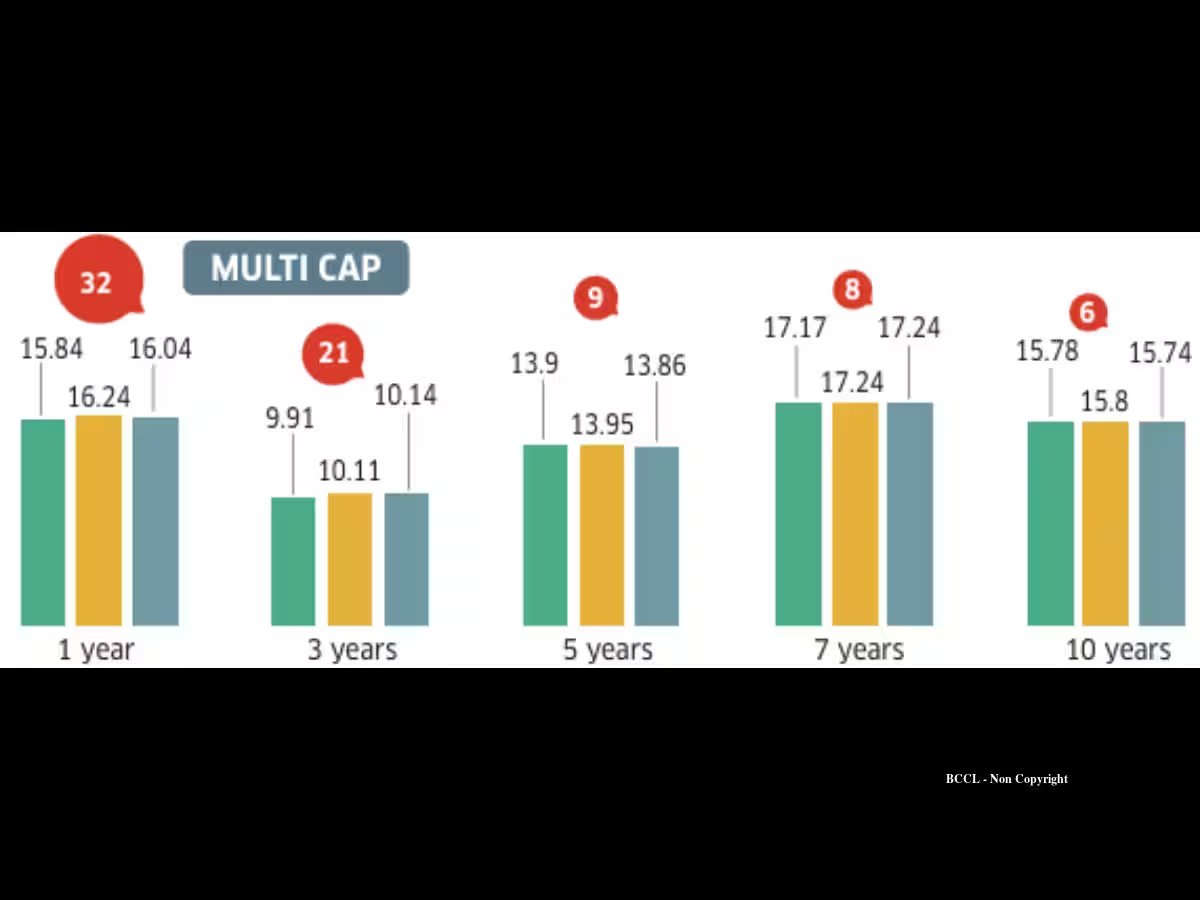
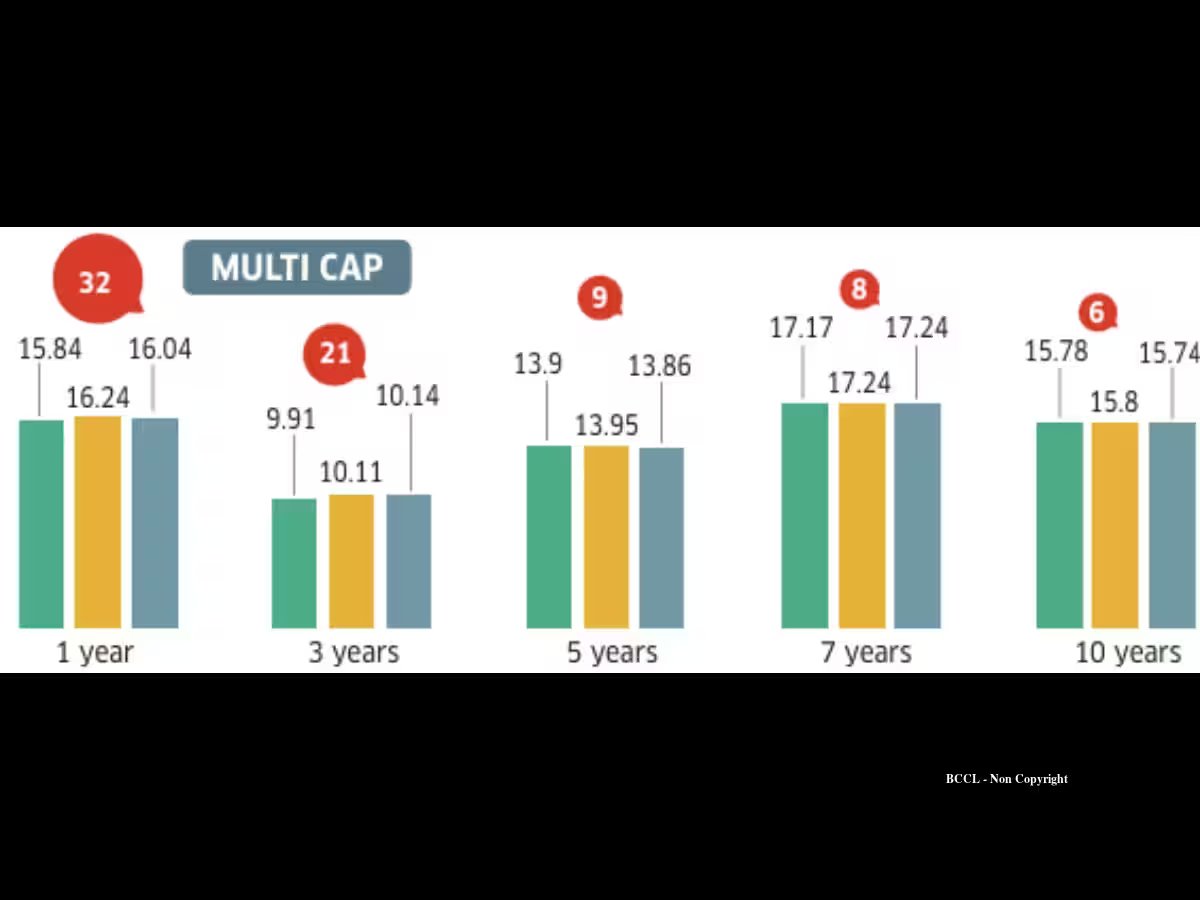
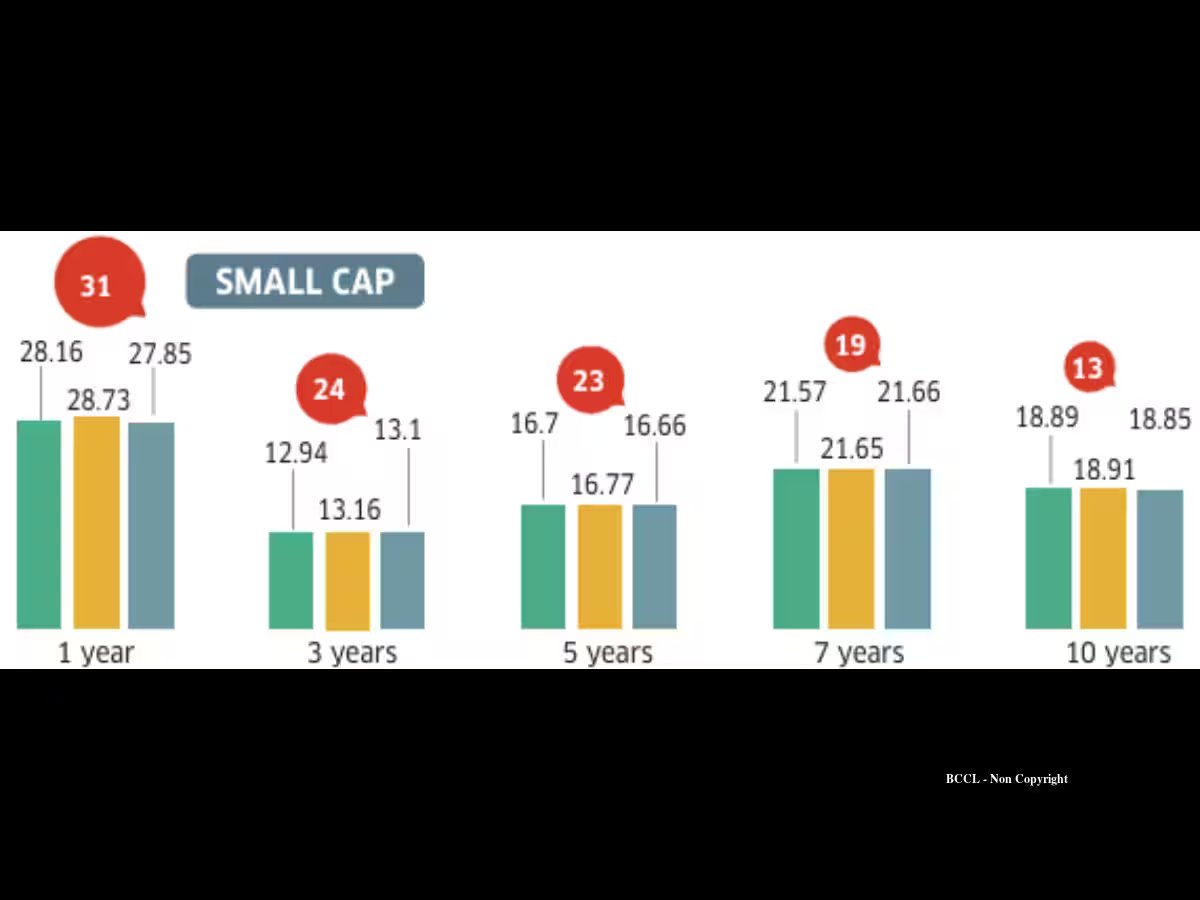
Period end: 31 August; Daily SIP Rs.500/trading day; Weekly and monthly amounts scaled to equal same total as daily; XIRR = Extended Internal Rate of Return. Sebi restructured multi-cap category in late 2020, so most funds lack the history needed for long-horizon comparisons. The 10-year multi-cap XIRR is based on just six schemes.
The operational reality
One practical challenge with high frequency SIPs is administrative complexity. “In case of a withdrawal, there is more clarity in terms of exit load calculation with a monthly SIP,” says Chhabria. “In the case of a monthly SIP, after five or six years, somebody says I want to withdraw, and the start date is the 1st, it is very easy to say, leave the last 12 months and then withdraw prior to that year. With daily SIPs, you have to calculate day-wise.”
Every daily instalment has its own purchase date, and exit load periods— typically one year from investment— apply to each separately. He also flags the possibility of failed debits. “There can be a banking failure also. It may be a convenience these fintechs may be offering, but you have to ensure all instalments went through correctly.” For monthly SIP investors, one missed debit is obvious. For daily SIP investors, a few missed transactions in a month may not register immediately.
This does not make daily SIPs operationally unmanageable—most platforms automate reconciliation. But it is real-world friction that investors should factor in, particularly when they anticipate partial withdrawals before the end of a long horizon.
Your frequency, your call
Taken together, the data leads to three conclusions. First, no single frequency consistently wins among daily, weekly, and monthly SIPs. Second, the differences are small and shrink further over longer horizons. Third, frequency still matters a great deal at the individual level—not because of return arithmetic, but because of cash-flow patterns, convenience, affordability, and behavioural preferences.
Three decisions triumph over frequency— how the SIP amount grows every year, how the portfolio is allocated across different asset classes, and how long the investor stays invested without interruption. Get those three right and frequency is a rounding error.