
Close Menu
Fund Focus News
    Facebook X (Twitter) Instagram
    Trending
    • SIP inflows slip 4% to Rs 29,845 crore in February; equity funds see steady demand amid volatility
    • How to Establish Beneficiaries for Your Mutual Funds
    • Understanding Back-End Load Fees in Mutual Funds
    • Mutual Fund Timing: Definition, Impact, and Example
    • How to Use Money Market Funds in Your Portfolio
    • Multi-asset allocation funds emerge as top-performing hybrid segment in February
    • NS&I Premium Bonds customers with ‘modest’ holdings urged to close accounts
    • Market correction: Flexi-cap funds fall up to 23% in nearly 18 months; large caps decline over 12%
    Facebook X (Twitter) Instagram
    Fund Focus News
    • Home
    • Bonds
    • ETFs
    • Funds
    • Investments
    • Mutual Funds
    • Property Investments
    • SIP
    Fund Focus News
    Home»SIP»Sip sustainably: Tasmanian dairy launches ‘Eco-Milk’ from seaweed-fed cows
    SIP

    Sip sustainably: Tasmanian dairy launches ‘Eco-Milk’ from seaweed-fed cows

    July 22, 2024


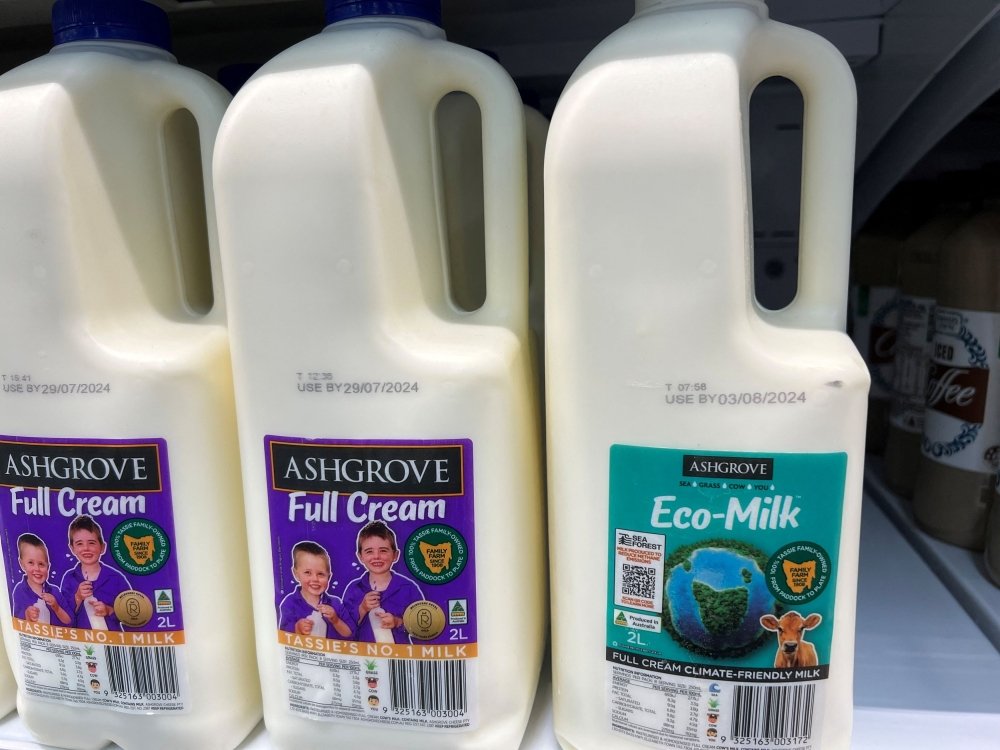
    CANBERRA, July 22 — A small dairy in Tasmania is stocking supermarket shelves with what it says is the world’s first branded milk produced by cows fed with a seaweed that makes them emit lower levels of environmentally damaging methane gas.

    The livestock industry accounts for around 30 per cent of global methane emissions, according to the United Nations. Seaweed and other feed additives for cattle could reduce these greenhouse gas emissions but have yet to be widely adopted due to cost.

    Advertising

    Advertising

    Since February, family-owned Tasmanian dairy producer Ashgrove has been feeding around 500 cows — a fifth of its total — an oil containing a seaweed extract that reduces the methane released by a cow’s digestion, said co-owner Richard Bennett.

    The cows produce around 10,000 litres of milk a day, a portion of which is bottled as “Eco-Milk” and sold across Tasmania including at Woolworths, Australia’s largest supermarket chain.

    “We’re getting about 25 per cent reduction in methane,” Bennett said.

    Eco-Milk is a test of whether consumers will pay extra for dairy products that have a lower environmental impact.

    A two-litre bottle sells for A$5.50 (RM17.20), twenty-five cents more than normal full cream milk, Bennett said, adding that sales were going well but the company had yet to decide on whether to expand the project.

    Producers of feed additives that inhibit the release of methane by microbes digesting plant matter in cows’ stomachs have invested hundreds of millions of dollars to produce enough to feed millions of animals.

    French cheese maker Bel Group said last year it would feed an additive to around 10,000 dairy cows in Slovakia. Other firms including JBS, Danone and Fonterra have dabbled with additives but not rolled them out at scale.

    The additive used by Ashgrove is supplied by a Tasmanian company called Sea Forest. Its CEO Sam Elsom said he hoped Eco-Milk would be popular.

    “If these products aren’t supported, things will go back to usual,” he said. “And the pace of decarbonisation will be much slower.” — Reuters


    Source link

    Share. Facebook Twitter Pinterest LinkedIn Tumblr Telegram Email

    Related Posts

    How to Use SIP Calculator for Retirement Planning?

    March 9, 2026

    3 reasons why stopping your SIP in March 2026 could be a Rs 4.3 lakh mistake – Money Insights News

    March 8, 2026

    Using SIP and FIRE Calculators for Wealth Goals

    March 5, 2026
    Leave A Reply Cancel Reply

    Top Posts

    The Shifting Landscape of Art Investment and the Rise of Accessibility: The London Art Exchange

    September 11, 2023

    Charlie Cobham: The Art Broker Extraordinaire Maximizing Returns for High Net Worth Clients

    February 12, 2024

    How to Use Money Market Funds in Your Portfolio

    March 10, 2026

    The Unyielding Resilience of the Art Market: A Historical and Contemporary Perspective

    November 19, 2023
    Don't Miss
    Mutual Funds

    SIP inflows slip 4% to Rs 29,845 crore in February; equity funds see steady demand amid volatility

    March 10, 2026

    Systematic Investment Plan (SIP) inflows into mutual funds declined marginally in February 2026, reflecting the…

    How to Establish Beneficiaries for Your Mutual Funds

    March 10, 2026

    Understanding Back-End Load Fees in Mutual Funds

    March 10, 2026

    Mutual Fund Timing: Definition, Impact, and Example

    March 10, 2026
    Stay In Touch
    • Facebook
    • Twitter
    • Pinterest
    • Instagram
    • YouTube
    • Vimeo
    EDITOR'S PICK

    Best Parag Parikh Fund: Rs 10K SIP becomes Rs 43 lakh – Over 20% annualised returns! – Money News

    March 25, 2025

    Daiwa Office Investment Issues New Corporate Bonds

    August 9, 2024

    Small-Cap ETFs: ISCB Outperforms, but SPSM Yields More

    January 17, 2026
    Our Picks

    SIP inflows slip 4% to Rs 29,845 crore in February; equity funds see steady demand amid volatility

    March 10, 2026

    How to Establish Beneficiaries for Your Mutual Funds

    March 10, 2026

    Understanding Back-End Load Fees in Mutual Funds

    March 10, 2026
    Most Popular

    🔥Juve target Chukwuemeka, Inter raise funds, Elmas bid in play 🤑

    August 20, 2025

    💵 Libra responds after Flamengo takes legal action and ‘freezes’ funds

    September 26, 2025

    ₹10,000 monthly SIP in this mutual fund has grown to ₹1.52 crore in 22 years

    September 17, 2025
    © 2026 Fund Focus News
    • Get In Touch
    • Privacy Policy
    • Terms and Conditions

    Type above and press Enter to search. Press Esc to cancel.