
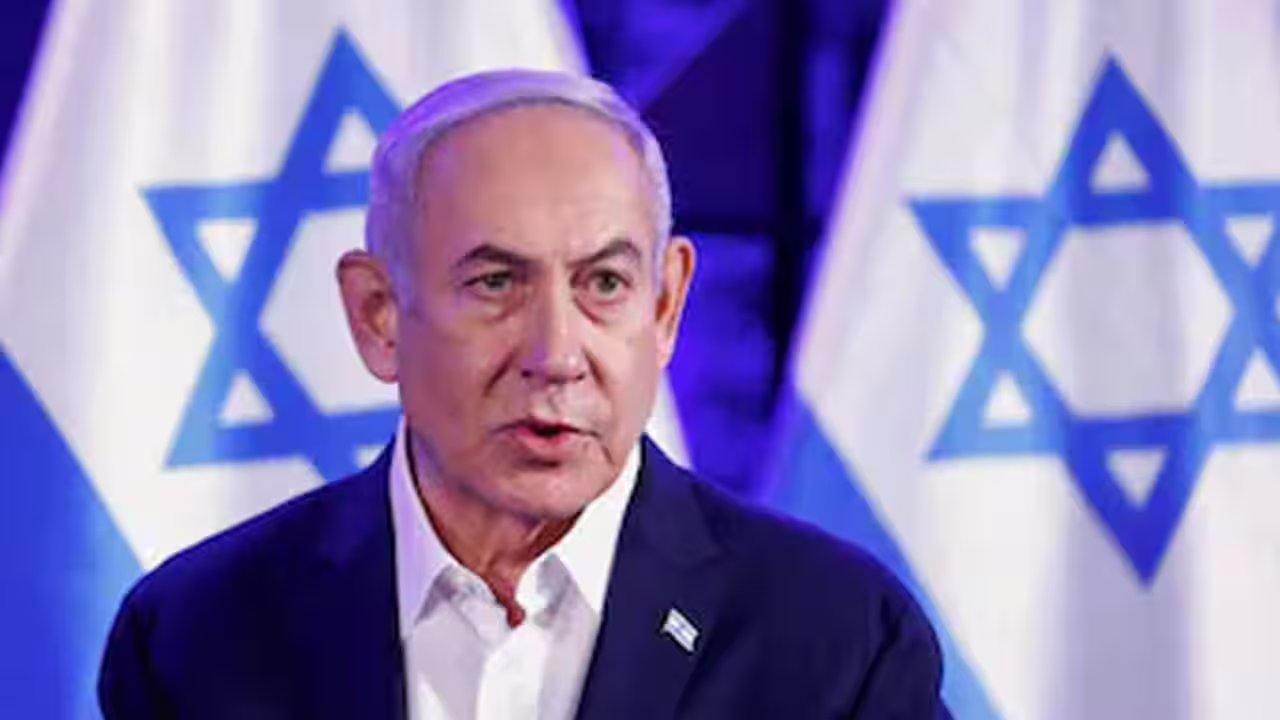
Israeli Prime Minister Benjamin Netanyahu has privately acknowledged that Israel currently has limited ability to influence US President Donald Trump’s decision-making on Iran, as Washington continues negotiations aimed at ending the nearly three-month-old conflict, according to two Israeli officials familiar with the conversations.
According to a Reuters report citing sources with knowledge of Netanyahu’s private discussions, there growing concerns within Israel as the United States pursues a diplomatic framework with Tehran that could reshape the regional conflict while leaving several Israeli security demands unresolved.
Israel has largely remained outside the ongoing negotiations between Washington and Tehran, which are focused on securing an initial agreement to halt hostilities following the joint US-Israeli bombardment campaign that began on February 28.
Although both the United States and Iran have downplayed expectations of an immediate breakthrough, negotiations have reportedly progressed on several fronts, including maritime security and sanctions relief. However, major disagreements remain over Iran’s nuclear programme, the lifting of US sanctions, and the future of Israeli military operations in Lebanon against Hezbollah.
According to one Israeli official involved in Netanyahu’s discussions, the prime minister expressed concern over the memorandum of understanding currently under negotiation between the United States and Iran.
Under the proposed arrangement, Iran would reopen the Strait of Hormuz to global shipping in exchange for the United States lifting its naval blockade on Iranian ports, a senior Trump administration official said. The two sides would then proceed to further negotiations on Iran’s nuclear programme.
The talks between Washington and Tehran are being conducted indirectly with mediation from Pakistan.
Iranian sources have also told Reuters that future stages of negotiations could include “feasible formulas” to address concerns over Iran’s stockpile of highly enriched uranium, including the possibility of diluting the material under supervision by the United Nations nuclear watchdog.
Despite Israel’s long-standing concerns regarding Iran’s nuclear enrichment activities and uranium reserves, Netanyahu reportedly acknowledged in private that Israel currently “has no manoeuvre to influence the president right now,” according to one of the Israeli officials.
The developments come amid intensive communication between Trump and Netanyahu. The two leaders have spoken in a telephonic conversation at least three times over the past week, during a period in which Israeli officials said preparations were underway for the possible resumption of joint US-Israeli air strikes targeting Iranian energy infrastructure.
Following the first of the three calls on Tuesday night, Trump was asked by reporters what he had told Netanyahu.
“He’s a very good man, he’ll do whatever I want him to do,” Trump said.
The two leaders spoke again on Friday night. A third call took place on Saturday after Trump held a joint discussion with leaders from Gulf nations, Turkey and Pakistan to brief them on the status of negotiations with Iran.
After that latest conversation, Netanyahu publicly commented for the first time on the emerging agreement, saying in a statement that he and Trump had discussed the “memorandum of understanding to reopen the Strait of Hormuz and the upcoming negotiations toward a final agreement on Iran’s nuclear program.”
Netanyahu said both leaders agreed that any eventual agreement with Tehran must include the dismantling of Iran’s nuclear enrichment facilities and the removal of enriched uranium from Iranian territory.
He also stated that Trump had “reaffirmed Israel’s right to defend itself against threats on every front, including Lebanon.”
Despite a ceasefire reached on April 16 after broader understandings between Washington and Tehran, fighting between Israel and Hezbollah has continued.
Israeli troops remain deployed across parts of southern Lebanon, while Israeli air strikes targeting Hezbollah positions have persisted. Hezbollah, in turn, has continued launching drones toward Israeli forces and northern Israeli towns.
At the start of the military campaign against Iran, Netanyahu had declared that Israel sought to eliminate Iran’s nuclear and ballistic missile capabilities, weaken its regional influence and create conditions for the collapse of Iran’s clerical leadership.
According to an earlier Reuters report, Trump gave final approval for the initial military operation after Netanyahu urged joint US-Israeli action targeting Iran’s Supreme Leader Ali Khamenei, who was killed in the opening strikes.
Since then, however, US and Israeli priorities have increasingly diverged. Washington has shifted its focus toward restoring stability in the Strait of Hormuz, through which roughly one-fifth of global oil and liquefied natural gas shipments passed before the war.
In a recent interview with CBS, Netanyahu maintained that additional steps were still necessary to ensure Iran ends uranium enrichment, halts support for regional proxy groups and stops producing ballistic missiles.
“There’s work to be done,” Netanyahu said.