
The bank cited a survey from late 2025 in which central banks said “geopolitics” was the third-biggest risk they faced, behind only “cybersecurity” and “other cyber incidents”. Three-quarters of central banks said geopolitical risk had increased last year.
In a fresh survey from April, a month after the US and Israel attacked Iran, 70pc of central banks said geopolitics was now the most significant risk they faced this year.
A third of central banks also said geopolitics would be the most important factor guiding the management of their foreign-currency reserves over the next five years.
Gold is traditionally viewed as a haven when markets or politics are stormy. But the ECB noted several disadvantages: its price is volatile, it is expensive to store and it cannot respond as quickly to shifts in demand.
This has traditionally led central banks to favour US bonds and other dollar-denominated investments, which are highly liquid and held in the world’s most widely used currency.
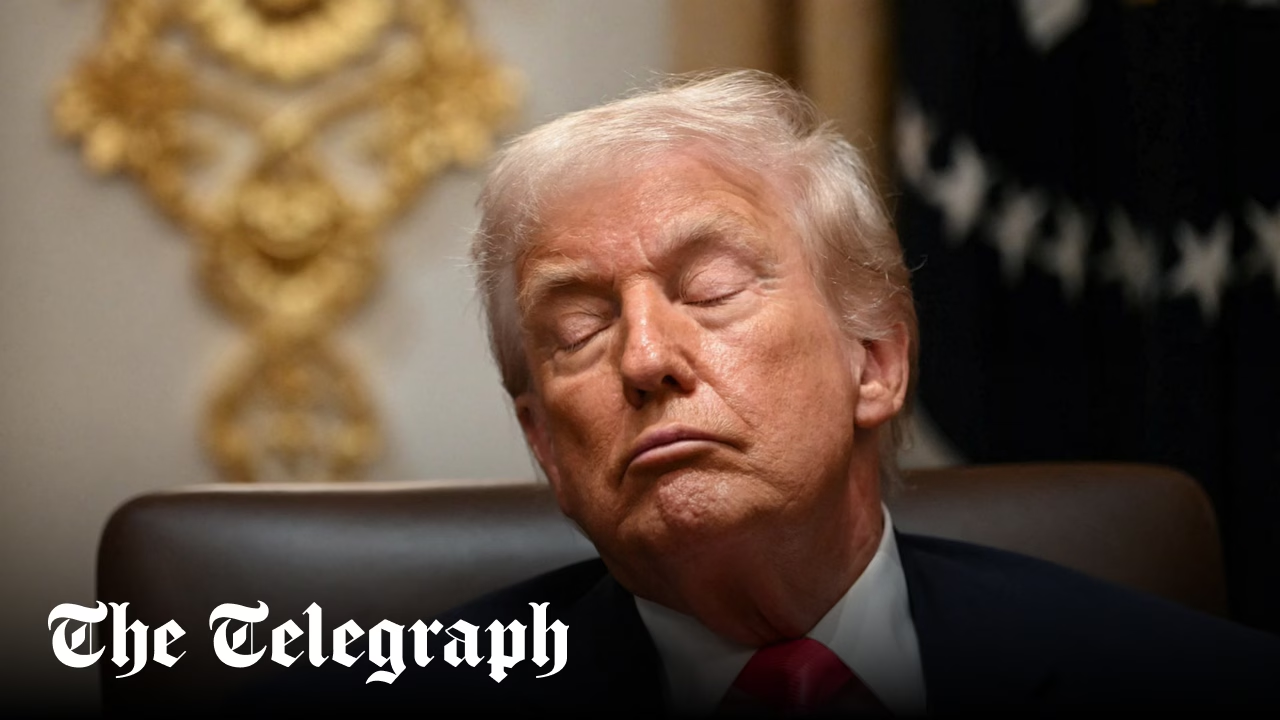
However, central banks have grown more cautious as Mr Trump has pursued unpredictable policy on the world stage and piled on more debt.
The US government’s debt is growing faster than demand for its bonds and faster than the American economy. The debt-to-GDP ratio has risen from just over 100pc in the 2010s to more than 120pc today.
The value of US Treasuries held in custody by central banks and other official institutions at the New York Federal Reserve declined by $82bn in March to $2.7tn, the lowest level since 2012.
Some central banks are wary about the potential weaponisation of those reserves after Russia’s central bank had its US assets frozen. A UBS survey last year found 49pc of reserve managers held this concern, up from 14pc in 2023.
The physical volume of gold central banks bought last year dropped to 850 tons, down from 1,000-plus tons in each of the previous three years.
The significant buyers in recent years have been the central banks of China, Poland, Turkey and India.
Turkey’s central bank has sold or lent out 130 tons of gold this year as it tried to prop up the value of the currency amid rising energy import costs. Russia’s central bank also sold gold, the ECB said, seemingly to bankroll its war against Ukraine.