
Key Takeaways
- State Street launched its Nasdaq 100 ETF last week, and BlackRock’s could land soon. Both could press the Invesco QQQ ETF on the fees investors pay.
- Nasdaq 100 is set to add SpaceX to its index next week, which means the funds tracking it will have to buy the stock.
Get personalized, AI-powered answers built on 27+ years of trusted expertise.
When the biggest game in town has competition, customers stand to benefit.
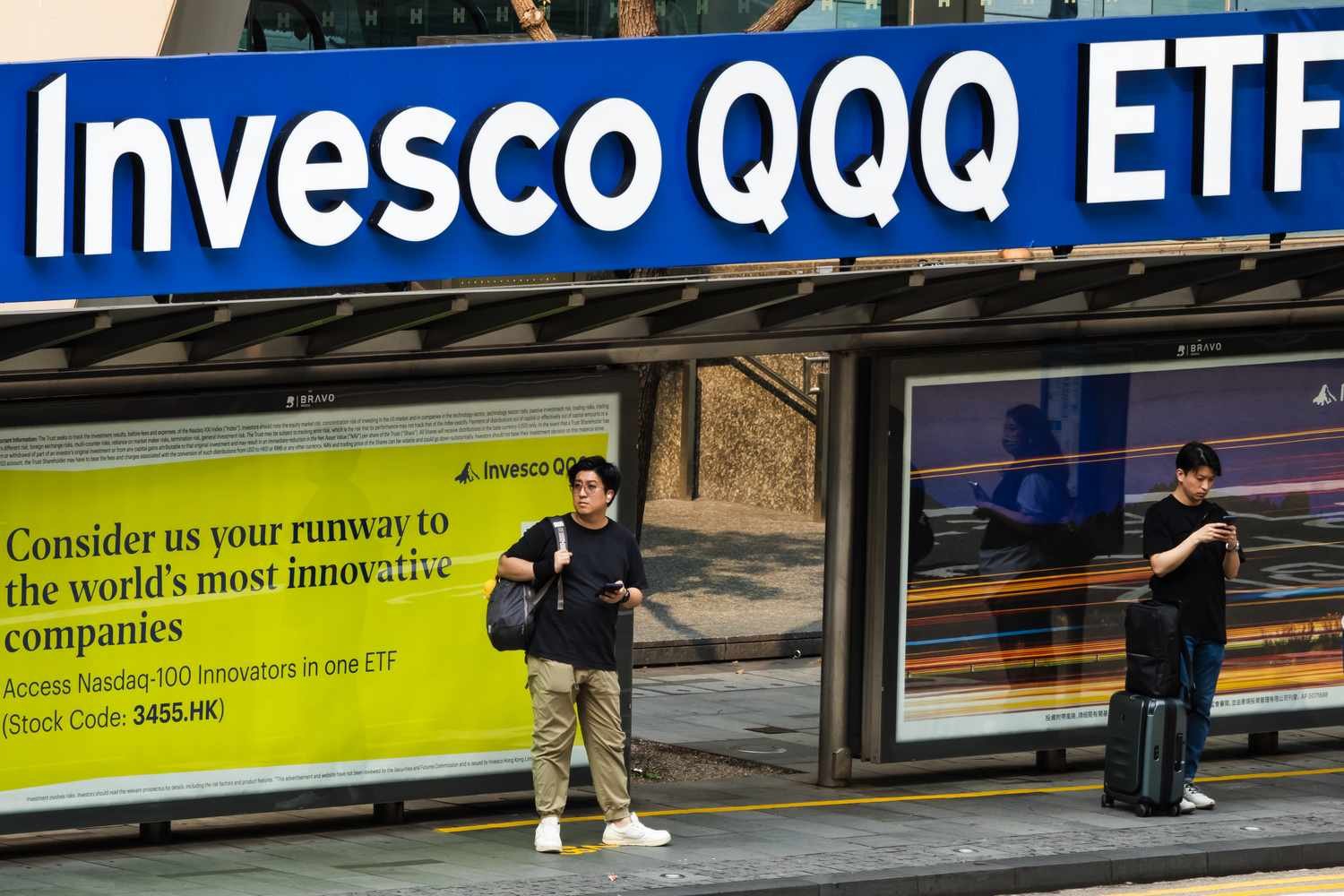
Invesco’s QQQ (QQQ), a Nasdaq-100 tracking exchange-traded fund, is just about synonymous with the index it tracks—and among the biggest ETFs, with roughly $480 billion in assets under management, according to VettaFi. But it’s getting more competition from some big ETF shops: State Street (STT) and BlackRock (BLK) want to compete with the first mover almost three decades after the fact. That stands to be a good thing for investors, because when issuers hit the market with virtually identical products, they tend to woo customers with lower expenses.
WHY THIS MATTERS TO YOU
When index-tracking ETFs compete with one another, they can start a fee war. That can bode well for investors’ wallets.
Indeed, State Street’s SPDR Portfolio Nasdaq 100 fund (QNDX) launched last week, charging 0.10%, which means for every $10,000 invested, one would pay $10 in annual management fees. That’s lower than QQQ’s current 0.18% fee. BlackRock’s iShares, meanwhile, filed in April to launch its own product using the symbol “IQQ.” (It hasn’t said what it plans to charge.)
The proliferation of Nasdaq 100 funds stands to boost shares of SpaceX (SPCX), which is set to join the tech-heavy index next week. Per Nasdaq’s fast-tracking rule change that went into effect in May, stocks with less than a 33.3% float—how much of the company’s overall shares are available to the general public to trade—will be weighted in the index at a maximum of three times its float value. Given SpaceX’s modest float of around 550 million shares, it will likely have a weight in the index at under 1%, because as of March 2026, a company with a float of $180 billion had a 1% weighting in the Nasdaq 100.
With that said, one doesn’t necessarily need to use Nasdaq 100 funds to add tech exposure to one’s portfolios. Other ETFs also do that without being associated with the index—and those who are already invested in a S&P 500 fund or a total market fund also have substantial tech exposure.
Vanguard’s Information Technology ETF (VGT), for example, has an expense ratio under 0.1%. It tracks a different index from MSCI.