

The country’s largest asset manager says the proposed ‘One Nation, One KYC’ framework could make it much easier for bank customers to start investing in mutual funds, opening up a large untapped market.
Speaking ahead of the company’s initial public offering (IPO), DP Singh, Joint CEO of SBI Funds Management, said the industry’s biggest hurdle today is not awareness but the investment process itself.
“The moment that friction is over, which is likely to happen very, very soon… the number which is there today, only six crore investors, that will multiply like anything,” Singh said. “I am not saying as much as the number of bank accounts are there, but at least 20% of the bank accounts will be the mutual fund investors.”
The company believes the opportunity is particularly significant within the SBI ecosystem. RS Srinivas Jain, Executive President & Chief of Strategy at SBI Funds Management, said the bank has around 35 crore KYC-compliant customers, but only about 55 lakh currently invest through SBI Mutual Fund. Even a modest increase in penetration could multiply the size of its business.
“The headroom for us to grow… this friction that is going to go away is going to make it a big opportunity,” Jain said.
Management said the proposed central know your customer – CKYC 2.0, also referred to as ‘One Nation, One KYC’, is at an advanced stage. Once implemented, customers who have already completed KYC with their banks may no longer have to repeat the process before investing in mutual funds, making onboarding faster and simpler.
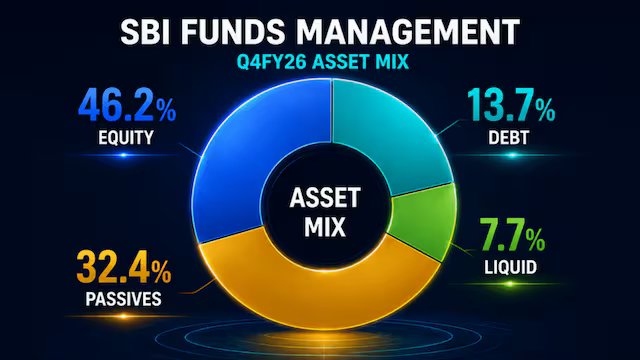
Beyond the industry opportunity, SBI Funds expects its own business mix to become more profitable. The company said its actively managed equity assets have been growing steadily, supported by monthly SIP inflows of more than ₹4,000 crore. This is gradually increasing the share of higher-margin active equity funds within its portfolio.
Today, SBI Funds manages about ₹13 lakh crore in assets, including around ₹6.5 lakh crore in active equity funds. The business is diversified across equity, debt, hybrid funds and exchange-traded funds (ETFs), helping reduce earnings volatility while providing multiple revenue streams.
Watch the full conversation here

Jain said the company has been steadily improving its active asset mix over the past few years.
“Last three years we’ve grown almost 32% to 42%, and that’s a very steady growth, and I see that growth continuing,” he said.
SBI Funds also highlighted its operating efficiency as a competitive advantage. According to management, the company has a cost-to-income ratio of around 20%, among the lowest in the industry, positioning it to benefit as assets under management continue to grow.
Catch all the latest updates from the stock market here