
Key Highlights
- Solana’s validator community greenlit SGP-0002, accelerating the annual disinflation rate from 15% to 30%
- The governance measure secured 67% approval with 60.7% of network stake voting
- Terminal inflation of 1.5% will now be reached in approximately 2.8 years rather than 5.7 years
- U.S. Solana spot ETFs attracted $138M in net capital over a 10-day period, featuring a $47M peak day
- Bitwise’s BSOL surpassed $1 billion in total assets, now holding 9.3M SOL tokens
The Solana validator community has officially voted to speed up the network’s token emission reduction schedule. Known as SGP-0002 or the “Double Disinflation” proposal, the measure achieved 67% approval, with 25.16% voting in opposition and 7.84% choosing to abstain. Total participation represented 60.7% of the network’s eligible stake.
This governance decision accelerates Solana’s yearly disinflation rate from 15% to 30%. Importantly, the final inflation target of 1.5% remains unchanged — the network will simply reach this milestone at a faster pace.
According to the previous timeline, Solana was projected to achieve its 1.5% terminal inflation in approximately 5.7 years. With the new accelerated schedule, that timeframe shrinks to around 2.8 years. This adjustment means roughly 18.9 million fewer SOL tokens will enter circulation over the coming six years.
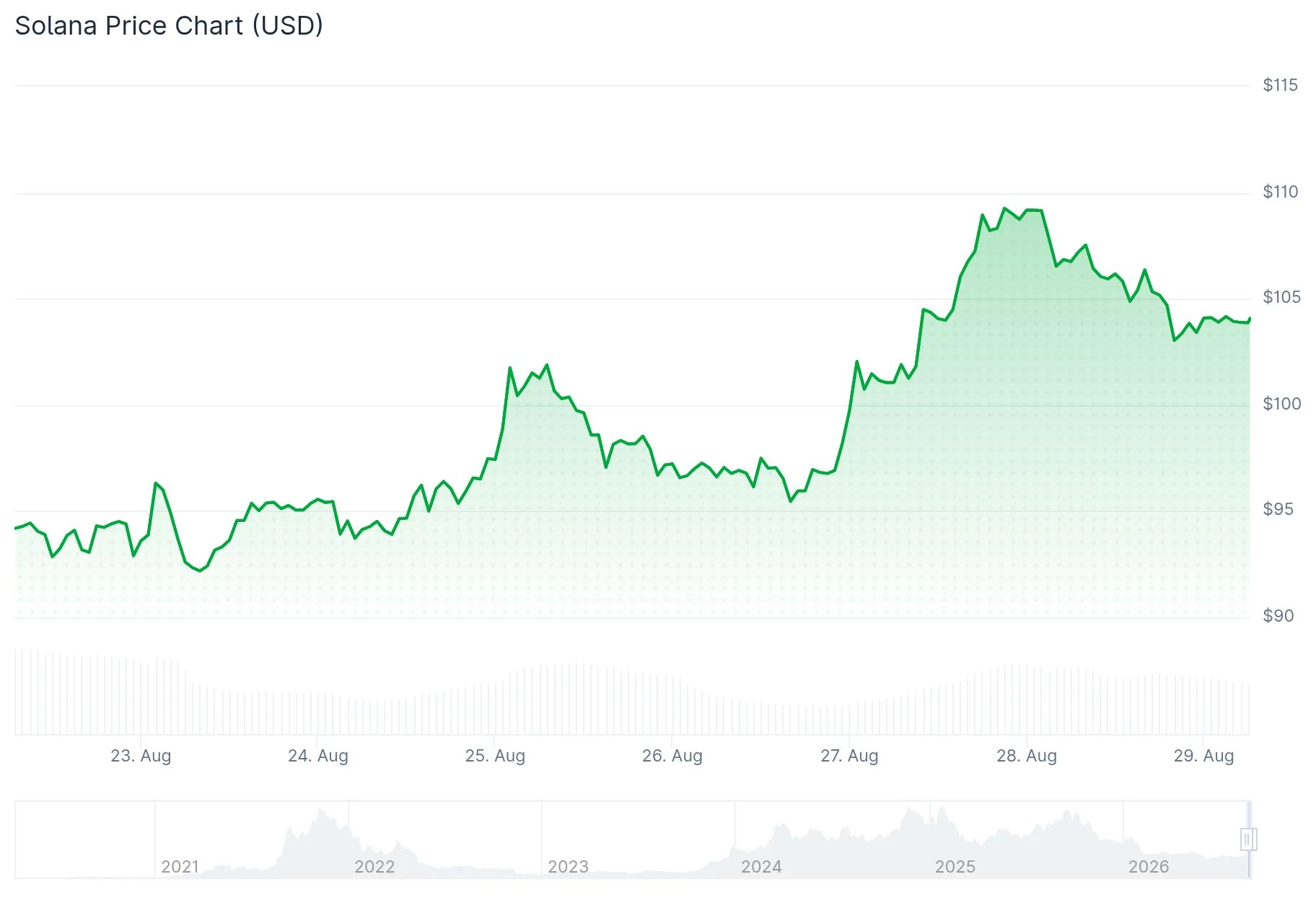
For SOL token holders, this represents favorable economics through reduced dilution. On the flip side, validators and those who delegate to them will experience decreased staking yields as token issuance slows.
This vote marked Solana’s inaugural binding governance event. Alongside SGP-0002, participants also ratified a proposed Solana Constitution while voting down an alternative measure concerning resource and inclusion fees.
The outcome wasn’t unanimous. Figment, which commanded the largest voting bloc with 17.1 million SOL staked, cast its entire vote against SGP-0002. Meanwhile, major players like Helius and Jupiter threw their support behind the measure.
Kraken’s voting stance notably changed mid-process. The cryptocurrency exchange initially registered opposition at 12:33 UTC, momentarily dropping support below the passage threshold. However, by voting’s end, over 90% of its approximately 8.9 million SOL stake had switched to supporting the proposal.
Market analyst Ted Pillows highlighted on X that a major investor purchased $29.58 million worth of SOL through Binance on voting day, observing that “big money is getting more interested in Solana after the double disinflation proposal passed.”
Spot ETF Market Shows Robust Demand
As the governance process unfolded, Solana’s exchange-traded fund landscape demonstrated impressive performance. Data from Glassnode revealed that Solana spot ETFs accumulated $138 million in net capital inflows across a 10-day window, representing the “strongest stretch on record.”
One trading session alone brought in $47 million, indicating that demand arrived in concentrated bursts rather than steady increments. Eric Balchunas, Bloomberg’s ETF analyst, highlighted that U.S.-based Solana ETFs have gathered approximately $1.7 billion in total net inflows since their market debut, experiencing minimal sustained redemptions.
Bitwise BSOL Achieves Billion-Dollar Milestone
Bitwise’s BSOL fund has become the first Solana ETF to surpass $1 billion in total assets under management. According to August 26 data, BSOL currently holds 9,332,360.79 SOL tokens valued at roughly $1.02 billion.
Bitwise introduced BSOL in October 2025 as America’s inaugural exchange-traded product offering complete direct exposure to SOL. The fund has since established itself as the dominant Solana ETF measured by asset holdings.
According to Balchunas’s analysis, U.S. Solana ETFs have collectively drawn approximately $1.7 billion in cumulative net capital since launching, with outflows remaining negligible throughout their trading history.