
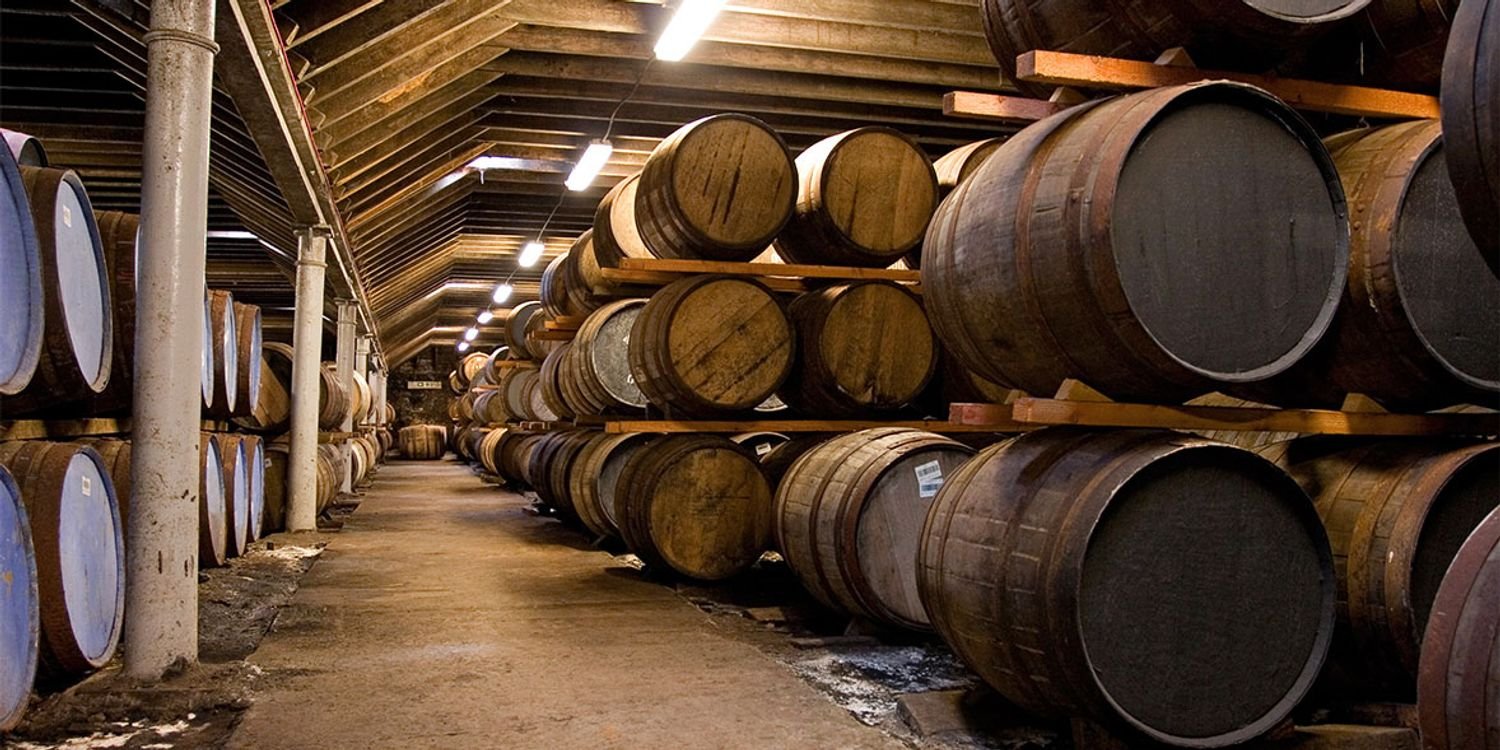
Whisky casks are frequently touted as a fun and profitable investment, but prospective investors are faced with sharp practice, disinformation and outright scams.
Scottish whisky accounted for 26% of all UK food and drink exports last year, and there are around 22 million casks (barrels) maturing in storage, according to the Scotch Whisky Association.
There’s serious money in single malt, which puts it on the radar of investors.
One way to get a taste of this £7.1bn market is to buy a cask of freshly distilled single malt whisky from a company that will also store it (in an excise warehouse) and insure it for you.
Once it’s matured for a few years, or potentially much longer, you can bottle it or sell it to a broker for a healthy profit.
That’s the theory – but as we found, investing in casks is fraught with risk, and the return on even genuine casks may not be as good as expected.
Harmless fun, or risky free-for-all?
For the (patient) whisky enthusiast, researching and buying a cask can be far more interesting than buying a bottle of the shelf.
It’s also possible that, being able to bottle the whisky yourself, you could end up with a large amount of quality whisky at a relatively low price, although taxes will apply (see below).
But as an investment, whisky casks can still resemble the Wild West.
In the words of the Scotch Whisky Association there is ‘no regulated market for mature or maturing casks of Scotch whisky’.
Nor is there an ‘officially published list of buying and selling prices for casks from different distilleries or of different ages’ and ‘no established mechanism for selling’.
Any claim that casks are regulated, protected (beyond the warehouse insurance) or returns guaranteed should be a red flag.
In November last year, the Advertising Standards Authority (the ASA) issued an enforcement notice to advertisers of whisky cask investments.
The ASA ordered them to immediately review their advertising, and threatened sanctions after finding ‘misleading’ and ‘socially irresponsible’ adverts.
- Find out more: How to invest: a beginner’s guide
Whisky cask prices don’t add up
Independent whisky consultant Mark Littler warns that a lack of publicly available cask prices is a big problem for amateur investors.
‘It’s impossible to do any independent research into pricing,’ he said. ‘This leaves the public vulnerable. It is very easy to get into an investment, but not always easy to extract yourself.
‘I’ve had clients who have paid thousands more than they should have for a cask, with the company that sold it no longer picking up the phone.’
It’s tempting to look at the respected Frank Knight annual index of luxury investments. This shows whisky outstripping other investment assets, such as art and wine, over a 10-year period.
However, the index only measures the returns of specific rare bottled whiskies, not casks, and not the overall whisky industry.
You’re better off seeking specific information from a distillery, whisky broker or specialist auction house – though investment returns depend on many factors.
Drams and scams
In April, Fergus Ewing, SNP member of the Scottish Parliament, raised what he called ‘the alarming growth in fraud in the sale of whisky casks’, warning that a scandal could ‘seriously damage the reputation of Scotch whisky worldwide’.
Mark Littler has seen several people being sold the same cask, inferior whisky substituted for a prestige brand, and buyers not being given a Delivery Order, the crucial document that should specify the whisky type and transfer the cask into their name.
Before completing a cask purchase, check with the whisky warehouse in which it’s held to understand what documents are required to transfer ownership. Ensure the seller of the cask can give these to you.
It’s crucial that the cask will be held in your name, otherwise you don’t fully own it.
Whisky investment is not regulated, so if you and a company can’t resolve a complaint, you can’t escalate it to the Financial Ombudsman Service.
And while legitimate whisky cask sales should include your casks being insured for damage, you can’t go to the Financial Services Compensation Scheme if things go wrong.
- Find out more: Are your investments protected?
Will you make any money?
This will depend on what you’ve bought – and you’ll need to wait many years to learn the answer.
Prices tend to only significantly increase once a cask has been resting for 12 to 18 years and is more suitable for bottling. You want the alcohol percentage of your cask to be monitored regularly, because if it falls below 40%, what’s inside can no longer be bottled as Scotch whisky.
Whisky evaporates from the barrel, so it’s classed as a wasting asset. HMRC defines such assets as having a predictable life of 50 years or less, so capital gains tax won’t apply to any profits you make.
However, if you bottle the cask yourself, you’ll need to pay excise duty and VAT based on the price of the cask at the point of bottling, not when you bought it. The Scotch Whisky Association warns that this can add up to thousands of pounds.
The long timeframe for whisky maturation makes you particularly vulnerable to changing regulation, and fluctuating demand for certain distilleries or Scotch whisky overall could mean you’ll receive far less than you could have made from other investments.
‘That cask was an important part of my retirement fund’
Take particular care when selling a whisky cask, to ensure you get the best price possible.
Peter Matcham, from Hampshire, decided to sell his cask of rare 1994 Ardbeg in 2022. He contacted whisky brokerage Spiritfilled Ltd and met them for lunch. They made Peter an offer then and there, for £30,000, and the sale was agreed.
Five days later, concerned at the speed of the sale, Peter tried to cancel it, emailing Spiritfilled: ‘My family have indicated I have made a big mistake.’ Spiritfilled responded by offering an extra £20,000, but later withdrew this.
Four months later, another 1994 Ardbeg sold at auction for £205,000. The two casks were of similar size (Peter’s held 207 bottles’ worth of whisky, the other 223) and Peter’s was matured in a cask that formerly held sherry, which is often more sought-after than the ex-bourbon cask of the auctioned Ardberg.
‘I am quietly seething – I should have been more aware,’ said Peter. ‘That cask was an important part of my retirement fund.’ Spiritfilled says that Peter made a substantial profit on the Ardbeg, which he had bought in 1994 for £1,000.
‘We bought the cask in good faith at Peter’s instigation,’ said director Russell Spratley. ‘He was very clear that he wished to proceed there and then.’ Spiritfilled has since sold the cask. Mr Spratley wouldn’t say how much it went for, but did insist that it was ‘nowhere near’ the £205,000 of the auctioned 1994 cask.
Jake Sharpe, of bottling company The Whisky Baron, was astonished that an Ardbeg of this age had been sold for just £30,000. ‘Finding Ardbeg of this calibre is like finding hen’s teeth,’ he said. ‘I would urge anyone in possession of old or rare casks to speak with multiple sources before making any sale.’
Can you buy into distilleries?
Owning shares in the firms that own distilleries might not be as romantic as having your own cask, but it’s a dram sight safer.
You can buy shares through a regulated investment platform; if that platform goes bust, you’re protected by the Financial Services Compensation Scheme.
However, many of the most famous distilleries are owned by large corporations that are involved in many other businesses.
Talisker and Dalwhinnie, for instance, are owned by Diageo, which makes more than 200 brands of different alcoholic drinks.
Ardberg and Glenmorangie are owned by Louis Vuitton Moët Hennessy (LVMH), which also owns a vast range of fashion brands.
So share prices in these firms could be affected by many factors other than the popularity of whisky.
While there are a handful of investment funds that promise to invest in whisky, keep a close eye on their fees and historical performance, and be wary when the fund manager has no evidence of a track record in this type of investing.
- Find out more: How to buy shares
Got drams on the mind? Read our expert picks on the best gifts for whisky lovers.