
Close Menu
Fund Focus News
    Facebook X (Twitter) Instagram
    Trending
    • Yale’s Legendary Endowment Manager Ran Hedge Funds for a Living. For Regular Investors, He Recommended This Instead
    • Vanguard’s S&P 500 Index Fund Charges About $3 a Year on $10,000. The Average Stock Fund Charges About $40.
    • XRP’s ETFs Trail Solana’s by $160 Million: Can XRP Close the Gap?
    • Dogecoin’s ETFs Went Seven Sessions Without a Dollar Moving. Where Did the Retail Money Go?
    • Crypto ETFs Bleed $1.29 Billion in One Week as Bitcoin and Ether Funds Lead Exits
    • Do You Need Active Mutual Funds for the New NISA? Thinking Through US and Global Data|黒猫迷子
    • Best performing balanced mutual funds in Nigeria as of September 2026
    • Forget T-Bills. These Box Spread ETFs Pay the Same Rate With Minimal Taxable Yield
    Facebook X (Twitter) Instagram
    Fund Focus News
    • Home
    • Bonds
    • ETFs
    • Funds
    • Investments
    • Mutual Funds
    • Property Investments
    • SIP
    Fund Focus News
    Home»Investments»Türkiye bolsters crisis resilience with energy transition, investments
    Investments

    Türkiye bolsters crisis resilience with energy transition, investments

    April 13, 2026


    Türkiye has bolstered its resilience against global crises thanks to increased use of renewable resources in the energy sector, infrastructure investments that strengthen supply security, and scenario-based planning, according to the CEO of a major Turkish company operating in the sector on Monday.

    Ihsan Erbil Bayçöl, CEO of Enerjisa Üretim, said in an interview with Anadolu Agency that the energy policies Türkiye has developed since the 2000s have demonstrated their effectiveness in the face of global crises in recent years.

    Bayçöl also stated that the energy transition process is progressing with proper planning and investments.

    Noting that the COVID-19 pandemic, the war between Russia and Ukraine, and developments in the Middle East have tested Türkiye’s energy strategies, the executive went on to say that “we have seen the benefits of scenario-based approaches.”

    “We implemented the right investments in a timely manner,” he added.

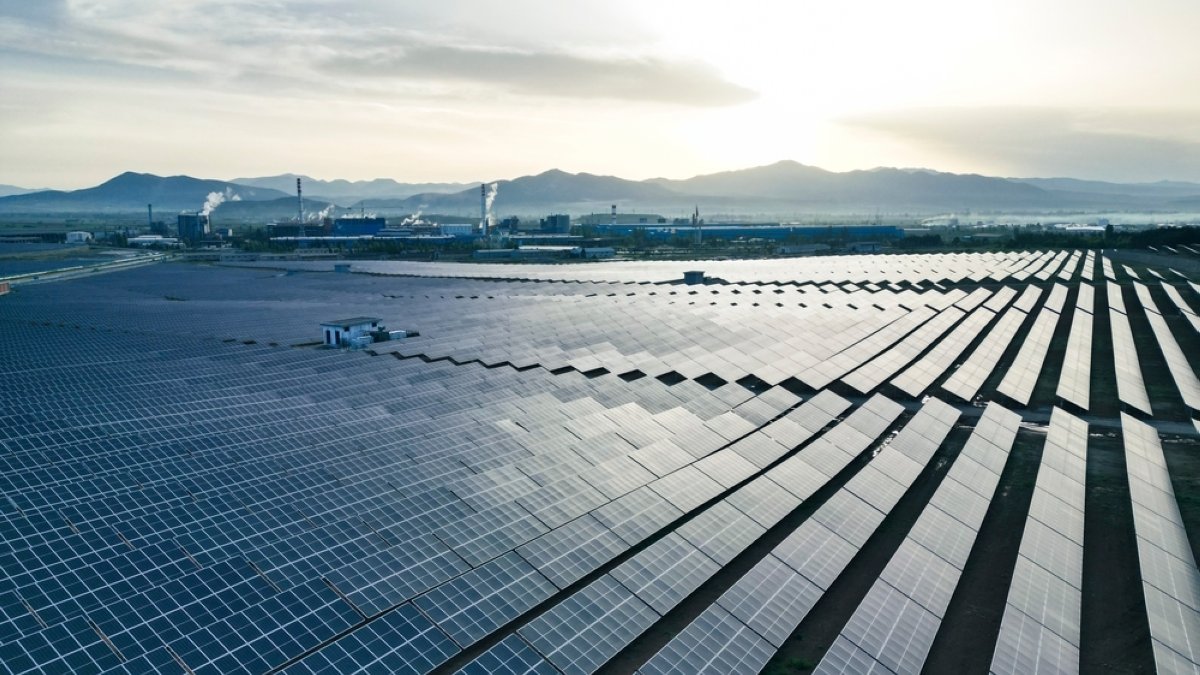
    Bayçöl also expressed the country’s ambitious goals in renewable energy and aims for significant increases in wind and solar capacity.

    In October 2024, Türkiye unveiled its Renewable Energy Roadmap for 2035, outlining ambitious plans to quadruple its wind and solar capacity by 2035. Accordingly, it aims to lift installed solar and wind capacity to 120,000 megawatts (MW).

    Moreover, Bayçöl also noted that the simplification of investment processes has allowed projects to advance more quickly and that stronger growth is expected in the sector in the next five years.

    However, he also suggested that the current capacity can be significantly increased.

    Opportunities ahead

    “Türkiye still has not fully realized its own potential in wind and solar. There is a tremendous opportunity ahead,” he noted.

    “Because, with the renewable energy investments made worldwide, the costs of implementing such investments have become more economical. We currently have an installed wind power capacity of just over 15,000 megawatts. It is possible to increase this capacity to 40,000 megawatts,” he added.

    Bayçöl stated that they foresee similar growth in solar energy. “We are talking about a solar capacity exceeding 30,000 megawatts. In this area, it is expected that levels of 60,000, 80,000, or even 100,000 megawatts may be seen,” he pointed out.

    The top executive of Enerjisa Üretim, Türkiye’s largest private-sector power generation company, also said that battery technologies play an important role in the energy transition, adding that advances in this field will increase system efficiency, enable a more effective operational structure daily and annually, and make Türkiye’s energy system more resilient against global crises.

    Bayçöl explained that, to clarify planning and manage investments more efficiently, they have identified three main priorities in energy infrastructure: energy supply security, efficiency and sustainability, and digitalization.

    Emphasizing that one of the most important elements is energy supply security and system robustness, Bayçöl concluded his remarks by saying: “Therefore, in the new tariff period, our first focus will be on this. We will direct our investments to ensure supply security and provide services with a more robust network in all distribution networks for which we are responsible.”

    The Daily Sabah Newsletter

    Keep up to date with what’s happening in Turkey,
    it’s region and the world.


    You can unsubscribe at any time. By signing up you are agreeing to our Terms of Use and Privacy Policy.
    This site is protected by reCAPTCHA and the Google Privacy Policy and Terms of Service apply.


    Source link

    Share. Facebook Twitter Pinterest LinkedIn Tumblr Telegram Email

    Related Posts

    Liberty Mutual Investments Forms Long-Term Partnership With Zenith Asset Management

    October 7, 2026

    CMA Restrictions On Overseas Investments By Public Money Market Funds | Ashurst Perkins Coie

    October 7, 2026

    AGF Investments Announces Risk Rating Change to AGF Credit Opportunities Fund

    September 30, 2026
    Leave A Reply Cancel Reply

    Top Posts

    Dogecoin’s ETFs Went Seven Sessions Without a Dollar Moving. Where Did the Retail Money Go?

    October 11, 2026

    XRP’s ETFs Trail Solana’s by $160 Million: Can XRP Close the Gap?

    October 11, 2026

    Yale’s Legendary Endowment Manager Ran Hedge Funds for a Living. For Regular Investors, He Recommended This Instead

    October 11, 2026

    Vanguard’s S&P 500 Index Fund Charges About $3 a Year on $10,000. The Average Stock Fund Charges About $40.

    October 11, 2026
    Don't Miss
    Mutual Funds

    Yale’s Legendary Endowment Manager Ran Hedge Funds for a Living. For Regular Investors, He Recommended This Instead

    October 11, 2026

    David Swensen built the most copied investment portfolio in the world using hedge funds and…

    Vanguard’s S&P 500 Index Fund Charges About $3 a Year on $10,000. The Average Stock Fund Charges About $40.

    October 11, 2026

    XRP’s ETFs Trail Solana’s by $160 Million: Can XRP Close the Gap?

    October 11, 2026

    Dogecoin’s ETFs Went Seven Sessions Without a Dollar Moving. Where Did the Retail Money Go?

    October 11, 2026
    Stay In Touch
    • Facebook
    • Twitter
    • Pinterest
    • Instagram
    • YouTube
    • Vimeo
    EDITOR'S PICK

    Nippon India Mutual Fund launches Income Plus Arbitrage and Active FoF

    June 3, 2025

    Bitcoin’s Flash Crash Over Weekend Prompts Analyst To Sound Warning on BTC ETFs: Continuous Liquidity Essential To ‘Prudent Risk Management’ – iShares Bitcoin Trust (NASDAQ:IBIT)

    October 12, 2025

    Which Canadian Dividend ETFs Pay the Most Right Now?

    September 7, 2026
    Our Picks

    Yale’s Legendary Endowment Manager Ran Hedge Funds for a Living. For Regular Investors, He Recommended This Instead

    October 11, 2026

    Vanguard’s S&P 500 Index Fund Charges About $3 a Year on $10,000. The Average Stock Fund Charges About $40.

    October 11, 2026

    XRP’s ETFs Trail Solana’s by $160 Million: Can XRP Close the Gap?

    October 11, 2026
    Most Popular

    🔥Juve target Chukwuemeka, Inter raise funds, Elmas bid in play 🤑

    August 20, 2025

    💵 Libra responds after Flamengo takes legal action and ‘freezes’ funds

    September 26, 2025

    🇮🇸 CPP Investments and Equinix complete atNorth acquisition to support growth of leading Nordic data center platform

    September 1, 2026
    © 2026 Fund Focus News
    • Get In Touch
    • Privacy Policy
    • Terms and Conditions

    Type above and press Enter to search. Press Esc to cancel.