
The financial market can feel like a world with its own language for most investors. ETF is one of the concepts that new investors are likely to hear when trying to navigate this world. In case you have been searching for what is a ETF, you are already on the right track to creating a diversified portfolio.
The knowledge of these funds can be the key to wiser long-term wealth creation without the need to engage in all the complexity of conventional investment. In this guide, we’ll break down the meaning, explain how they work, compare their structures against mutual funds, and explore specialized products like crypto and leveraged funds.
What is ETF? (Definition & Overview)
Image Credit: Capital
An ETF is a collection of securities that offers an exposure to a particular market index, industry, or investment plan. They provide a certain degree of liquidity and flexibility that traditional mutual funds may not have because they are exchange-traded. When you buy one share of such a fund, you are in fact buying a slice of the entire underlying basket, and you can have hundreds or even thousands of assets diversified immediately.
What Does ETF Stand For? (ETF Meaning Explained)
The ETF meaning is quite simple. ETF stands for Exchange-Traded Fund. It is called exchange-traded because ETFs are assets bought and sold on public stock exchanges throughout the trading day. You do not require any special broker to purchase ETFs.
This differs significantly from many mutual funds, which are only priced and traded once the market closes. The fund part refers to a shared pot of money of numerous investors as a means of purchasing a diversified basket of securities.
How Do ETFs Work?
The magic occurs behind the scenes in what is known as creation and redemption. Authorized Participants (large financial institutions) combine assets and give them to the fund provider as new shares.
This ETF share tracks a benchmark, which is the entire performance of all the assets in it. Then these shares are sold to you in the open market. When you buy shares, you gain the performance of all assets held within that specific fund.
The Basket of Assets Concept
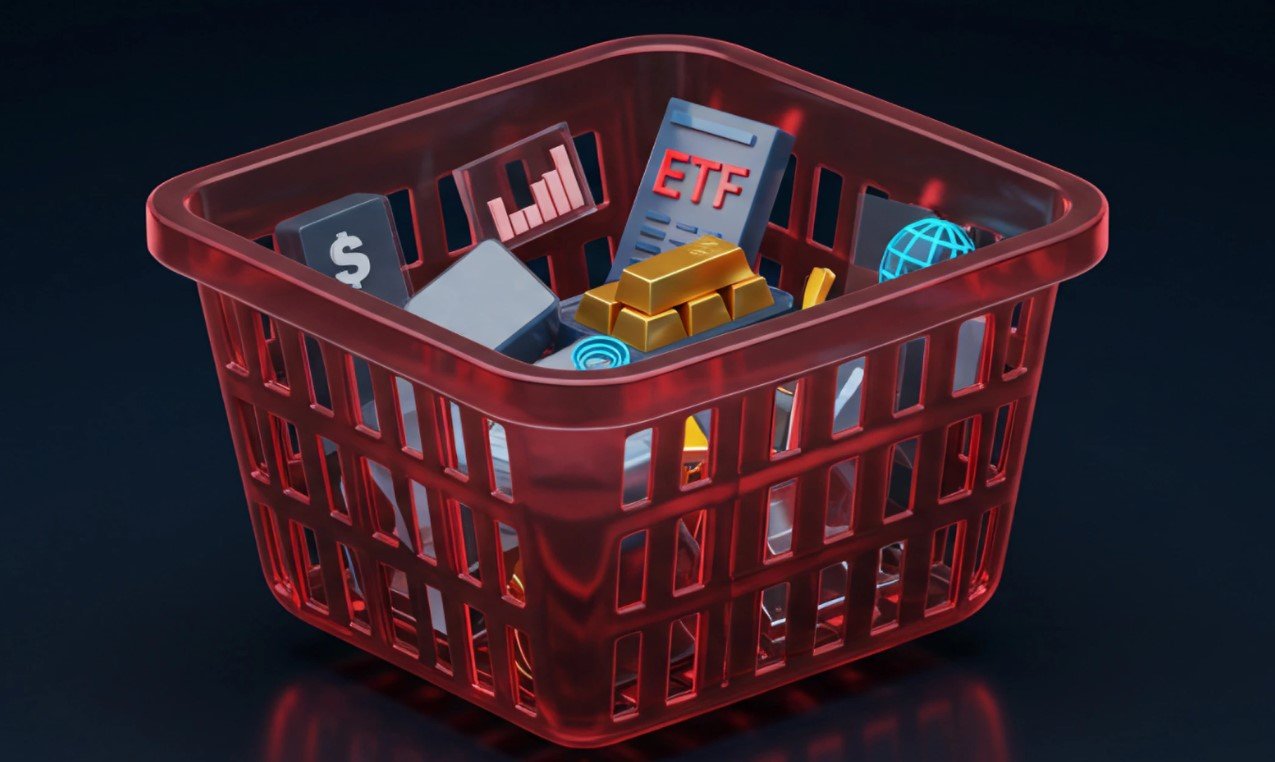
Image Credit: Deriv
To understand the core meaning, you need to grasp the concept of a “basket.” Think of it like a regular shopping basket that contains a lot of items. There could be 500 of the largest U.S. companies in a single fund. Hence, S&P 500.
Because there are many shares, the basket acts as a shield. When a single company in that basket performs poorly, the remaining 499 companies cushion the performance of the basket. This natural diversification is the reason why they are recommended to be used in retirement accounts by many experts.
What is an ETF Expense Ratio?
ETF expense ratio is the fee you pay the fund provider every year to manage the basket. It is given as a percentage. To illustrate, a ratio of 0.05% would imply that you pay 50 cents for every $1000 you invest. Typically, ETFs are known to have significantly lower charges as compared to conventional mutual funds.
Types of ETFs You Should Know
Not every ETF is the same. There is a wide variety of options you may select depending on your investment objectives. The main types you should know about are.
What is a Stock ETF and Bond ETF?
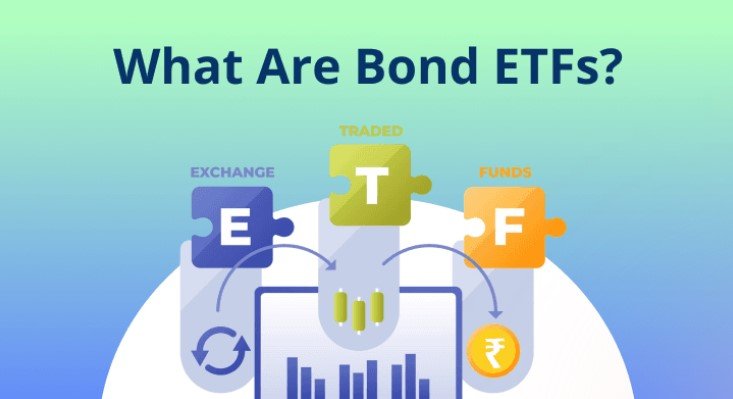
Image Credit: Mstock
A stock ETF (or Equity ETF) is a type of security that is intended to track an index of shares. Some target “Large Cap” companies, and others may target “Dividend” stocks which give you periodic payments.
Conversely, a Bond ETF is a safe, more predictable flow of income than the unstable stock market since it contains government or corporate debt.
What is a Crypto ETF (Spot vs. Futures)?
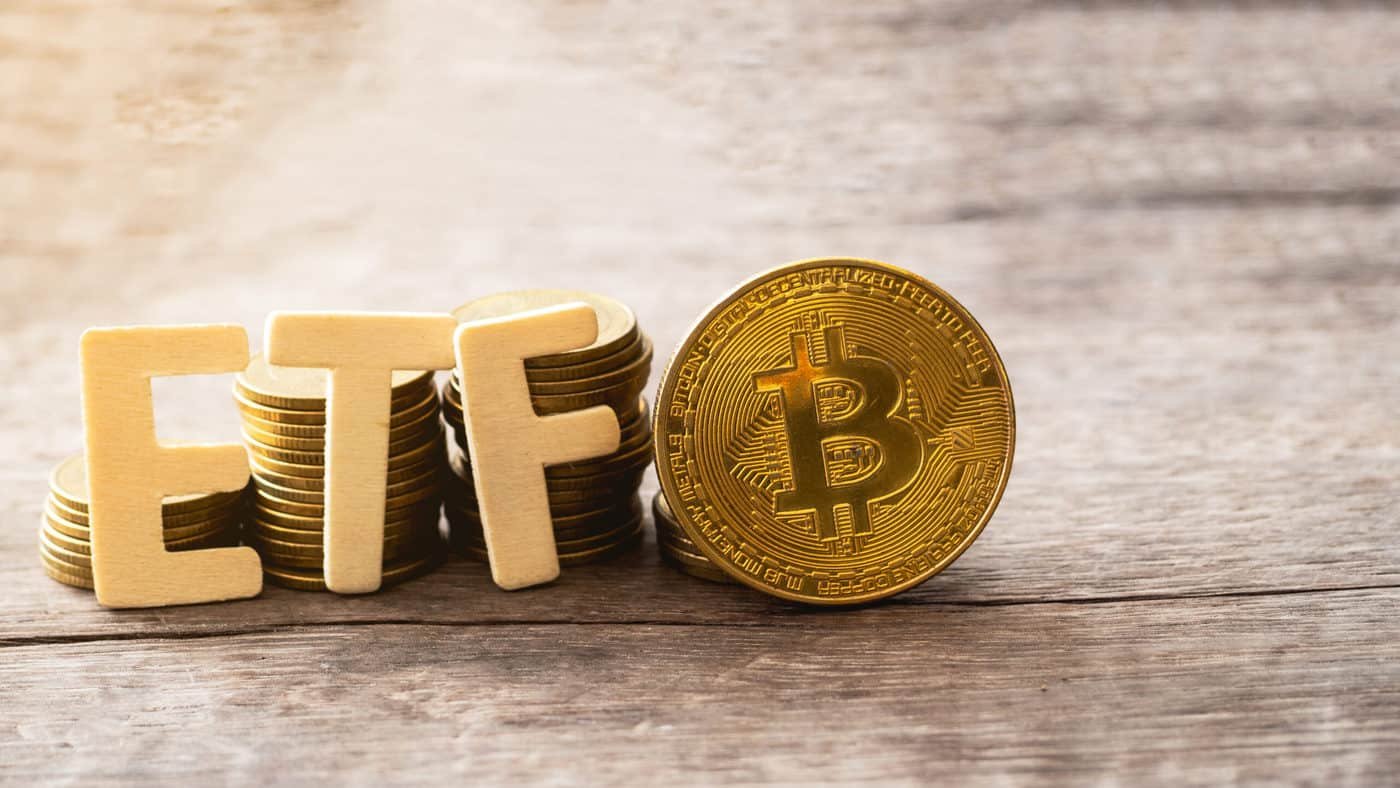
Image Credit: CoinMama
Over the past few years, there has been a surge in inquiries about what is a crypto ETF? These investments enable you to get exposure to the price of digital assets without the hassle of owning digital wallets or private keys.
Spot ETF: This fund literally purchases and keeps a crypto in a safe lock-up. The ETF price is closely related to the real-time value and coin price prediction. So, what is a spot Bitcoin ETF? It is simply an ETF that tracks the Bitcoin price. An Ethereum ETF will track the ETH price.
Futures ETF: It does not actually own Bitcoin, but it buys and sells contracts that are based on the future value of Bitcoin.
What is a Leveraged ETF?
Leveraged ETFs are dedicated funds employing financial derivatives and debt to increase the returns of an underlying index. As an example, a 2x leveraged ETF is designed to give a 2x daily performance of its index.
A note of caution. As much as the gains double, so do the losses. They are typically not long-term set and forget investments but short-term trading.
ETFs vs. Mutual Funds vs. Stocks
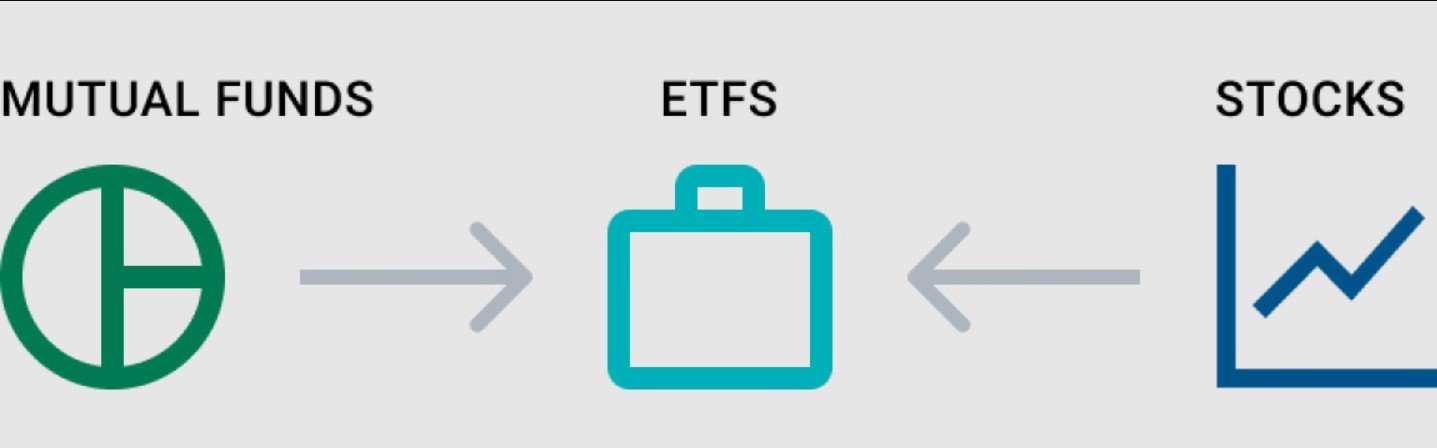
For most people, the decision on where to place their money usually boils down to ETFs, Mutual Funds, or stocks. Let’s compare them.
ETF vs Mutual Fund
ETF vs mutual fund debate generally revolves around two factors: cost and timing. Mutual funds tend to be actively managed by a human being who attempts to outperform the market resulting in increased fees. They trade, too, once a day after the market closes.
ETFs are managed passively (following an index automatically), and therefore have lower fees and can be bought and sold at any time the stock exchange is open.
ETFs vs. Stocks
When you buy a stock, you are owning a piece of that company. If the company does well, you make money. If it fails, you lose money. When you buy an ETF, you are placing your bet on multiple companies, up to 500 in the case of the S&P 500.
The main difference is that stocks can make you massive gains. However, this only happens when you invest in a company that does exceptionally well. The chances are slim. What the ETFs offer is the assurance of peace of mind associated with diversification.
Advantages and Disadvantages of ETFs
ETFs are considered one of the smartest investment options. But like any investment, there are advantages and disadvantages.
Advantages of ETFs
- ETF diversification assists in risk reduction by diversifying investments into various assets, industries, or markets.
- Reduced charges enable the investor to retain more profits than most of the actively traded funds.
- Buying and selling can be done easily compared to crypto or mutual funds.
- Transparency will give you a clear picture of the holdings, pricing, and the general investment strategy.
- Tax efficiency typically reduces capital gain distributions in comparison to conventional mutual funds.
- Easy access to assets unlocks opportunities in stocks, bonds, commodities, and crypto markets.
Disadvantages of ETFs
- Depending on your brokerage platform and frequency of trade, trading commissions can be applied.
- Even in financial slowdowns or when a sector is declining, market volatility may affect the price of ETFs.
- Tracking error can lead to minor variances in the performance of ETFs and its benchmark.
- Multi-layered products such as leveraged ETFs are riskier and can be confusing to laypersons.
How to Invest in ETFs (Step-by-Step)
- Open a Brokerage Account: Select a platform such as Fidelity or Vanguard, or any brokerage app.
- Research Your Basket: Screener ETFs before investing. Look at the holdings, performance, expense ratio, and risk profile.
- Check the Holdings: Make sure that you are not duplicating too much with the stocks that you already have.
- Buy: Type in the ticker symbol (i.e. IBIT, VOO, S&P 500), the number of shares, and press Buy.
- Automate: A lot of investors establish a process called Dollar Cost Averaging, where they purchase a fixed sum of money at the end of each month, irrespective of the price.
Conclusion: Is an ETF a Good Investment?
For most beginners and long-term investors, ETFs are one of the smartest investment vehicles available. ETFs give you simplicity, diversification, low costs, and accessibility. Whether you’re exploring a Bitcoin ETF or comparing etf vs mutual fund, ETFs can serve as a powerful foundation for wealth building.
Still, your ideal ETF depends on your goals, risk tolerance, and investment horizon. As with all investing, before buying an ETF, always do your research. While trends like Coin price prediction may attract speculative attention, disciplined ETF investing often offers more sustainable long-term outcomes.
FAQs About ETFs
What is a ETF?
ETF is a collection of investments such as stocks, bonds, or crypto. You can buy and sell ETFs on stock exchanges.
What is a Bitcoin ETF and how is it different from buying Bitcoin on an exchange?
Bitcoin ETF will enable you to hold Bitcoin in your standard brokerage account. No need to worry about hackers, losing a password, or a crypto exchange.
What amount of money do I have to begin investing in an ETF?
You can begin with the price of one or two shares, starting with as little as $50 or 100. There are brokers who have even permitted fractional shares, you can begin with as little as one dollar.
Do ETFs pay dividends?
Yes. Assuming the stocks within the ETF are dividend-paying, then the fund will collect the dividends and pay you, typically quarterly.
Why is ETF expense ratio important?
High fees may eat tens of thousands of dollars of your profits over 20 or 30 years. Lower expense ratio reduces your fee and increases your return.