
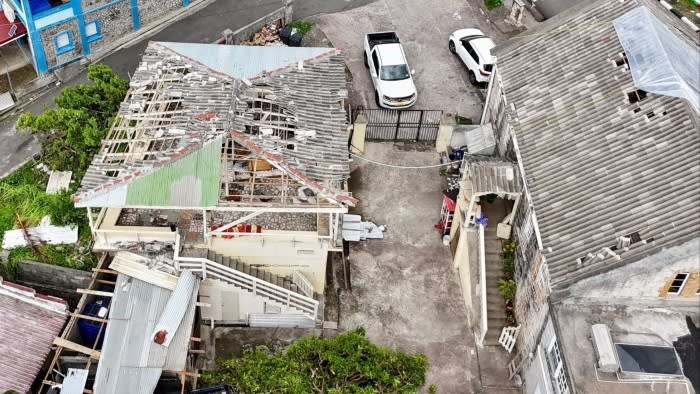
The first-ever triggering of a government bond “hurricane clause” by the Caribbean nation of Grenada has thrown a spotlight on the push for more countries to pause debt payments when natural disasters strike.
Grenada told investors in its $112mn bond this week that it will suspend $12mn in interest over the next year as it recovers from Hurricane Beryl, which wrecked outlying islands last month.
The trigger of what was the world’s first disaster “pause clause”, when Grenada inserted it in its debt almost a decade ago, will be a test case for the effectiveness of these tools. Even other hurricane-exposed small island nations have largely held off adopting similar clauses, despite growing encouragement by official lenders.
“Grenada provides us with the opportunity to test the value of this contractual innovation in helping a country and its people recover from a devastating disaster, and this should not be underestimated,” said Shakira Mustapha, a research lead at the Centre for Disaster Protection.
At the same time, she added, there needs to be “clear articulation” of the fiscal relief these clauses bring, and also how their triggers are designed given that hazards such as droughts or floods are harder to model than earthquakes or cyclones.
The pauses are being seen as alternatives to what Simon Stiell, the UN climate chief, called “the endless debt cycles of governments borrowing to rebuild, only to face another climate-inflicted disaster” as he surveyed damage to his own home island of Carriacou in Grenada in July.
As hurricanes and other threats become more frequent and damaging, countries often face expensive emergency borrowing in the aftermath or paying up for insurance in advance.
“Climate change is uninsurable. The frequency of these events once known as once-in-a-thousand-year events are happening every few years . . . so it has to be different from insurance,” said Avinash Persaud, special adviser on climate change at the Inter-American Development Bank.
Dickon Mitchell, Grenada’s prime minister, said in July that losses from the earliest severe storm ever recorded in an Atlantic hurricane season might ultimately equate to a third of the country’s GDP.
Countries from Mexico to Jamaica have also been taking out insurance cover through investors buying catastrophe bonds arranged by the World Bank, but these are relatively complex and in Jamaica’s case, did not trigger in response to Beryl.
Grenada’s pause was activated after an insurance claim by the government crossed a $30mn threshold that allowed it to suspend up to two interest payments.
“The interest saved is added back on to the principal of the debt at the end. So effectively, it’s a tap of liquidity at non-emergency rates. And it’s automatic [with] no need to go through an onerous process to try and get it,” Persaud added.
The World Bank now offers two-year disaster pauses at no extra fee on new loans to island nations and other small economies, in one of the biggest official pushes yet to foster adoption of the clauses.
In a paper this month the IMF also detailed how it would treat these clauses alongside other climate change-linked bonds when it analyses sustainability of country debts. “The resulting reduction in the need to borrow in the face of natural disasters would mitigate the impact of the negative shock on debt burden indicators,” the fund said.
Despite this, pause clauses have so far failed to take off in bond markets. After Grenada, only Barbados has included provisions in international bonds, including debt restructured in 2018.
“It is a no-brainer for issuers and for bondholders, but it is surprising we have not seen wholesale adoption,” said Sebastian Espinosa, managing director at White Oak, an advisory firm that aided Grenada in a 2015 sovereign debt restructuring that added the hurricane clause.
“There have been calls for private sector lenders to include these clauses in their contracts, but that is not really how bond markets work,” Espinosa said. “It is really down to the issuer and its advisers to insist upon them.”
In Grenada’s case, “the clause was accepted by bondholders in the restructuring because it makes sense for a small country like Grenada to have this flexibility”, said Carlos de Souza, portfolio manager at Vontobel, an investor in the Grenadian bond.
But other countries, including larger states, may be reluctant to put pause clauses into their regular bond sales out of fear they will pay up in extra borrowing costs for triggers that might never be used, de Souza added.
Governments might have to test the waters, such as by issuing two bonds that are identical except for one featuring a pause provision, he said. “Without that sort of counterfactual, it will be very difficult for a country to assess the actual cost of issuing the clause.”
These clauses should not cost extra because they limit how many times issuers can trigger them over the life of a bond, such as three times for Grenada’s debt, Persaud said.
The price of Grenada’s bond, which matures in 2030, dipped slightly after Hurricane Beryl, as investors priced in a likely trigger of the clause. Before Beryl struck, Grenada’s finances were improving. In June, the IMF projected a budget surplus of 9.5 per cent of GDP this year.
This has partly been based on a surge in sales of Grenadian citizenship to investors who can use its passport to access US investment visas and visa-free travel to several countries. Bondholders also receive a portion of the citizenship sales as part of the restructured debt.
“From a financial perspective, they didn’t necessarily have to trigger the clause, but it was their right to do so, and I don’t think anyone will criticise the triggering,” de Souza said.