
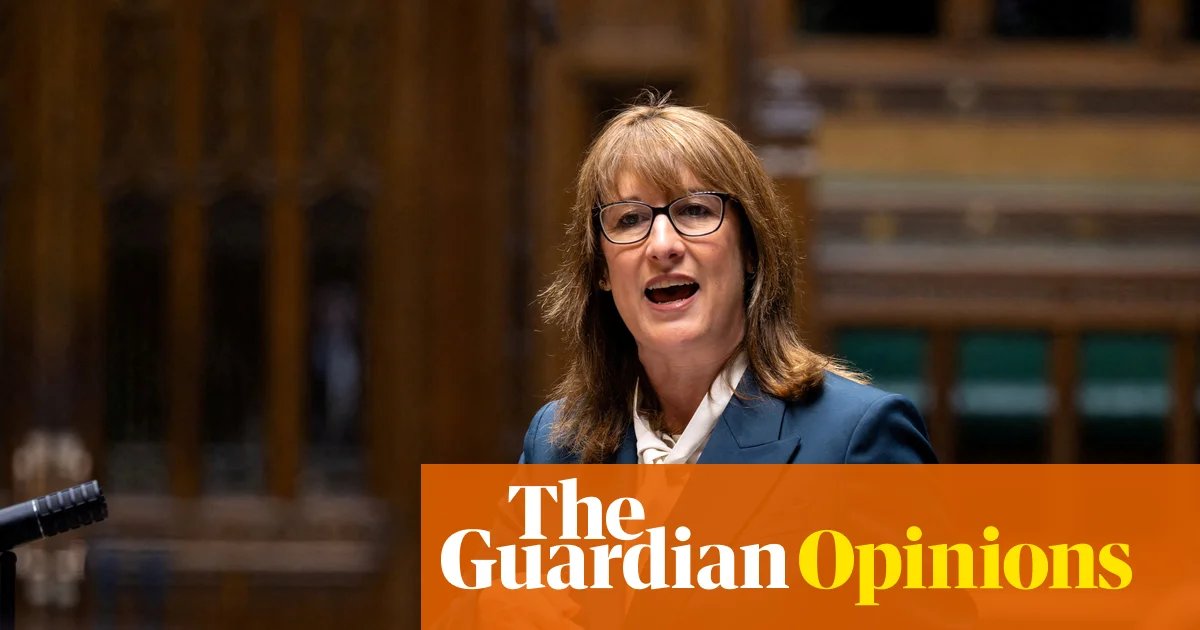
There is a good reason Rachel Reeves is wary of the dreaded bond market vigilantes. Anyone who inherits a mountain of debt and then finds out that many of the lenders act like sharks is right to be concerned.
Most of the participants in financial markets are not actively predatory. They swim in a sea of money with only one rule, to stick together, hoovering up as much profit as they can at the lowest risk.
Bond vigilantes, on the other hand, are traders with a remit to pursue juicy prey, even if it means going hungry for a while. They manage funds that want a high interest rate from government lending. Right now, they smell small drops of blood in the water.
It’s not just the conflict in the Gulf and the extra costs it brings. It is the political instability that stems from Keir Starmer’s fragile leadership and rival claims of quick fixes and easy answers.
The UK has become infamous for succumbing to hysteria, especially after the Brexit vote and the farcical Tory response to Covid, which from an economic perspective, culminated not in Liz Truss’s break for the border moment, otherwise known as the 2022 mini-budget, but Jeremy Hunt’s £40bn national insurance pre-election giveaway in 2023-24.
The bond vigilantes also have the Italian and French finance ministers in their sights, now that they have joined the UK as the worst offenders on debt row. Hence the term Bifs (Britain, Italy, France), which has recently supplanted Piigs (Portugal, Ireland, Italy, Greece and Spain), the derogatory term coined in the European sovereign debt crisis of 2012.
What these traders scout to find are countries that cannot control their annual spending. For those that are singled out, borrowing money to bridge the gap between spending and income, which was expensive before the breakout of hostilities in the Gulf, costs even more now.
The UK ran a deficit of 5% to 6% after pandemic spending waned. Initially, this didn’t matter, which can be seen from casting back to check on the borrowing rates for 10-year UK bonds.
In early 2022, the yield, or interest rate, on the 10-year bond was about 1%. Two years later it was 4%. Last week, the debt management office, which auctions government bonds for the Treasury, could only find buyers at 4.9%. There are several reasons for the steep rise, and they cannot all be laid at Truss and Hunt’s door.
In early 2022, the Bank of England was a major buyer of UK bonds and that kept the value high and the interest rate low. Later that year, the UK was not only suffering at Truss’s hands, but the war in Ukrainewas pushing inflation above 10%, prompting wide scale and costly bailouts to businesses and households. The annual deficit jumped above 6% in 2024. By this time the central bank was also selling bonds, not buying them.
To fend off the vigilantes, Reeves has vowed to drive the annual deficit below 2% by 2031. In Washington this week, she received praise from Kristalina Georgieva, the boss of the International Monetary Fund (IMF), who said: “We see the UK’s fiscal response as a good example for other countries.” At the IMF’s spring meetings, Georgieva said she was also pleased that Reeves would limit the next round of rescue measures and make them temporary.
Leftwing MPs, who have a long list of extra spending commitments they would like the chancellor to adopt, will probably cast Georgieva as fiscally conservative. Yet without an overhaul of the rules governing international bond markets, an open trading economy such as the UK must play ball.
That said, there is one self-imposed fiscal rule that Reeves controls and one she could jettison to support long-term investments. This rule forces her to reduce the debt to GDP ratio in the final year of the five-year economic forecasts produced by the Office for Budget Responsibility.
It is one of the barriers to extra defence spending, which if it was announced today could begin to kick in four of five years down the line, just at the point when Reeves has committed to bring down the debt level, as well as the annual deficit.
Everyone should care about whether the UK can defend itself when the number of rogue states capable of challenging our independence grows every year. It cannot be logical to maintain a debt rule that only has the effect of delaying vital investment.
Other investment could also get the green light without the fear of breaking a rule that was always going to get in the way of sensible decision-making.