
SINGAPORE – Singapore investors have a range of new exchange-traded funds (ETF) benchmarked against the S&P 500 on Wall Street and MSCI World indexes.
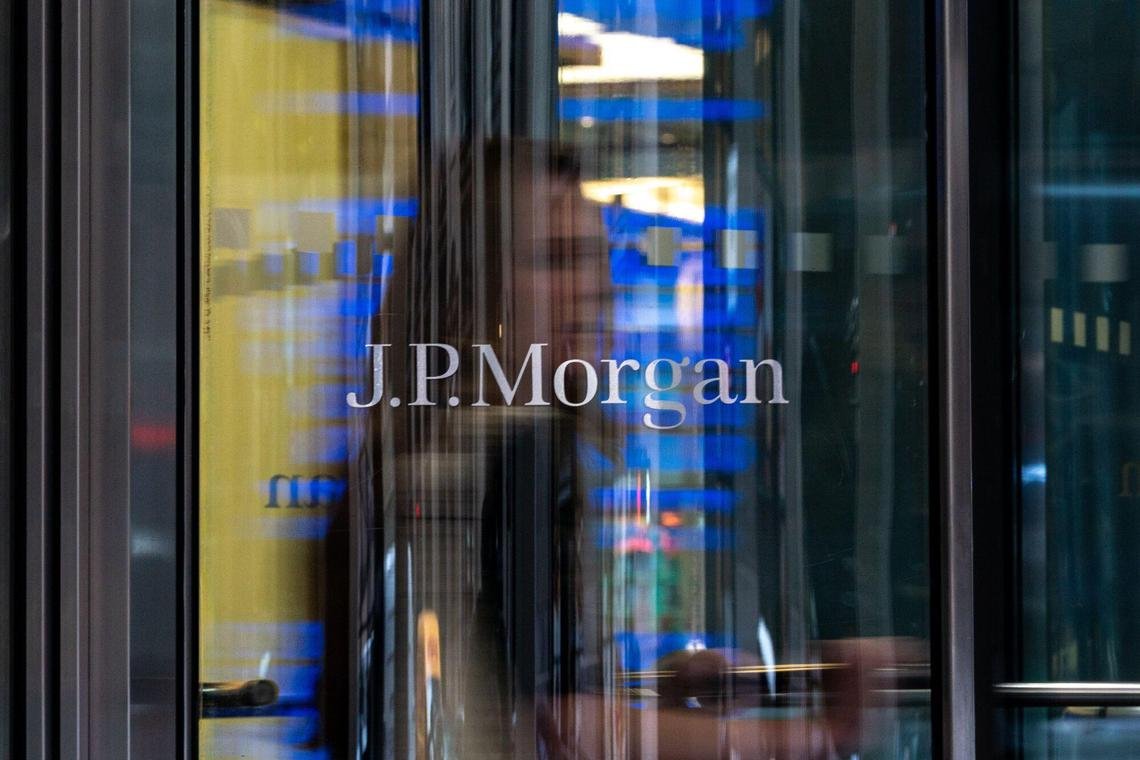
JPMorgan Asset Management (JPMAM) has registered eight more active ETFs here, including the world’s largest active fixed-income ETF, it noted on August 18.
This brings the total number of JPMAM-managed active ETFs registered here to 11. All are available to local investors, although none is listed here.
Unlike passive ETFs that aim to replicate the performance of a specific market index that is tracked automatically, active ETFs are managed by professional portfolio managers who make decisions about asset allocation, stock selection and timing.
They are designed to outperform the market to deliver potentially higher returns, while passive ETFs operate on a buy-and-hold principle based on the belief that consistently outperforming the market over the long term is challenging.
Active ETFs are also flexible in the areas they invest in, allowing them to potentially achieve better risk-adjusted returns compared with passive strategies, particularly in volatile or declining markets. But this also means they could command much higher management fees than their passive counterparts.
JPMAM’s website notes that ongoing fees for these funds range from 0.2 per cent to 0.4 per cent, on a par with average management fees for passive ETFs.
Mr Philippe El-Asmar, JPMAM’s head of Apac ETF, digital and direct, said its seven research enhanced index (REI) ETFs blend “index-like equity exposure with stock-specific insights” that make them an attractive option for investors who want to avoid “high levels of tracking error”.
The eighth ETF – JPMorgan USD Ultra-Short Income Active UCITS – employs a more conservative strategy.
It invests in ultra-short duration fixed-income securities, which are typically less sensitive to changes in interest rates than longer-duration bonds. This allows the fund to provide income while maintaining low volatility.
“It is designed to provide additional income beyond that of money market funds, while mitigating volatility and limiting duration exposure,” said JPMAM, which manages over US$280 billion (S$360 billion) across 144 ETFs globally.
Mr Ayaz Ebrahim, chief executive of Singapore and South-east Asia at JPMAM, said the REI ETFs “can serve as active building blocks for investors’ equity core portfolios”, while the active fixed-income fund would help investors manage credit and duration exposure with a conservative mindset.
Mr Gerald Wong, chief executive of financial platform Beansprout, said that while the fixed-income fund’s strategy is seen as a less risky one, investors should still err on the side of caution.
“It’s important for investors to note that the ETF is not capital-guaranteed. As it is denominated in US dollars, Singapore-based investors may also face foreign currency risks if their portfolios are primarily in Singapore dollars,” he added.
JPMorgan also registered three active ETFs here in April that are benchmarked against the S&P 500, Nasdaq Composite and MSCI World indexes.
Its latest active ETFs registered here are listed only on the London Stock Exchange and other bourses in Europe.
There is only one active ETF listed on the Singapore Exchange (SGX) – Lion-Nomura Japan Active ETF, which is managed by Lion Global Investors and Japanese financial services group Nomura.
Mr Kang Wei Chin, ETF product manager at SGX Group, said the ETF has already outperformed its benchmark by 5.15 percentage points since listing in January 2024, delivering a total return of 9.46 per cent over the past year.
He added that local ETF listings have more than doubled since 2020, but another active ETF listing could take some time to materialise.
“This delay is very much a natural evolution of the market. In most markets, passive ETFs would first reach a critical point before active ETFs adoption began to take form,” he added.
“We are collaborating with local issuers to launch active ETFs that leverage the track record of an existing listed unit trust.”
Active ETFs have surged in popularity over the last couple of years, with 510 launched globally in 2024 – up from 352 in 2023, noted investment research firm Morningstar. Around 300 have already been launched this year.
Active ETFs took in US$183 billion in assets in the first half of 2025, with JPMorgan recording the largest inflows at US$25.5 billion, the report said.
JPMAM said the Asia-Pacific ETF market has seen robust growth, with assets under management reaching US$1.8 trillion and increasing at an annual rate of around 24 per cent, doubling every three years and significantly outpacing other regions.
Mr Ebrahim said the level of interest from local investors “has exceeded our initial expectations” but JPMAM will continue to prioritise its ETF registrations here before evaluating a listing possibility.
He added: “We welcome more issuers to list and register more ETFs as we believe that by working together, we can expand the market and create greater opportunities for all stakeholders.”
Mr Wong of Beansprout added that awareness of active ETFs remains low among retail investors in Singapore due to passive ETFs being more established and widely understood as a “low-cost way to gain market exposure”.
“As investor awareness grows and performance track records are established, we expect more asset managers to explore launching active ETFs tailored to the needs of Singapore-based investors,” he added.